
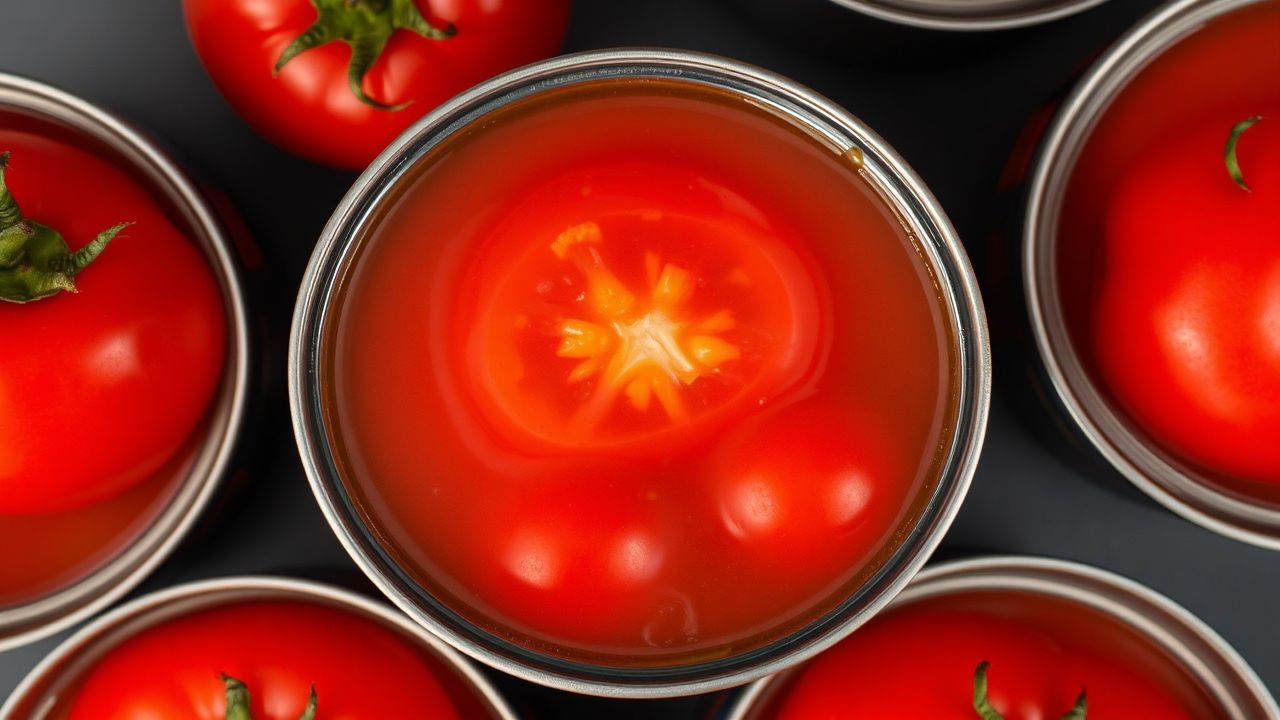

Imagine cracking open a can and finding whole tomatoes floating in a bright, tangy bath. Many cooks wonder whether that liquid is useless filler or an ingredient they should treat like stock.
- At a glance: The packing liquid protects and flavors the fruit while stabilizing texture during storage.
- Cooking benefit: The juice concentrates soluble tomato compounds, improving mouthfeel and emulsification.
- Practical use: Reserve or reduce the juice to adjust sauce body, deglaze pans, or boost broths.
- Storage tip: Freeze excess juice in ice cube trays for single-serving boosts to soups and risottos.
Why whole canned tomatoes sit in so much juice
Protection and stability explain the visible volume of liquid. Manufacturers pack whole tomatoes in juice or a light puree to limit oxygen exposure and maintain a stable acidic environment during months on the shelf.
The bath also cushions the fruit during transport and handling so the flesh keeps shape once you open the can. Commercial canning principles are well established; see the canning overview at canning (food preservation) for technical context.
Primary reasons for the liquid
There are seven practical reasons you find so much juice with whole tomatoes. They serve as a buffer for pH, a carrier for soluble flavors and pigments, and a mechanical shock absorber during distribution.
Beyond those functions, the liquid preserves texture by slowing enzymatic changes and offers a ready-made medium for heat transfer when you cook. For background on preservation science see food preservation.
Prep, cook time, yield and difficulty
Preparation: Minimal. Open the can, assess the tomato-to-juice ratio, and decide whether to use or reserve the liquid. That quick assessment removes guesswork when balancing acidity and sweetness in a recipe.
Cooking: Simmer time varies with intended thickness. A basic simmered sauce that uses the juice concentrates in 20–30 minutes; reducing the liquid deepens flavor and body. Yield: A 28 oz can commonly yields enough sauce for 4–6 servings.
Ingredients
These pantry items pair cleanly with whole canned tomatoes and their juice. The list emphasizes how the liquid interacts with aromatics and fat for balanced flavor extraction.
- 1 can (28 oz) whole peeled tomatoes in juice
- 2 tbsp olive oil
- 1 medium onion, finely chopped
- 3 cloves garlic, minced
- 1 tsp dried oregano
- Salt and freshly ground black pepper to taste
- Fresh basil or parsley for garnish
- Optional: Red chili flakes for heat
Instructions
Opening and prepping: Shake the can gently before opening to mix solids and liquid. Pour contents into a bowl so you can judge how much juice the tomatoes sit in and decide whether to reserve it.
Sauté aromatics: Heat oil over medium and sweat the onion until translucent, about 4–6 minutes. Add garlic and cook briefly to avoid bitter, burnt notes.
Incorporating the tomatoes
Add the whole tomatoes with juice: Pour the tomatoes and their liquid into the pan. Break the fruit with a spoon for a chunky finish or crush with a masher for a rustic puree.
Season and simmer: Add oregano, salt, and pepper, then bring to a gentle simmer. Cook 15–25 minutes to let the juice reduce and meld with aromatics; longer reduction produces a thicker, more concentrated sauce.
Finishing steps
Adjust consistency: For a velvety finish, blend half the sauce or pass it through a sieve. For a chunky outcome, stir gently and finish with fresh herbs off the heat.
Storage: Cool leftover sauce and refrigerate up to four days, or freeze in measured portions. Keep reserved tomato liquid separately if you want to restore body later.
Science behind the juice and canning choices
The packing liquid contains soluble solids—sugars, organic acids, and small molecules like amino acids and nucleotides. These compounds diffuse from flesh into surrounding juice during heating and holding, concentrating tomato flavor in the bath.
The liquid carries pigments such as lycopene and water-soluble color components that affect color and mouthfeel once reduced. For more on tomato chemistry and pigment behavior, see lycopene and the general tomato overview.
How the juice changes cooking behavior and texture
Heat transfers efficiently through the liquid, so tomatoes soften evenly without localized overheating. That moderates cell rupture and helps the fruit retain a recognizable shape when you want chunks in the sauce.
As the soluble solids thicken during reduction, they add body and help emulsify fat. This rounded mouthfeel improves how olive oil or butter integrates into the finished sauce.
Practical implications for recipes
Add the juice early for slow-simmered sauces so it reduces and concentrates without promoting separation. Conversely, reserve some juice for last-minute adjustments if you need to loosen a finished sauce.
If a recipe specifies drained tomatoes, interpret that as an instruction about flavor balance rather than safety. Draining reduces acidity and soluble umami; keep the drained liquid to tweak the sauce later if needed.
Tips for using canned tomato juice effectively
Use the juice as a flavor builder: Deglaze pans with it, add it to braises, or mix part of it into stocks to boost savory depth. The liquid carries acid and sweetness that balance fatty proteins and enrich broths.
Adjust consistency deliberately: If a sauce is thin, simmer uncovered to concentrate. If it’s too thick, add reserved juice or a splash of stock to loosen without diluting flavor.
When using canned tomato juice cold, such as in gazpacho or cocktails, taste first. Many brands add salt or citric acid, and cold applications reveal seasoning more directly than heat does.
Chef’s notes and substitutions
Plum varieties packed in juice often give a sweeter, denser base. If you prefer lower acidity, a pinch of baking soda during simmering will neutralize some acid—add carefully and taste as you go to avoid a soapy finish.
For speed, blend the entire can and use it as a soup or pizza-sauce base. For texture contrast, crush a portion of the tomatoes and leave the remainder whole for bite and visual appeal.
Serving suggestions
Pair tomato-based sauces with starchy carriers like pasta, polenta, or crusty bread that absorb and showcase the concentrated juice. A tear of bread soaks up flavor that would otherwise wash away on the plate.
Finish dishes with grated hard cheese or a drizzle of extra-virgin olive oil to lift fat-soluble aromas. These finishing touches highlight how the juice functions as an active, flavorful ingredient.
Further reading and internal resources
For practical recipe ideas using whole canned tomatoes and their juice, check the CookHarvest recipe collection and the canned tomatoes tag for hands-on examples and inspiration.
Explore related CookHarvest entries for techniques, substitutions, and recipe scaling at CookHarvest recipes and find consolidated content on preserved tomatoes at canned tomatoes.
FAQ
Why are canned tomatoes packed in juice instead of water?
Tomato juice preserves soluble flavor compounds and acidity that plain water would dilute. The juice keeps tomato solids concentrated so preservation retains authentic flavor.
Can I discard the juice if I prefer a thicker texture?
Yes. Draining yields a thicker texture but sacrifices acidity and soluble umami. If you drain, reserve the liquid for later adjustments so you can restore flavor without watering down the dish.
Does the packing liquid affect shelf life?
Yes. The liquid helps maintain a low-oxygen environment and stable pH, both of which contribute to the can’s long shelf life. Correct acidity and sealing lower microbial risk prior to opening.
Is the juice safe to use in cold dishes?
Generally, yes. Taste the juice first because many brands add salt or citric acid. If seasoning fits, the juice makes an efficient base for cold soups and tomato-based cocktails.
Are all canned tomato juices the same?
No. Labels vary: some cans contain plain tomato juice, others include puree, salt, or seasonings. Read the label and choose the variety that best matches your recipe goals.
Recommended Reading:
- Crisp & Sweet: The Ultimate Guide to Dehydrated Apple Chips
- Preserving Fresh Flavor: The Art of Putting Up Tomatoes
- Crunchy Creations: Homemade Granola Using a Dehydrator