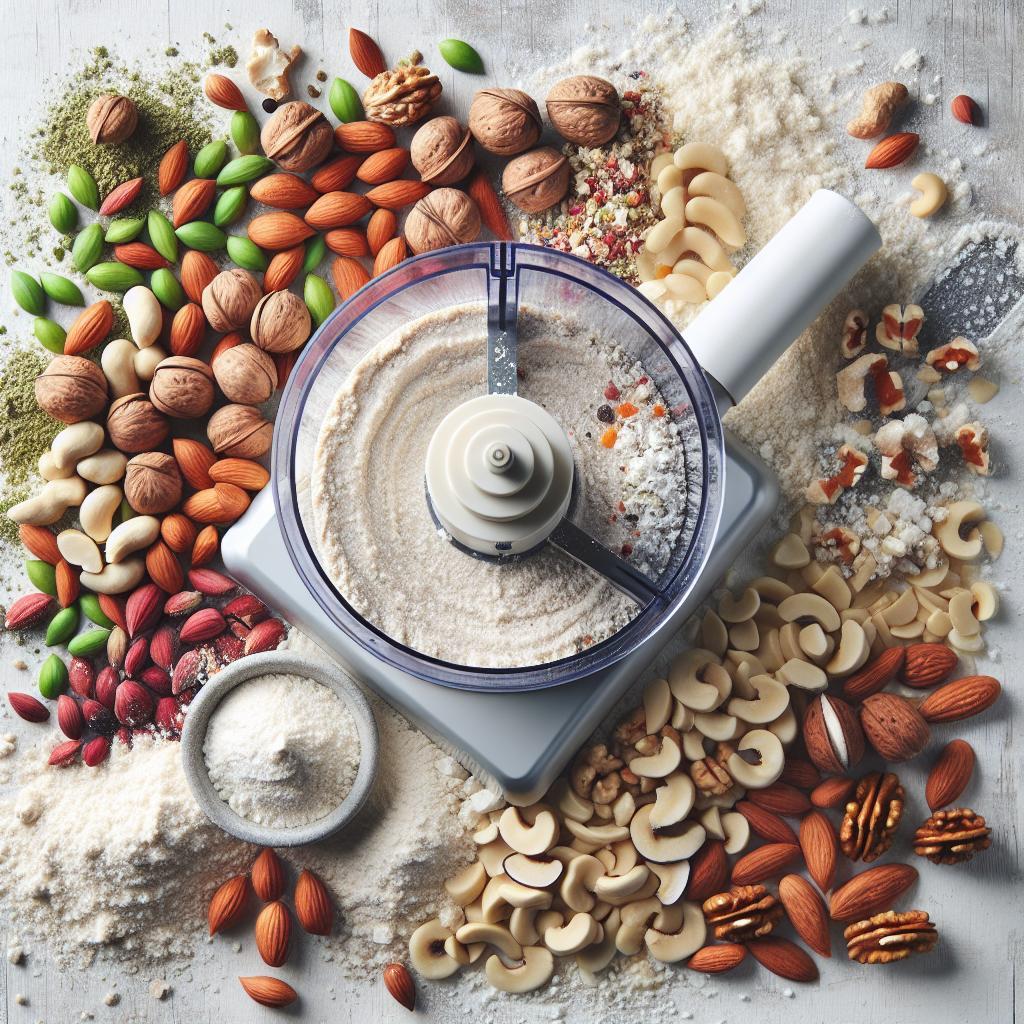

In the world of culinary creativity, nuts are more than just a crunchy snack-they’re a gateway to delicious, nutrient-packed flours that can elevate everything from baked goods to savory dishes. But if you’re staring at a bag of almonds or walnuts wondering how to transform them into a fine, flour-like powder, you might be asking: can my trusty food processor handle the task? Grinding nuts into flour isn’t just about smashing; it’s a delicate dance of texture, consistency, and technique. In this article, we’ll explore whether your food processor can truly do the trick and share tips to turn those nuts into the perfect flour for your kitchen adventures.
Grinding nuts into flour can elevate your baking and cooking with fresh, flavorful, and finely textured results that store-bought versions just can’t match. The key is selecting the right food processor for nut grinding precision, unlocking techniques to create the perfect nut flour texture while avoiding common pitfalls. With a bit of know-how, you’ll also learn how to enhance flavor and freshness, turning humble nuts into a pantry staple that’s as versatile as it is delicious.
Prep and Cook Time
Preparation: 10 minutes | Grinding: 5-7 minutes
Yield
Approximately 1 ½ cups of nut flour (from 1 ½ cups whole nuts)
Difficulty Level
Easy to Medium – Perfect for home cooks and enthusiasts ready to elevate their baking.
Ingredients
- 1 ½ cups raw almonds or your choice of nuts (walnuts, hazelnuts, or pecans work beautifully)
- Optional: ½ teaspoon sea salt for flavor enhancement
- Optional: 1 teaspoon maple syrup or honey for a subtle sweet hint
Instructions
- Select your food processor wisely. Look for models with strong motors (at least 600 watts) and sharp, high-quality blades designed for dry ingredient processing. A compact bowl helps concentrate the nuts near the blade for even grinding.
- Toast the nuts lightly. Spread nuts on a baking sheet and toast at 350°F (175°C) for 5-7 minutes until fragrant and golden. This step enhances flavor and dryness, improving grinding results without releasing excess oil.
- Cool completely. Let toasted nuts cool to room temperature before grinding to prevent clumping or oil separation.
- Add nuts to the food processor. Pour in 1 ½ cups cooled nuts. Pulse in short bursts of 5-7 seconds, pausing frequently to check texture. This pulsing prevents over-grinding and heat build-up that cause oily pastes.
- Scrape down the sides. Every 5-6 pulses, stop the processor and scrape down the bowl sides with a spatula to ensure consistent grinding and avoid large chunks.
- Continue pulsing until flour consistency is achieved. The flour should be fine but not powdery-tiny specks add texture without coarseness.
- Add optional salt or sweetener. If desired, blend in a pinch of sea salt or a touch of maple syrup for unique flavor notes, blending just briefly to mix.
- Transfer and store. Immediately move nut flour to an airtight container. Store in the refrigerator for up to two weeks or freeze for longer shelf life, maintaining freshness and vitality.
Tips for Success
- Choose fresh, raw nuts to preserve natural oils and sweetness. Avoid pre-roasted nuts with additives.
- Avoid over-processing. Too much blending releases oil, turning nuts into nut butter rather than flour.
- Don’t overcrowd the processor. Small batches grind more evenly and smoothly.
- Use pulse mode to maintain control and monitor progress.
- For ultra-fine flour, sift the ground nuts through a fine mesh sieve and reprocess any large particles.
- Experiment with nut combos (like almond-walnut blends) for unique textures and flavor depth.
Serving Suggestions
- Use fresh nut flour in gluten-free baking recipes such as cookies, muffins, and pancakes for nuttier, moister results.
- Add nut flour as a crunchy topping over yogurt, smoothie bowls, or oatmeal.
- Sprinkle over salads or roasted vegetables for an added nutty crunch.
- Pair with fresh berries and honey for an irresistible homemade nutty dessert base.
- Mix into protein shakes or homemade energy bars to boost nutrition and texture.

| Nutrient | Amount (Per ¼ cup) |
|---|---|
| Calories | 150 |
| Protein | 6g |
| Carbohydrates | 5g |
| Fat | 14g |
For more creative ways to incorporate homemade nut flour, check out our detailed guide on baking with nut flours. For science-backed insights on nut nutrition, visit The Nutrition Society.
Q&A
Q&A: Grinding Nuts into Flour – Can a Food Processor Do the Trick?
Q: Can I use a food processor to grind nuts into flour?
A: Absolutely! Food processors are versatile kitchen heroes that can transform whole nuts into a fine, flour-like consistency. With their powerful blades and spacious bowls, they make quick work of grinding almonds, walnuts, cashews, and more.
Q: How fine can a food processor grind nuts? Will it be as smooth as store-bought nut flour?
A: While a food processor can get your nuts pretty finely ground, it might not achieve the silky powder-like texture of commercially milled nut flours. You’ll often end up with a slightly coarser meal that’s perfect for baking or cooking, but if you want ultra-fine flour, a dedicated grain mill or a high-speed blender might be better.
Q: What tips help get the best flour texture from a food processor?
A: For fluffier, more consistent nut flour: pulse in short bursts rather than continuous grinding to avoid turning nuts into nut butter. Also, make sure your nuts are dry and not oily or roasted, as moisture can create clumps. Sifting the resulting flour through a fine mesh sieve can help separate finer flour from larger pieces.
Q: Are there any nuts that work better or worse for food processor flour?
A: Almonds are a classic choice and pulverize nicely. Cashews also grind well. Walnuts and pecans can be trickier because of their softer, oilier texture, which risks turning into a paste. It’s usually best to go for raw, unsalted, and dry nuts for optimal results.
Q: How much nut flour can a food processor make at once?
A: Depending on your processor’s size, you can typically grind between 1 to 2 cups of nuts at a time for consistent results. Overloading the bowl may lead to uneven grinding, so it’s better to work in batches.
Q: Can grinding nuts in a food processor cause overheating or burning?
A: Excessive, continuous processing can generate heat, causing the nuts’ natural oils to release and make the mixture paste-like. To avoid this, use short pulses and take breaks, allowing the blades to cool down and preventing overheating.
Q: What are some creative uses for homemade nut flour?
A: Homemade nut flour adds a delightful nutty flavor and rich texture to pancakes, muffins, gluten-free bread, or as a crunchy coating for meats and veggies. Plus, it’s an easy way to boost protein and healthy fats in your recipes.
Q: Is making nut flour in a food processor cost-effective?
A: If you buy nuts in bulk or at sales, grinding your own flour can save money and reduce packaging waste. Plus, you get the freshest flavor and can customize the coarseness for your recipes.
Q: Any final words of wisdom before I start grinding?
A: Patience is key! Take your time pulsing, don’t rush to get a “perfect” flour on the first try, and embrace a bit of texture-it’s part of the charm of homemade nut flour. With a good food processor and a little practice, you’ll soon elevate your baking game with homemade nutty goodness.
To Wrap It Up
In the quest to transform crunchy nuts into a fine, flour-like powder, the food processor emerges as a versatile kitchen ally-offering speed and convenience without the need for specialized equipment. While it may not always achieve the ultra-fine texture of a dedicated nut grinder or mill, with the right technique and a bit of patience, your trusty food processor can indeed do the trick. So next time your recipe calls for nut flour, don’t hesitate to harness the power of your processor and unlock a world of homemade, nutty goodness right at your fingertips. After all, innovation often begins in the heart of the kitchen blender bowl.