
Tangy Twist: How to Make Perfect Homemade Pickled Eggs starts with clear intent: select the right vinegar and spices, control egg texture, and time the brine so flavor penetrates evenly. This guide presents practical, tested techniques so you can reproduce crisp, tangy pickled eggs every time.
- Precision matters: follow brine ratios and timing for consistent tang and texture.
- Texture control: cooling and peel technique affect the final bite.
- Flavor layering: spices and optional veggies add visual and taste depth.
Choosing the Ideal Vinegar and Spices for a Flavorful Brine
Vinegar type determines brightness and mouthfeel. For example, apple cider vinegar offers mellow fruit notes while white distilled vinegar yields sharper acidity; read more about vinegar basics on vinegar.
Spices provide aromatic complexity and balance acidity. Mustard seed, black peppercorns, and bay leaves deliver classic savory layers while additions like turmeric or smoked paprika shift the profile toward exotic or smoky.
Vinegar ratios and salt-sugar balance
A reliable starting brine uses a 2:1 vinegar-to-water ratio. Adjust salt and sugar to taste: around 1 tbsp salt and 2 tbsp sugar per 3 cups liquid provides a balanced, pickled flavor that anchors spices without overpowering the egg.
For alternatives, blend vinegars to modulate acidity and aroma. For instance, a half-and-half mix of apple cider vinegar with white vinegar brightens flavor while retaining body.
Step-by-Step Guide to Achieving the Perfect Pickled Egg Texture
Texture depends on precise cooking and rapid cooling. Overcooked yolks dry out; undercooked whites remain soft and may peel poorly.
Start with cold water and bring eggs to a gentle boil, then simmer for nine minutes for firm, tender whites and a creamy yolk. After cooking, transfer eggs immediately to an ice bath to stop the heat and tighten membranes so shells come off cleanly; this technique mirrors the methods described for boiled eggs.
7 Expert Steps
- Place eggs in a single layer and cover with cold water by 1 inch. Cold start prevents cracking and promotes even heat transfer.
- Bring to a gentle boil then simmer for 9 minutes for a reliably creamy yolk. Time precisely to avoid a chalky center.
- Ice bath immediately: plunge eggs into iced water for at least 5 minutes to halt cooking and firm the whites.
- Peel under running water: crack and roll the shell, then remove membrane fragments for a smooth surface that absorbs brine evenly.
- Make the brine: heat vinegar, water, salt, sugar, and spices until sugar dissolves and aromas bloom; cool slightly before pouring over eggs.
- Submerge eggs in a sterilized jar: pack eggs snugly and pour hot brine so all eggs sit below the liquid line to prevent discoloration and spoilage.
- Refrigerate and wait: allow a minimum of 5 days, ideally 10–14, for flavors to penetrate and reach balance.
Creative Flavor Combinations to Elevate Your Pickled Eggs
Pickled eggs respond well to bold and subtle profiles because the egg absorbs the brine while retaining its protein texture. Classic beet-and-horseradish yields vivid color and sharp heat, while curried citrus introduces warm, aromatic notes.
Here are reliable combinations to experiment with based on spice solubility and visual appeal. Choose one dominant flavor, then add supporting notes so one taste does not mask another.
- Beet & Horseradish: cooked beet slices for color and grated horseradish for bite.
- Curried Citrus: curry powder, turmeric, and orange zest to create golden-hued tang.
- Smoky Chipotle: chipotle and smoked paprika for depth and a long finish.
- Sweet & Spicy Ginger: fresh ginger and a touch of honey to balance heat with sweetness.
- Herb Garden: dill, chives, and tarragon with cracked peppercorns for a fresh, herbaceous profile; see background on dill.
Storage Tips and Serving Suggestions for Long-Lasting Freshness
Store pickled eggs in airtight glass jars and keep them refrigerated at all times. Proper jar sterilization and full submersion in brine minimize oxygen exposure and reduce spoilage risk.
When stored correctly, unopened refrigerated pickled eggs remain flavorful for several weeks; consume within 3–4 weeks for best texture and taste. Always discard jars when brine looks cloudy or produces an off-odor to avoid food-safety issues.
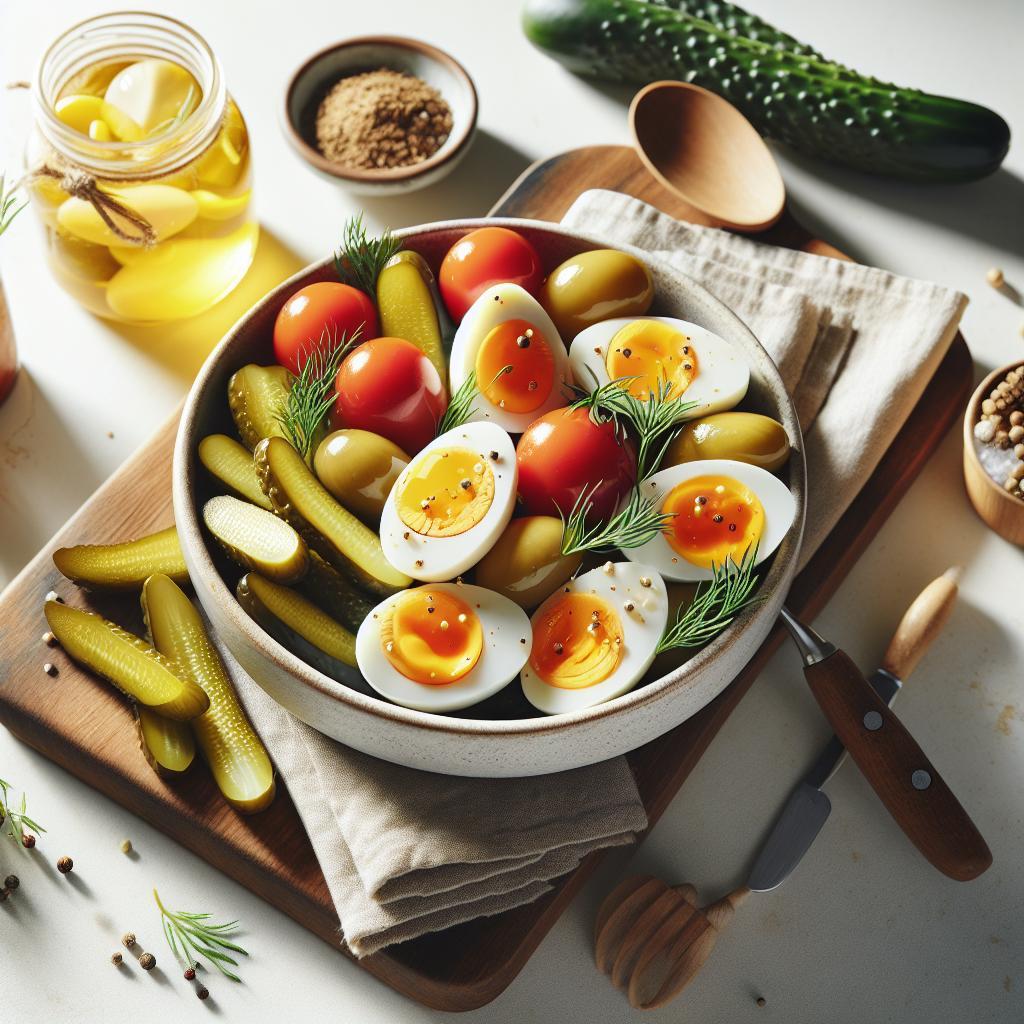
Slicing chilled eggs highlights marbled brine effects while halved eggs show off color and seasoning. Serve them on charcuterie boards, in salads, or stuffed as an elevated snack for gatherings.
Prep, Yield, and Difficulty
Plan for short active time and extended marinating time. Prep typically takes 15 minutes, brine simmer about 10 minutes, and marinate from 5 to 14 days depending on intensity desired.
Yield depends on jar size; a quart jar commonly holds about 12 large eggs. The technique rated Easy–Medium suits both first-timers and experienced home cooks who want predictable results.
Ingredients
Gather eggs, vinegar, water, sugar, salt, and a selection of spices. Use quality ingredients: eggs from hens with varied diets yield different yolk color and subtle flavor nuances.
Basic ingredient list: 12 large eggs, 2 cups apple cider vinegar or preferred vinegar, 1 cup water, 2 tbsp sugar, 1 tbsp kosher salt, 1 tsp peppercorns, 1 tbsp mustard seeds, bay leaves, and garlic cloves. For additional background on apple cider vinegar properties, consult apple cider vinegar.
Detailed Instructions
Follow the 7-step sequence above for reliable outcomes. Sterilize jars, maintain sanitation, and label jars with the brine date so you track marination time.
After brining, rotate jars after two days to encourage even infusion. Taste one egg on day five and again on day ten to identify your preferred point of balance.
Tips for Success
Small technique changes shift results quickly; test in a single jar before scaling. For instance, slightly hotter brine extracts more pigment from beets but can also intensify acidity.
Use eggs about one week old for easier peeling; fresher eggs yield creamier yolks but can resist shell removal. If brine seems too sharp, dilute with more water and a splash of vinegar until balanced.
Layering pickled vegetables like onions or radishes in the jar visually signals flavor and texture to guests. These add-ins soften in brine and complement egg protein with crunch or sweet tang.
Serving Suggestions
Pickled eggs make a versatile protein: halve for appetizers, slice into salads, or dice into egg salad for a tangy twist. Garnish with herbs and smoked paprika to highlight brine flavors and add contrast to creamy yolks.
They pair well with robust cheeses, cured meats, and bitter greens that benefit from acid. For a cocktail approach, a halved pickled egg can even garnish a savory Bloody Mary.
Nutritional Snapshot
Pickled eggs retain the core nutrition of boiled eggs: high-quality protein and essential micronutrients in a low-carb format. Brine adds negligible calories but contributes sodium—adjust salt in the brine to manage intake.
Per egg estimates: ~70 kcal, 6 g protein, 5 g fat, and trace carbs. If you follow specific dietary plans, tailor spice and sugar levels accordingly.
Key Takeaways
Homemade pickled eggs reward precision in cooking and brine formulation. Controlling heat, cooling quickly, and using measured vinegar-salt-sugar ratios gives consistent tang and texture.
Experiment with one variable at a time: swap one spice or change vinegar proportion to learn how each element shifts the final profile. Keep jars labeled and dated to replicate the best batches.
FAQ
How long before pickled eggs are ready to eat?
Allow at least 5 days for basic flavor penetration; 10–14 days yields fuller, balanced taste. Test an egg along the way to find your personal ideal.
Can I use different vinegars interchangeably?
Yes, but each vinegar brings distinct acidity and aromatics. Blend vinegars or reduce proportions when switching to milder types to keep balance.
Are pickled eggs safe at room temperature?
No. Always refrigerate pickled eggs. Acid slows microbes, but cold storage prevents bacterial growth that could compromise safety.
Will pickled eggs taste the same if I use older eggs?
Older eggs peel easier but have thinner whites; one-week-old eggs represent the best compromise for texture and peeling ease. Adjust cooking time slightly only if yolk consistency becomes an issue.
What’s the best way to get vibrant color when using beets?
Add cooked beet slices to the jar and use hot brine to extract pigment faster. Remember that longer marination deepens color and also intensifies beet flavor.
For additional context on the science and history of pickling, consult the pickling overview and for general egg background see eggs as food.
See also: Pickled Eggs