
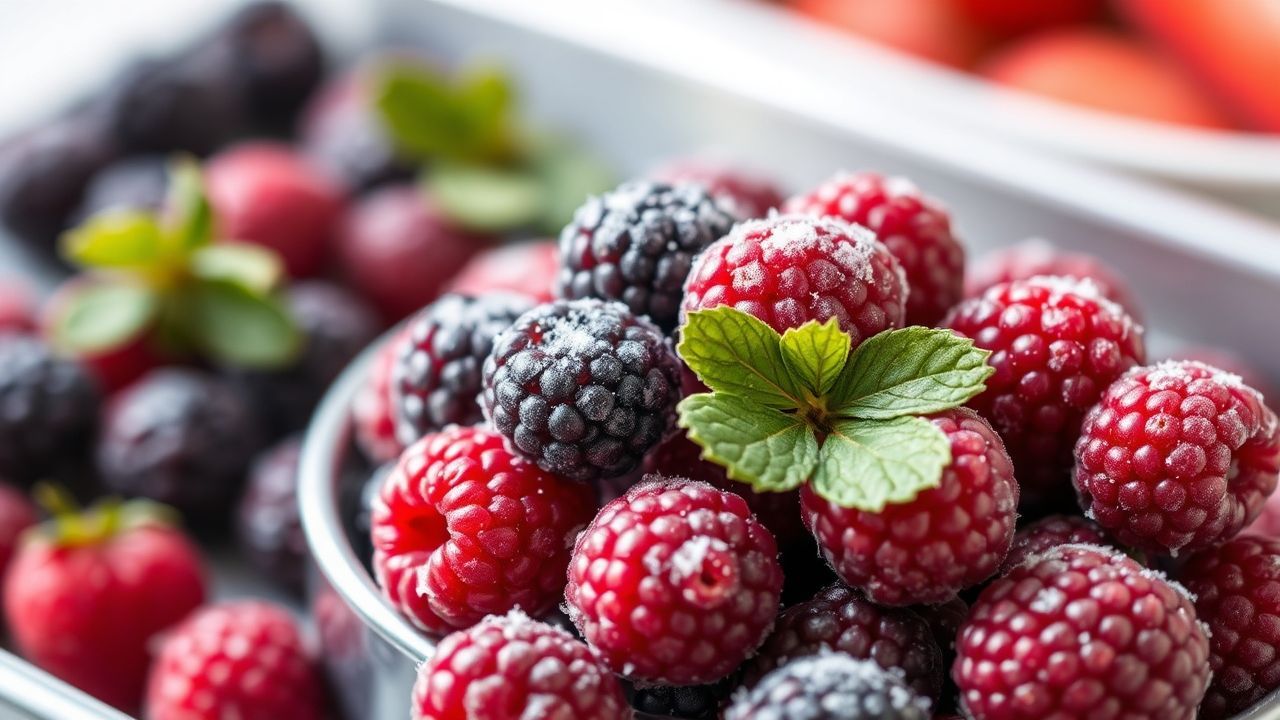

Freeze berries the right way and you keep individual pieces, texture, and fresh flavor for smoothies, baking, and garnishes. This guide gives tested, kitchen-ready methods to flash-freeze, store, and thaw berries so they do not form clumps.
- Flash-freeze single layers so fruit does not bond as ice forms.
- Dry thoroughly after washing; surface moisture creates ice crystals that link pieces.
- Use airtight, low-oxygen storage to prevent freezer burn and preserve texture.
- Portion before storing so you only thaw what you need and avoid refreeze cycles.
Choosing the Perfect Berries for Clump-Free Freezing
Pick berries that are ripe but still firm; overly soft fruit releases juice and collapses during freezing. Firmness reduces free water and lowers the chance that frozen surfaces will weld pieces together.
Different species respond differently to freezing because of anatomy and cell structure. For a botanical overview of berry types, see the berry anatomy resource on berry (botany).
Mastering the Prep Process to Preserve Texture and Flavor
Rinse gently under cold running water and drain in a colander to avoid bruising fragile fruit. Then blot dry on a clean towel until surface moisture is gone; this removes the water that forms the adhesive ice film.
For strawberries, hull and slice into even pieces so freezing and thawing occur uniformly. Uniform pieces freeze faster and limit internal ice crystal growth that causes mushiness.
Smart Freezing Techniques That Keep Berries Separate
Flash-freezing in a single layer on parchment-lined trays is the most reliable method to prevent clumps. Spread berries so pieces do not touch, then place trays on the coldest, most stable shelf in your freezer for fastest solidification.
Once fully frozen, transfer berries into airtight containers or resealable freezer bags and remove excess air. Removing air limits ice migration and protects fruit texture and color during storage.
Equipment and Temperature Controls
Use shallow, rigid trays for the flash-freeze phase so cold air circulates under and around each piece. Rigid trays transfer cold faster than soft surfaces and reduce contact pressure on delicate berries.
Keep your freezer as cold and stable as practical; lower, steady temperatures produce smaller ice crystals and better texture retention. For context on phase change and ice crystal behavior, consult the freezing overview.
Portioning, Packing and Long-Term Storage
Portion berries into recipe-sized batches before packing; then you only thaw what you need and avoid repeated thaw-refreeze cycles. Bag or container size should match likely single-use portions for efficiency.
Use airtight, low-oxygen packaging and remove as much air as possible without crushing fruit. Vacuum sealing or using rigid, freezer-grade containers extends life and minimizes freezer burn.
Thawing Tips to Maintain Texture and Flavor
Thaw slowly in the refrigerator when you need intact, thawed berries for plating or salads. Gradual warming reduces sudden water release and helps fruit keep structure and flavor.
For smoothies or sauces, use berries straight from the freezer; adding them frozen preserves texture and shortens prep time. When a recipe calls for thawed berries, transfer the amount needed to the fridge overnight and blot excess liquid before use.
Prep, Time, Yield and Storage Basics
Prep Time: 10–25 minutes depending on quantity and whether you hull or slice fruit. Flash-freeze: 2–4 hours to solidify single pieces depending on freezer temperature and berry size.
Yield remains close to original volume, though compaction varies by species. Store for best quality up to 12 months; longer storage increases texture and color degradation despite separation.
Ingredients and Tools
Ingredients: 4 cups fresh mixed berries (blueberries, raspberries, strawberries—hulled and sliced where appropriate). Optional: 1 tablespoon lemon juice to preserve color.
Tools: parchment paper, shallow trays, airtight freezer bags or rigid freezer containers, and a marker to label dates. For home freezer basics and appliance considerations, see the freezer article.
Step-by-Step Instructions
1. Gently rinse berries under cold water in a colander. Handle carefully to avoid bruising delicate varieties and accelerate drainage.
2. Dry thoroughly by blotting on a clean towel until the surface is dry to the touch; excess water equals ice crystals and adhesion. 3. Hull and slice strawberries into uniform pieces about ½ inch thick for even freezing and thawing.
4. Arrange fruit in a single layer on parchment-lined trays with pieces not touching to prevent surface bonding. 5. Flash-freeze on the coldest shelf until fully solid (typically 2–4 hours).
6. Portion and pack frozen pieces into airtight containers or resealable freezer bags; expel air and label with date. 7. Use within 6–12 months for peak flavor; prolonged storage will gradually reduce color and texture.
Tips for Success
Keep a dedicated cold zone in your freezer for the initial flash-freeze phase; frequent door openings slow freezing and increase crystal size. Avoid stacking trays until pieces are fully frozen solid.
Portion into meal-sized batches so you only thaw what you need, which prevents repeated thaw-refreeze cycles that accelerate quality loss. For general food preservation principles consult food preservation.
Serving Suggestions
Use frozen berries directly in smoothies and blended drinks to retain bright flavor and texture. For raw presentations, thaw in the refrigerator and drain excess liquid before plating.
For sauces and compotes, use small portions and cook gently to retain color and acidity. When plating thawed fruit, a squeeze of citrus or a light dusting of sugar can refresh flavor without masking natural notes.
Why Clumps Form — Physical Explanation
Clumps occur when surface water forms ice that connects neighboring pieces. As ice crystals grow, they bridge fruit surfaces and weld pieces together into aggregates.
Fast freezing reduces crystal size and stops extensive crystal growth that causes bonding. Therefore, the flash-freeze method minimizes the mechanism that produces clumps and preserves cell structure.
Common Questions When You Freeze Berries
Many cooks ask whether skipping washing prevents clumping. While skipping washing can reduce surface moisture, it raises food-safety risks and shortens shelf life. Wash gently and dry thoroughly to balance safety and texture.
Another frequent question asks which berries tolerate freezing best. Firm types like blueberries and halved strawberries handle freezing and thawing better than fragile raspberries, which need gentler handling and shallower trays.
FAQ
Q: Why do frozen berries form clumps?
Clumps form when surface moisture freezes and links individual fruit via ice crystals. Prevent surface water and freeze pieces separately to avoid that bonding mechanism.
Q: Can I skip washing to avoid moisture?
Skipping washing reduces initial moisture but increases contamination risk and shortens storage life. Wash gently, then dry thoroughly to balance safety with texture preservation.
Q: Which berries freeze best without clumping?
Firm-textured berries like blueberries and halved strawberries tolerate freeze-thaw cycles better than delicate raspberries. Slice large berries to improve freezing uniformity.
Q: How long do frozen berries retain good quality?
For peak flavor and texture, use frozen berries within 6–12 months. Consistent low temperatures and airtight packaging prolong palatability, but texture and color slowly decline with time.
Q: Is home flash-freezing as good as commercial methods?
Commercial flash-freezing uses lower temperatures and faster rates to produce smaller ice crystals and superior texture. Home flash-freezing replicates the principle by spreading fruit and freezing rapidly on a very cold shelf.
The techniques above reduce clumping and keep frozen fruit ready for smoothies, baking, and fresh-looking garnishes. Apply these steps consistently and your freezer will deliver individual, flavorful berries every time.
See also: freeze berries