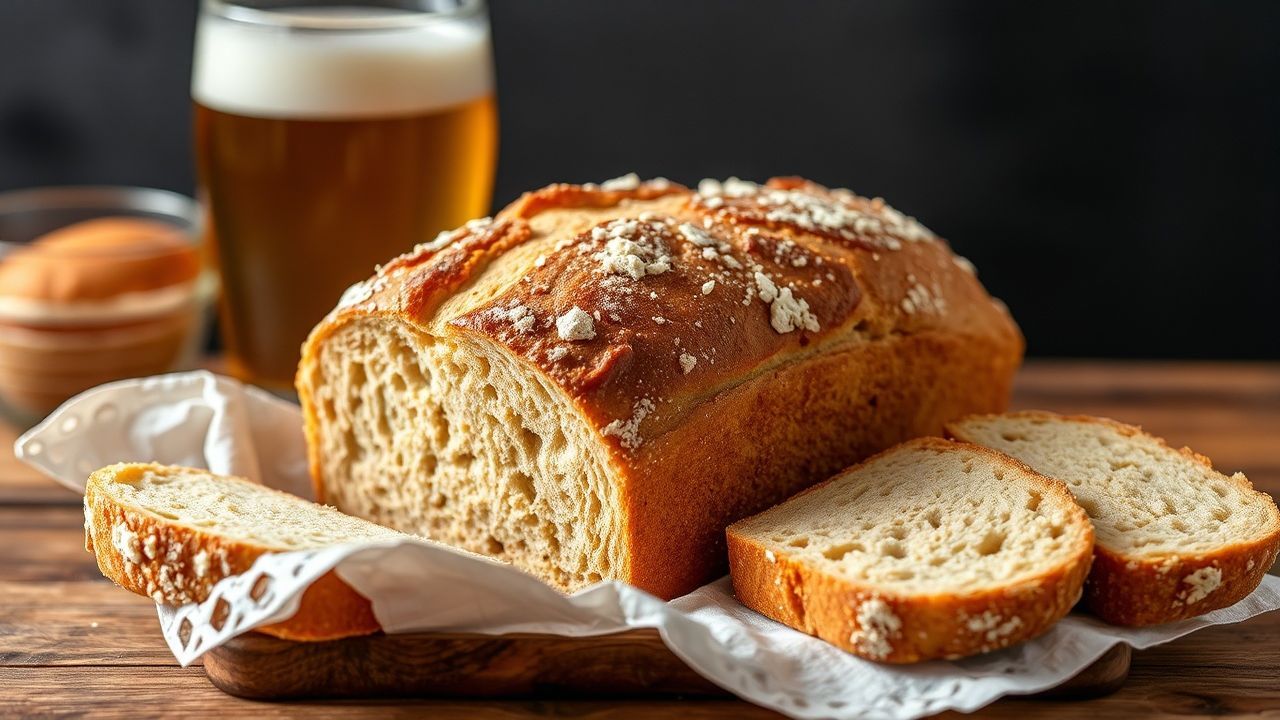

There’s a comforting alchemy when warm bread meets the malty, hoppy scent of beer. This recipe-driven guide explains how to make reliable, flavorful beer bread using simple pantry staples and one bottle of beer.
- Quick bake: No yeast proofing; mix and bake in under an hour.
- Versatile flavor: Your beer choice directly shapes crust and crumb notes.
- Minimal technique: No kneading required; gentle mixing preserves texture.
What Is Beer Bread?
Beer bread is a no-yeast quick loaf that combines flour, a chemical leavening agent, a touch of sugar, and beer. The beer supplies dissolved carbon dioxide and malt-derived flavors that add lift and depth.
Historically, cooks used beer as a ready source of fermentation and character. Modern versions rely on baking powder as the primary leavening. For a primer on the food and drink context, see beer and bread.
Key Ingredients and Why They Matter
The standard ingredient list stays short: all-purpose flour, sugar, baking powder, salt, beer, and melted butter. Each element plays a defined role in structure, flavor, and crust development.
Flour provides the gluten framework. Baking powder supplies the rapid gas release that gives the loaf its initial rise. Beer contributes carbonation, malt sugars, and hop aromatics. For background on mixing and heat effects, consult baking concepts.
Ingredient List (per 9×5-inch loaf)
3 cups all-purpose flour, sifted. 1 tablespoon granulated sugar. 1 tablespoon baking powder. 1 teaspoon fine salt. 12 oz room-temperature beer. 4 tablespoons unsalted butter, melted.
Use cold butter for a lighter crumb if you fold it in rather than brushing it on. Swap half the flour for whole wheat for heartier flavor; reduce the baking powder slightly to avoid a coarse rise.
Step-by-Step Instructions
Preheat the oven to 375°F (190°C). Grease a 9×5-inch loaf pan and set it aside while you mix the batter. This preheating ensures a predictable oven spring and better crusting.
In a large bowl, whisk together the sifted flour, sugar, baking powder, and salt until homogeneous. Slowly pour in the beer while stirring gently with a wooden spoon or spatula until just combined; do not overmix.
Baking Timeline and Checkpoints
Transfer the sticky dough to the prepared pan and smooth the top. Brush the surface with melted butter to encourage a golden, tender crust.
Bake on the center rack for 40–50 minutes. Test for doneness with a skewer; it should emerge clean or with a few moist crumbs but no wet batter. Cool 10 minutes in the pan, then transfer to a wire rack to finish cooling.
Flavor Pairings and Beer Selection
Your choice of beer determines sweet, bitter, or roasted notes in the loaf. Light lagers give subtle, clean flavors. Amber ales deliver malty warmth. Stouts and porters add cocoa, coffee, and caramel dimensions.
For savory add-ins like shredded cheddar or herbs, pick malty amber ales or balanced pale ales. For sweeter versions with chocolate or cinnamon, choose a stout or porter that already carries those flavor cues.
Practical Pairing Tips
Measure flavor impact by tasting the beer alone before baking. If the beer tastes assertive, scale back spices and aromatic herbs. If it tastes mild, use bolder cheese or herbs to match it.
To approximate a predictable result across different beers, keep the sugar neutral and rely on add-ins to dial sweetness or savoriness.
Expert Tips for Consistent Results
Control temperature: room-temperature beer integrates more predictably than a chilled can straight from the fridge. Overmixing develops gluten and yields a tougher crumb.
Use a light hand when stirring; a few streaks of flour are fine. For a more open crumb, try folding rather than aggressive stirring. For a firmer crumb, mix slightly more.
Brushing the top with melted butter at two points—before baking and immediately after removal from the oven—deepens color and adds a soft gloss. If you prefer a crispier top, skip the post-bake butter rub.
Troubleshooting and Pro-Cautions
If the loaf collapses in the center, you likely underbaked it or used too much liquid for that flour ratio. Verify oven temperature with an inexpensive oven thermometer to ensure accuracy.
Dense texture usually results from overmixing or expired baking powder. Replace your leavening agents every 6–12 months and measure by weight for repeatable outcomes.
Variations and Creative Twists
Add-ins turn a basic loaf into a themed bread. Fold in shredded sharp cheddar and chopped chives for a savory loaf. Stir in honey and cinnamon with raisins for a breakfast-style variant.
Swirl-ins like caramelized onions or roasted garlic create an indulgent center. Preserve balance by reducing sugar when adding sweet components or increasing salt for strong cheeses.
Gluten-Free Approach
Use a commercial gluten-free flour blend designed for quick breads and add a binding agent such as xanthan gum per the blend’s instructions. Note textural differences: gluten-free loaves typically produce a denser crumb and shorter shelf life.
Choose a gluten-free beer to keep the loaf fully free of gluten. Expect to experiment with hydration ratios because alternative flours absorb liquid differently.
Serving Suggestions
Serve slices warm with herb butter, a robust cheese spread, or alongside vegetable- and meat-based soups. The bread’s crusty exterior and tender interior make it a versatile accompaniment.
For presentation, garnish with chopped fresh rosemary or thyme. Pair a hearty stew with a malt-forward loaf to reinforce the beer-derived notes in every bite.
Storage and Shelf Life
Store cooled bread at room temperature in an airtight container for 2–3 days. For longer storage, slice and freeze in a resealable bag; toast slices from frozen to refresh texture and aroma.
Avoid refrigerating wrapped bread; refrigeration accelerates staling. Proper freezing preserves crumb and flavor when you reheat slices briefly under a broiler or in a toaster.
Nutritional Snapshot
The following table provides approximate macronutrient values per slice. Values vary with beer choice and add-ins like cheese or honey.
| Nutrient | Per Slice (approx.) |
|---|---|
| Calories | 180 |
| Protein | 5 g |
| Carbohydrates | 32 g |
| Fat | 4 g |
Adjust portions and add-ins to meet dietary goals. Using whole-grain flours raises fiber and alters glycemic response.
Q&A
What exactly makes beer bread rise?
Beer bread rises primarily from baking powder releasing CO2 during heating. The dissolved carbonation in beer adds extra lift and can subtly affect the crumb.
The malt-derived sugars and hop compounds influence flavor rather than leavening. For technical context about chemical leaveners, see leavening agents.
Can I substitute beer with another liquid?
Yes. You can use carbonated water and a small amount of malt extract for similar flavors. Non-carbonated liquids will rely entirely on the baking powder for rise.
If you use milk or buttermilk, adjust baking powder to prevent over-leavening. Buttermilk also introduces acidity that changes crumb texture.
Is beer bread vegan-friendly?
Most beer bread recipes are vegan if you omit butter or replace it with plant-based margarine. Verify that the beer itself uses no animal-derived fining agents if strict vegan status matters.
Commercially available vegan beers are common; check brewery information if uncertainty exists about processing aids.
How do I adapt the recipe for a loaf tin that’s a different size?
Scale volumes proportionally by pan volume. If you use a wider, shallower pan, expect a shorter bake time and slightly crisper edges. Use a skewer to test the center for doneness.
When increasing loaf depth, add 5–10 minutes to baking time and tent with foil if the top browns too quickly.
Where can I learn more about fermentation and baking chemistry?
Reliable overviews live on educational and technical pages about baking and fermentation. For foundational reading, see the Wikipedia entry on baking and the page for yeast, which explains biological leavening agents used in other bread types.
These resources provide context for how beer’s malts and carbon dioxide interact with dry leaveners during baking.
As you bake, keep experiments small and controlled: change one variable at a time—beer style, add-ins, or oven temperature—to learn how each factor affects the final loaf. Happy baking, and enjoy the simple magic of turning a bottle into a golden loaf.
See also: beer bread