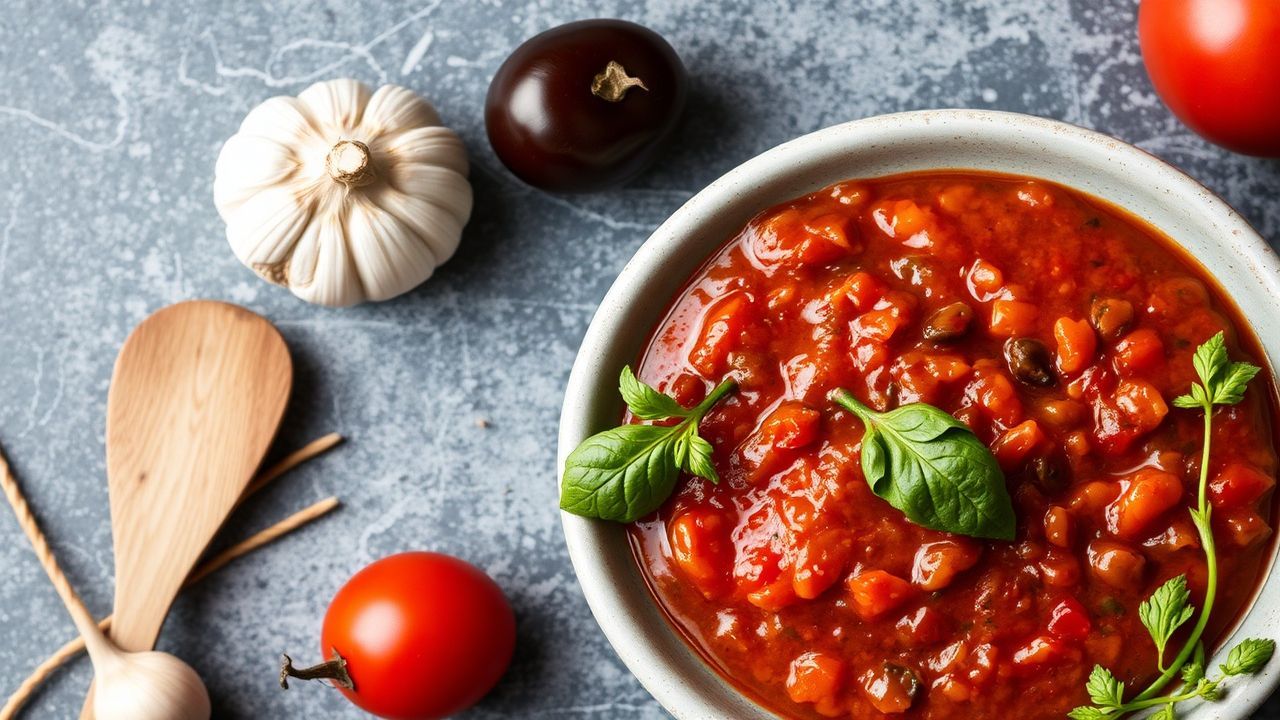

There is something magnetic about the bold, briny punch of puttanesca. It combines salty olives, tangy tomatoes, pungent garlic and a whisper of heat into a compact flavor statement that lifts simple pasta into a memorable meal.
- Quick build: Ready in about 30 minutes using pantry staples.
- Flavor focus: Balance anchovy umami, caper brightness and olive saltiness.
- Make-ahead friendly: Flavors deepen overnight; it stores well in the fridge or freezer.
- Versatile: Works with long pasta, tubes, polenta or roasted fish.
Origins and Flavor Profile
Puttanesca traces to coastal kitchens around Naples, where bold pantry sauces developed to feed hungry households with few fresh ingredients. For geographic and culinary context see Naples.
The sauce emphasizes briny, savory and slightly spicy notes rather than herb-forward sweetness. For a concise cultural reference on the dish itself, review Spaghetti alla puttanesca.
Prep and Cook Time
Prep Time: 10 minutes. Prep focuses on slicing garlic, chopping olives and rinsing capers so they release less brine. Organized mise en place speeds the 30-minute total and reduces last-minute adjustments.
Cook Time: 20 minutes. The method uses short simmering to meld flavors while preserving tomato brightness. Keep the heat moderate and adjust as the sauce reduces.
Yield
This recipe yields enough sauce for four generous servings of pasta. If you pair it with a protein or vegetables, it will stretch to feed more people without losing intensity.
Leftovers compress flavor and make efficient lunches. Store in an airtight container and reheat gently to preserve texture and aromatics.
Difficulty Level
Intermediate. The steps read simple, but timing and heat control determine whether garlic stays sweet or turns bitter. Attention to these small details produces a clean, layered sauce.
Familiarity with basic sauté technique and an understanding of salt balance will make execution easier. These skills reward you with consistently bold puttanesca results.
Ingredients
Use quality pantry items. The recipe relies on a few intense components; sourcing good tomatoes and real anchovy fillets pays off. For background on anchovies and their role, see Anchovy.
Below is the tested ingredient list for a classic puttanesca. Quantities scale easily for larger batches.
- 3 tablespoons extra-virgin olive oil
- 4 cloves garlic, thinly sliced
- 6 anchovy fillets, finely chopped
- 1 teaspoon red pepper flakes (adjust to taste)
- 1 (28-ounce) can crushed tomatoes
- 1/2 cup pitted Kalamata or oil-cured olives, coarsely chopped
- 3 tablespoons capers, rinsed and drained
- 1 teaspoon dried oregano
- Freshly ground black pepper, to taste
- Salt, sparingly — anchovies and capers supply much of the salt.
- 1/4 cup fresh parsley, chopped
- 1 pound spaghetti or linguine, cooked al dente
Ingredient Substitutions and Notes
Vegetarian swap: replace anchovies with 1 tablespoon miso dissolved in a tablespoon of warm water. That preserves umami without overt fishiness. Alternatively, add an extra handful of olives for savory depth.
If you use oil-packed anchovies, drain them well. For a milder base, halve the anchovy quantity and rely more on olives and capers for savory balance.
Instructions
Follow a clear sequence: flavor the oil, build umami, introduce tomatoes, then add briny components near the end. This order preserves texture and aromatic lift. Keep all steps on moderate heat unless noted.
Work with moderate heat throughout. Avoid scorching garlic; remove from heat if it browns too quickly. Use a wide skillet so olives and capers distribute evenly.
- Heat the oil. Warm the olive oil in a large skillet over medium heat until it shimmers. Add the sliced garlic and sauté until fragrant and just golden, about 1–2 minutes.
- Add anchovies and red pepper flakes. Stir continuously until the anchovies dissolve into the oil, about 2–3 minutes. The anchovy melt creates an umami-rich base for the sauce.
- Pour in the crushed tomatoes. Stir to combine and bring to a gentle simmer. Cook uncovered for about 10 minutes to reduce excess water and concentrate flavor.
- Stir in olives, capers and oregano. Simmer another 4–6 minutes so briny ingredients distribute evenly without becoming mushy.
- Taste and adjust. Add freshly ground black pepper and only a pinch of salt if needed. Remove from heat and stir in chopped parsley for brightness.
- Toss with pasta. Drain pasta reserving a small cup of cooking water. Add pasta to the sauce and toss; use reserved water to loosen the sauce if it clings too tightly.
Chef’s Notes: Tips for Success
Small technique choices influence final balance: moderate heat preserves garlic sweetness, and short simmering keeps tomato brightness. Choose whole crushed tomatoes rather than pre-seasoned sauce for precise control.
High-quality canned tomatoes produce the best base. For texture, swipe a wooden spoon across crushed tomatoes to break any large pieces while the sauce simmers.
When possible, use oil from oil-packed anchovies sparingly because it can be intensely salty. Taste as you go and adjust olives or capers rather than adding extra salt.
Storage, Make-Ahead and Safety
Store cooled puttanesca in an airtight container in the refrigerator for up to five days. Label containers with date and reheat gently to avoid breaking the sauce.
Freeze in portioned freezer-safe containers for up to three months. Thaw overnight in the refrigerator before reheating on the stovetop to preserve texture and aroma.
Serving Suggestions
Serve over al dente spaghetti or linguine so the long strands capture sauce pockets. Garnish with chopped parsley and optional grated Pecorino Romano for savory contrast.
For variety, use the sauce over rigatoni, polenta, or roasted fish. A crisp green salad and crusty bread complement the dish and add textural contrast.
Nutritional Snapshot
The following values approximate a single serving when paired with pasta. Values vary by brand and portion size; adjust as needed for dietary goals.
Per serving (estimate): Calories 450; Protein 14g; Carbohydrates 62g; Fat 12g. Sodium will be higher due to anchovies and capers, so monitor if you limit salt.
Serving Variations and Pairings
Puttanesca scales well. For a lighter plate, serve smaller portions of pasta with a larger portion of roasted vegetables topped with sauce. For a richer meal, add sautéed shrimp or grilled chicken.
Pair the sauce with a medium-bodied red or a crisp white. Additionally, try the sauce spooned over grilled polenta or baked eggplant for regional variations of the same flavor profile.
FAQ
What exactly is puttanesca and where did it originate?
Puttanesca is a tomato-based sauce that emphasizes briny, umami-rich ingredients like anchovies, olives and capers. Culinary historians link the recipe to Naples and nearby coastal towns where pantry-driven sauces were common.
The dish reflects a resourceful cooking tradition that highlights bold preserved ingredients rather than fresh herbs alone.
Can I make puttanesca without anchovies?
Yes. Omit anchovies and substitute 1 tablespoon miso dissolved in warm water, or add an extra handful of olives. The resulting sauce will taste more olive-forward but retain the salt-acid balance.
Another option is to use a small piece of Parmesan rind while simmering to add depth without fish flavor.
How do I prevent bitter garlic when sautéing?
Sauté garlic on medium heat and remove the pan from direct heat if slices brown too quickly. Thin, even slicing and immediate stirring reduce the risk of scorching.
Alternatively, mince garlic for faster integration or slice thicker for sweeter, slower-cooked aromatics.
Does puttanesca improve with time?
Yes. Refrigerated puttanesca often tastes better the next day as flavors meld. Reheat gently and refresh with fresh parsley or a drizzle of extra-virgin olive oil just before serving.
Freezing preserves the sauce for months, though fresh herbs are best added at serving time after thawing.
What pasta shapes work best with puttanesca?
Long strands like spaghetti and linguine are traditional because they wrap and carry sauce well. Short tubular shapes such as rigatoni also work because they trap olive and caper bits inside.
For baked dishes, use rigatoni or penne so the sauce fills the tubes and yields pockets of briny flavor.
See also: For broader context on Mediterranean ingredients, consult Olive and Capers articles.
See also: puttanesca