
Bresaola rewards precision and patience. This air-dried beef, rooted in northern Italian practice, becomes deeply flavored through measured curing and controlled drying.
- At a glance: Proper salt ratios and steady humidity produce tender, safe bresaola.
- Lean cuts like the eye round yield consistent drying and a silky texture.
- Monitor weight loss; about 25–35% loss signals readiness for many recipes.
- Home curing is achievable with simple tools: scale, hygrometer, thermometer and airflow control.
Origins and What Defines Bresaola
Bresaola comes from the Valtellina valley and has a distinct profile of lean meat, gentle seasoning, and long, cool drying. The technique differs from fattier cured products because it relies on lean-muscle transformation rather than fat maturation.
To understand the historical context and technical classification, consult the Bresaola entry on Wikipedia for verified background. For regional context, also review the Valtellina page.
Prep and Time
Plan the timeline before you begin: active preparation takes under an hour, curing ranges 7–10 days, and air-drying typically lasts 3–4 weeks in a controlled setup. Some artisans extend drying to 6–8 weeks for a firmer profile, but longer aging increases risk unless conditions remain stable.
Temperature and humidity determine speed. Refer to the principles of food preservation and methods like cold curing on the curing (food) page to refresh technique fundamentals.
Yield and Difficulty
Expect roughly 1.0–1.5 pounds (450–700 g) of finished bresaola from a 2.5-pound (1.1 kg) eye round, depending on weight loss target. Achieving consistent results requires attention to detail and simple instrumentation.
Label this project as advanced-intermediate. You can perform it at home with the right controls, but you must respect hygiene, salt math, and airflow to avoid spoilage.
Ingredients
Select a single, uniform muscle like the eye of round to ensure even drying and predictable curing rates. Trim excess fat and silver skin, leaving a thin protective layer if you prefer a slightly softer exterior.
Use coarse kosher salt and a balanced rub; sugar, juniper, and black pepper complement beef without masking it. These choices influence microbial control and flavor development in predictable ways.
- 1 whole eye round beef, approx. 2.5 lb (1.1 kg), trimmed
- 150 g kosher salt (adjust by weight and surface area)
- 2 tbsp sugar (optional, balances salt)
- 1 tbsp freshly ground black pepper
- 1 tbsp crushed juniper berries
- 1 tsp dried rosemary, crushed
- 1 tsp dried thyme
- 2 cloves garlic, minced
- Cheesecloth or muslin for wrapping
- Butcher’s twine for tying
Instructions
Follow a clear sequence: trim, rub, cure, rinse, wrap, and dry. Each stage affects moisture, microflora, and texture; skip none.
Keep a written log: dates, weights, temperatures, and observations. The log proves invaluable if you adjust techniques between batches.
- Selecting and trimming: Pick an eye round with minimal fat and consistent grain. Trim silver skin and any uneven edges to avoid pockets that dry unevenly.
- Prepare the curing rub: Combine salt, sugar, juniper, black pepper, rosemary, thyme, and garlic. Use a bowl and measure by weight for repeatability.
- Apply the cure: Massage the rub over every surface, pressing to improve contact. Place the meat in a non-reactive container and refrigerate.
- Cure in refrigeration: Maintain 34–38°F (1–3°C) and turn the meat every 24 hours. Cure 7–10 days depending on thickness; the interior should firm up but not harden completely.
- Rinse and dry: Rinse under cold water to remove excess salt, then pat dry. Air-dry in the fridge on a rack for 24 hours to develop a slightly tacky pellicle.
- Wrap and tie: Wrap in cheesecloth and secure with twine. The wrap holds shape while allowing evaporation and some airflow.
- Hang to dry: Hang in a space at 55–60°F (13–16°C) with ~65–75% relative humidity and gentle airflow. Check weekly for even drying and surface condition.
- Check readiness: Target roughly 25–35% weight loss. The meat should be firm, slightly yielding to the press, and aromatic.
- Slicing and storing: Slice very thin against the grain. Store wrapped in breathable paper in the fridge or vacuum-seal for longer preservation.
Curing and Drying Details
Salt concentration must reflect surface area and meat weight; measure your meat and scale cure quantities rather than guessing. Use weight change to gauge progress rather than only visual cues.
Humidity and airflow work together. Too much airflow dries the surface fast and traps moisture inside. Too little airflow encourages unwanted molds or uneven drying. A small fan and hygrometer keep conditions steady.
Chef’s Notes
Eye round remains the classic choice because its uniform grain and low fat produce even drying. If you experiment with other muscles, adjust cure time proportionally.
Document every batch. Minor changes in ambient environment alter drying rates and flavor concentration. Over multiple batches you refine your parameters to match your space.
Seasoning variations let you craft signature profiles, but keep total salt consistent for preservation. Small amounts of clove or cinnamon change aromatics dramatically; test small samples before committing to a whole joint.
When in doubt, err on the side of higher hygienic standards: clean work surfaces, sanitized tools, and fresh hands lower risk. Oxygen-limiting wraps are okay after full drying, but never seal meat that still has internal moisture above safe thresholds.
Serving Suggestions
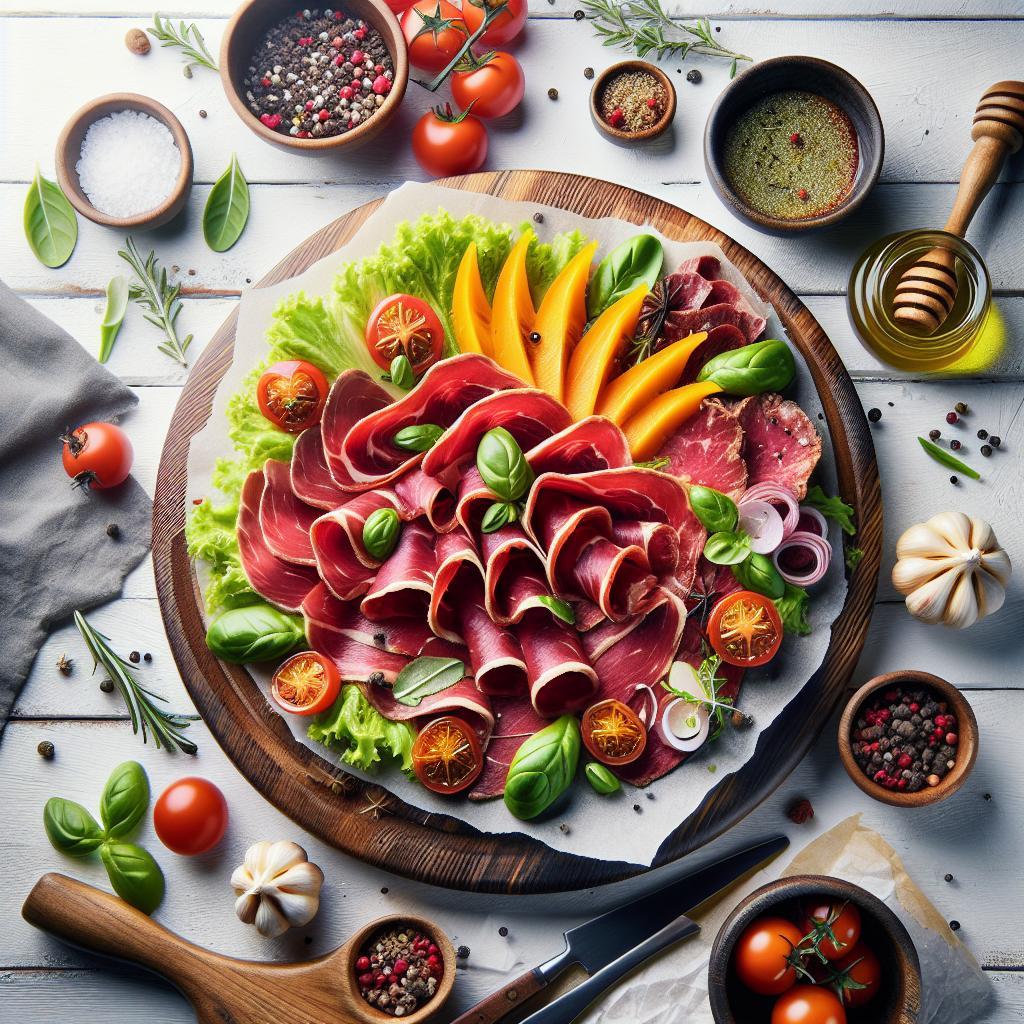
Serve bresaola paper-thin on a board with pepper, lemon, and a drizzle of good olive oil. Pair with arugula and shaved aged cheese for contrast in texture and flavor.
It also performs well in sandwiches, salads, or folded into pasta for a savory accent. Keep presentations simple to highlight the concentrated beef flavor.
Nutritional Snapshot
The lean profile makes bresaola high in protein and low in fat compared with many cured meats. Consider portioning guidelines if you track sodium intake closely.
| Nutrient | Per 100g |
|---|---|
| Calories | 150 kcal |
| Protein | 33 g |
| Carbohydrates | 0 g |
| Fat | 3 g |
Resources and Further Reading
For practical equipment and setup advice, consult our internal guides on curing gear and airflow control. They list entry-level hygrometers and cases for home curing spaces.
Explore our related articles: Charcuterie Basics Guide and Meat Curing Equipment for step-by-step gear lists and troubleshooting. For the science behind drying, see the food drying overview.

FAQ
How long does bresaola take to cure and dry?
Curing typically lasts 7–10 days, depending on thickness. Drying often requires 3–4 weeks under controlled temperature and humidity.
Can I make bresaola at home safely?
Yes, with proper temperature control, weight tracking, and sanitation you can make high-quality bresaola at home. Start small and document variables.
What temperature and humidity should I use?
Maintain a cool range around 55–60°F (13–16°C) and relative humidity near 65–75%. These conditions slow drying and encourage even maturation.
How do I tell when bresaola is ready?
When the meat reaches roughly 25–35% weight loss and feels firm but still slightly yielding, it is usually ready. Taste and texture vary with drying time and seasoning.
What if I see mold on the surface?
White, powdery molds are often harmless and can be wiped away with a cloth dipped in vinegar solution. Colored or fuzzy growths warrant disposal and a review of your drying conditions.
Mastering bresaola means combining precise technique with observation. Keep records, control environment, and refine seasoning in small trials to build repeatable, delicious results.
See also: bresaola