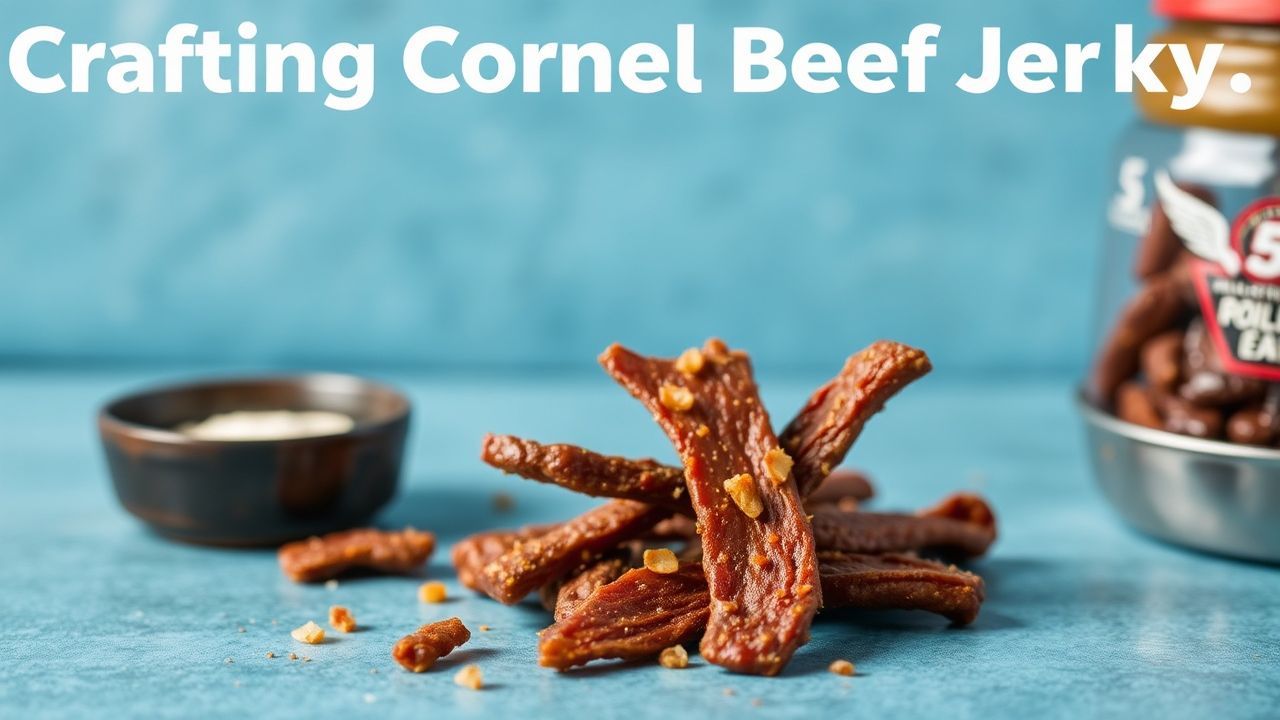

Crafting corned beef jerky turns a classic deli favorite into a sturdy, protein-rich snack that holds flavor and texture on the go. This guide provides practical, tested techniques for selecting brisket, balancing a marinade, and drying to the right chew.
- Choose well-marbled brisket for moisture retention and bite.
- Balance salt and acid to tenderize without over-curing the meat.
- Dry low and slow to reach the bend-and-crack texture that defines jerky.
- Store properly to extend shelf life and preserve flavor.
Prep and Timings
Preparation matters. Allow 20–30 minutes active prep, refrigerate meat in marinade for about 24 hours, and plan for 6–8 hours of drying depending on slice thickness and equipment. These windows produce predictable results when you control variables.
Also, set your dehydrator or oven to a stable low temperature. For food-preservation context, consult the food dehydration basics on food dehydration to understand moisture removal and its effect on shelf life.
Yield and Difficulty
Yield guides planning. Two pounds of trimmed brisket typically yields roughly 8 servings at 3–4 ounces per serving after drying. Expect weight loss of 40–60% from raw to finished product depending on fat trim and water content.
Skill level: intermediate. The process requires knife control, careful timing during marination, and monitoring during drying. Beginners can succeed by following steps precisely and testing small batches.
Choosing the Perfect Cut for Tender Jerky
Select a well-marbled portion of brisket to keep jerky tender after moisture loss. A point cut has more intramuscular fat; a flat cut slices more uniformly. Both work when trimmed and sliced correctly.
Slice against the grain into strips 1/8–1/4 inch thick for balanced chew. For background on the cut and muscle structure, review the brisket entry on brisket to match your expectations for texture and cooking behavior.
Mastering the Marination Process
Marination accomplishes three tasks: seasoning, tenderizing, and surface preservation. Use coarse salt with aromatics like crushed peppercorns and bay leaf; add an acid such as apple cider vinegar or a controlled amount of citrus to help break down proteins.
Keep salt ratios measured: excessive salt cures too strongly and yields an overly salty product. For corned-style flavor, build on the cured taste but avoid re-curing to prevent a gritty result. Use fresh aromatics and refrigerate during marination.
Drying Techniques and Texture Control
Use a dehydrator at 155°F (68°C) or an oven with accurate thermostat control set to the same range. Arrange strips single-layer on racks to allow airflow around each piece. Turn pieces every 2–3 hours to maintain even drying.
Test doneness by bending a piece; it should flex and show small cracks but not snap into pieces. If jerky bends like leather but feels tacky, continue drying. For context on preservation methods and safe moisture targets, see meat curing.
Seasoning Blends and Flavor Profiles
Seasoning complements corned beef’s cured backbone. Start with a base of black pepper, garlic, and a touch of brown sugar to round savory edges. Then layer secondary flavors according to your desired profile.
- Classic Deli: mustard seed, coriander, cracked black pepper.
- Smoky Maple: smoked paprika, maple syrup, garlic powder.
- Asian Fusion: five-spice, soy-equivalent seasoning, ginger, honey.
- Herb Zest: thyme, rosemary, lemon zest for brightness.
Experiment in small bowls before scaling; liquids like maple syrup can caramelize and affect drying time, so adjust drying accordingly.
Ingredients
Keep the ingredient list focused and measurable. Accurate quantities help you replicate results and scale batches predictably. Below are practical, tested amounts for a 2 lb starting brisket.
- 2 lb beef brisket, trimmed and sliced against the grain
- 1/4 cup kosher salt (adjust if brisket is already heavily cured)
- 1 tbsp crushed black pepper
- 4 garlic cloves, minced
- 2 bay leaves, crushed
- 3 tbsp apple cider vinegar or equivalent acid
- 1 tbsp brown sugar or maple syrup (optional)
- 1 tsp smoked paprika or a few drops of liquid smoke (optional)
- Red pepper flakes, to taste
- Water, to cover during marination if needed
Step-by-Step Instructions
Follow these steps with attention to order and timing. Consistency in prep and monitoring produces repeatable, safe results.
- Trim and slice: Remove excess fat and slice 1/8–1/4 inch against the grain for optimal bite.
- Make the marinade: Combine salt, pepper, garlic, bay leaf, vinegar, sweetener, and smoked seasoning in a bowl. Add water only if needed to immerse strips.
- Marinate 24 hours: Submerge strips, refrigerate, and turn periodically to ensure even flavor uptake.
- Preheat dehydrator/oven: Set to 155°F (68°C). Use rack trays for airflow; parchment below can catch drips but avoid overlapping strips.
- Drain and pat: Remove from marinade and pat dry to minimize surface moisture and accelerate drying.
- Dry 6–8 hours: Check and flip every 2–3 hours. Aim for a flexible, crackled test when bent.
- Cool and store: Fully cool before sealing in airtight containers or vacuum bags. Refrigerate or freeze for extended shelf life.
Track your first batch carefully–note times, temperatures, and final texture. These notes become the basis for consistent future batches.
Storage, Safety, and Shelf Life
Proper storage preserves flavor and prevents spoilage. Store finished jerky in airtight jars or vacuum-sealed bags in a cool, dry place for short-term use. For longer storage, refrigerate or freeze.
For an overview of long-term preservation strategies and safety considerations, consult the general principles on food preservation. High-salt or low-water activity products last longer, but always inspect for off-odors, slime, or discoloration before eating.
Serving Suggestions
Serve corned beef jerky as a robust snack on its own or pair it with cheese and pickles for a compact charcuterie option. The jerky’s tang and spice cut through rich cheeses and pair well with crisp apples or rye crackers.
Also, chop jerky into small pieces to add an umami hit to salads and sandwiches. For travel, vacuum-sealed portions keep things tidy and extend freshness.
Nutrition Snapshot
Per serving estimates depend on cut and trim, but a typical 4 oz finished portion provides concentrated protein and calories. Keep portion sizes in mind when planning snacks for active use or hiking.
| Nutrient | Per Serving (4 oz) |
|---|---|
| Calories | Approx. 180 kcal |
| Protein | Approx. 28 g |
| Carbohydrates | Approx. 3 g |
| Fat | Approx. 6 g |
FAQ
Can I use already-corned brisket to make jerky?
Yes. Pre-corned brisket brings a built-in spice profile and salt content. However, reduce added salt and shorten marination to prevent over-curing.
What temperature and time produce safe jerky?
Maintain a stable drying temperature around 155°F (68°C). Typical drying ranges fall between 6–8 hours, but monitor texture. Always cool and inspect before sealing to ensure even dehydration.
How do I avoid jerky that is too brittle or too soft?
Uniform slice thickness and consistent turning during drying prevent spot over-drying. If jerky becomes brittle, decrease future drying time; if too soft, resume drying until the bend-and-crack test passes.
Can I smoke the jerky for extra flavor?
Yes. Cold or hot smoking adds depth but changes moisture-loss dynamics. Use measured smoke exposure and adjust drying time to account for added humidity from smoking.
How long will homemade corned beef jerky last?
Properly dried and sealed jerky will last up to two weeks at room temperature, longer refrigerated, and several months frozen. Always check for changes in color, smell, or texture before consuming.
See also: corned beef