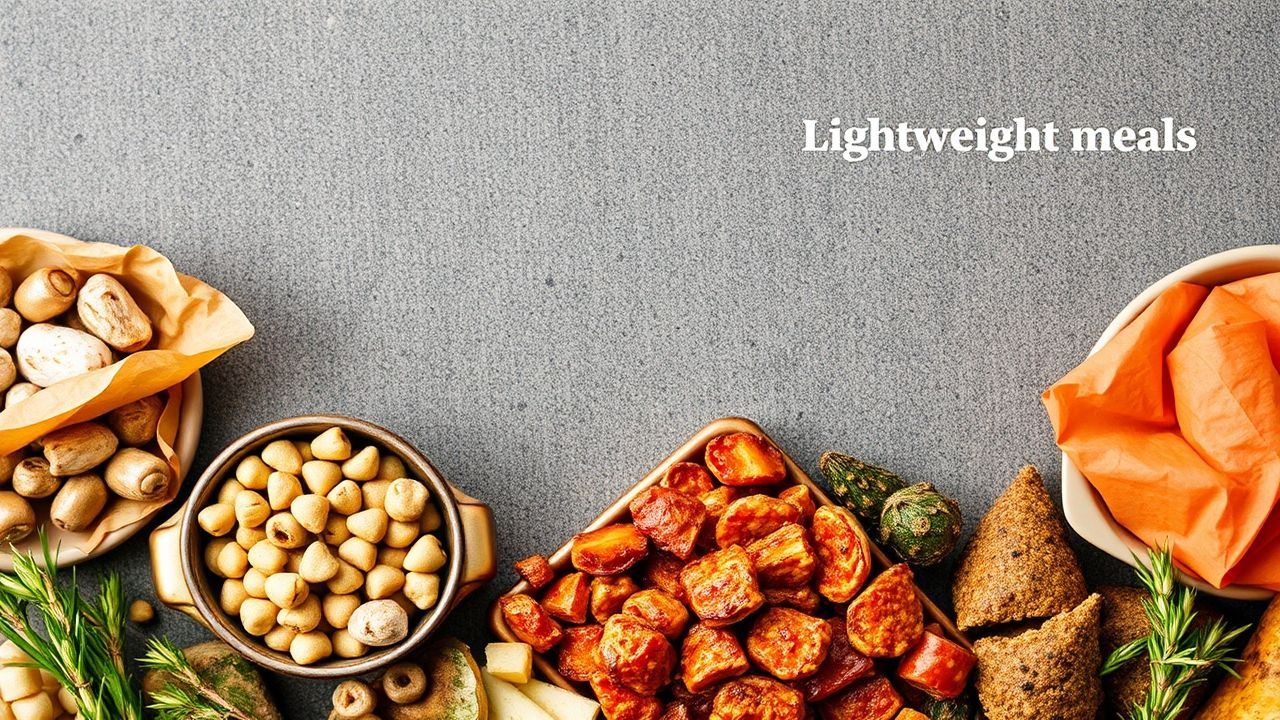

When the trail calls, meal weight dictates range and comfort. This guide shows practical, field-tested techniques for making reliable, nutrient-dense dehydrated meals that save ounces while preserving flavor and food safety.
- Conserve weight: Drying removes water while keeping calories and protein concentrated.
- Control ingredients: You choose sodium, fats, and allergens to match needs on the trail.
- Extend shelf life: Proper drying and barrier packaging store meals for months.
- Rehydrate fast: Matching rehydration method to the meal restores texture and taste.
Choosing Ingredients for Maximum Nutrition and Minimal Weight
Select components that dehydrate well and deliver balanced macronutrients when dry. Focus on lean proteins, whole grains, and dense vegetables that rehydrate with good texture.
Lean cooked chicken, turkey, firm tofu, and concentrated legumes give high protein per ounce in dehydrated meals. For carbs, use cooked quinoa or brown rice for sustained energy and digestive stability on the trail.
Pick vegetables that dry to a chewy or brittle state instead of collapsing. Bell peppers, carrots, and zucchini dehydrate efficiently and return structure when rehydrated.
Add flavor with dried herbs, powdered broth, and dry spice blends rather than wet sauces. Small seasoning packets cut weight while boosting perceived flavor dramatically.
For background on the drying process and historical practice, consult the Food drying entry on Wikipedia: food drying. That page explains the core science that guides safe home drying.
Step-by-Step Guide to Dehydrating Meals at Home
Prepare ingredients for uniform drying: consistent slice thickness and even cooking times produce predictable results. Slice vegetables about 1/4 inch thick and shred proteins so pieces dry at the same rate.
Pre-cook grains and most proteins to reduce microbial risk and improve digestibility. Cool components fully before placing them on trays to avoid steaming and extended drying time.
Arrange pieces in a single layer with airflow paths between items. Use a dehydrator or an oven set to low with an open door for ventilation, and monitor temperatures to avoid overheating or under-drying.
Typical target ranges: 130–145°F for fruits and vegetables and around 155°F for meats. Use a reliable probe or calibrated thermometer to confirm your appliance reads correctly.
Temperature, Time, and Safety
Drying time varies with humidity, slice thickness, and equipment. Expect 6–12 hours for most vegetables; dense proteins and grains often need longer cycles.
Cook meat fully before drying and finish until pieces reach a jerky-like snap. That reduces pathogen risk and yields shelf-stable protein when combined with proper packaging and low residual moisture.
Always perform a break test: pieces should snap or crumble without a moist core. For mixed batches, separate protein trays from vegetable trays so you can match times and temperatures precisely.
When in doubt, err on the side of additional short drying intervals rather than stopping early. Cool the trays in a dry room before testing; trapped heat can hide residual moisture.
Packaging and Storing Your DIY Dehydrated Creations
Package as soon as items reach consistent dryness to lock in shelf life. Use vacuum sealing or high-barrier pouches with oxygen absorbers to minimize oxidative and moisture damage.
Vacuum packaging reduces headspace and insect access; further technical details are available at the Vacuum packing Wikipedia page: vacuum packing. That source helps explain barrier choices for long-term storage.
Portion into single- or two-serving bags for ration control and quick trail use. Label each packet with contents and date to enforce first-in, first-out rotation.
Store packets cool and dark, ideally below 75°F. Higher temperatures accelerate oil rancidity and vitamin loss, so choose a temperature-stable storage area until you take packs on long trips.
Rotate stores every 6–12 months, depending on ingredients and packaging integrity. Periodic checks for off-odors, color shifts, or moisture indicate a compromised seal and signal disposal.
For further context on preservation methods, read the Food preservation entry: food preservation. It covers chemical and physical controls that extend shelf life across many food types.
Rehydration Techniques to Bring Lightweight Feasts to Life
Rehydration changes texture more than drying does, so match your method to the meal. Test methods at home before committing a batch to a long trip.
Hot soak works well for most dehydrated meals: pour boiling water into the pouch, seal, and steep 10–20 minutes. That conserves fuel and delivers a fast, uniform rehydrate.
For heartier blends, simmer briefly in a pot with added bouillon to rehydrate grains and soften proteins more thoroughly. Simmering restores integrated flavor and reduces chewiness.
Cold-soak saves fuel and works in warm weather. Soak several hours or overnight; legumes and dense grains need longer. Expect slightly chewier textures compared with hot rehydration.
Recipe Template: Mixed Chicken & Quinoa Trail Bowl (Yield: 4)
This template balances protein, carbs, and vegetables to keep energy and satiety steady on the trail. The recipe scales cleanly and performs well in most dehydrators.
- 2 cups cooked chicken, shredded
- 1 cup cooked quinoa
- 1 cup sliced carrots
- 1 cup diced bell peppers
- 1/2 cup chopped spinach
- 1/4 cup chopped onion
- 1 tbsp olive oil
- 1 tsp garlic powder, 1 tsp dried thyme
- Salt and pepper to taste
Mix cooked, cooled ingredients with oil and seasonings. Spread a thin, even layer on trays and dehydrate at roughly 135°F for 8–10 hours, checking and stirring midway.
When pieces snap or crumble without visible moisture, cool fully and package in vacuum pouches with oxygen absorbers. Rehydrate with boiling water and steep 10–15 minutes before stirring.
Quinoa is a high-protein grain that stands up well in dehydrated meals; see the Quinoa page for botanical and nutritional background: quinoa.
Chef Notes and Variations
Swap turkey, tofu, or powdered eggs for protein variation. Freeze-dried cheese adds calories and flavor without adding moisture risk.
Test small batches when you change ratios or ingredients. Different dehydrator models and home ovens vary, so trial runs reduce waste and let you dial in texture.
For additional recipes and community-tested techniques, check related posts on our site: dehydrated meals tag and our practical dehydrator buyer’s guide: dehydrator guide.
Prep Planning, Yields, and Nutrition
Active prep time runs about 30 minutes, with dehydration spanning 8–12 hours depending on load and humidity. Rehydration typically requires 10–20 minutes by hot soak or a brief simmer.
A standard four-serving batch from the template yields roughly 320 kcal per serving with about 28 g protein, 20 g carbs, and 8 g fat. Adjust portions to meet individual calorie targets on the trail.
Keep a simple log of batch weights before and after drying to learn your appliance’s efficiency. That data helps you plan resupply points and daily calorie targets on multi-day trips.
Field Use and Packing Strategy
Organize meals by day and label packs for rapid access. Keep fuel, utensils, and rehydration water grouped to cut camp setup time at day’s end.
Practice your rehydration routine at home until timing and textures feel predictable. Consistent drying, proper packaging, and tested rehydration are the three pillars that make field meals reliable.
For long-term shelf stability, consider meal composition when planning. Lower-fat, lower-oil blends last longer and tolerate temperature swings better during travel.
FAQ
How long will dehydrated meals last?
Properly dried and vacuum-sealed meals last months to a year, depending on fats and storage temperature. Rotate stock and label packs to maintain freshness control.
Do I need a dehydrator or will my oven work?
A dedicated food dehydrator gives better temperature control and airflow for consistent results. An oven on its lowest setting can work if you monitor temperatures and airflow closely.
Can I dehydrate raw meat?
Do not dehydrate raw meat without cooking it first. Pre-cook to safe internal temperatures, then dry until the jerky-like snap to reduce bacterial risk.
How do I rehydrate meals without boiling water?
Cold-soaking works in warm climates or when you have time. Soak several hours or overnight in a sealed container; expect slightly chewier textures than with hot rehydration.
Where can I learn more about preservation and safety?
For technical context on preservation controls and history, review the Food preservation entry: food preservation. For jerky-specific handling, see the Jerky article: jerky.
Recommended Reading:
- Crisp & Sweet: The Ultimate Guide to Dehydrated Apple Chips
- Preserving Fresh Flavor: The Art of Putting Up Tomatoes
- Crunchy Creations: Homemade Granola Using a Dehydrator