
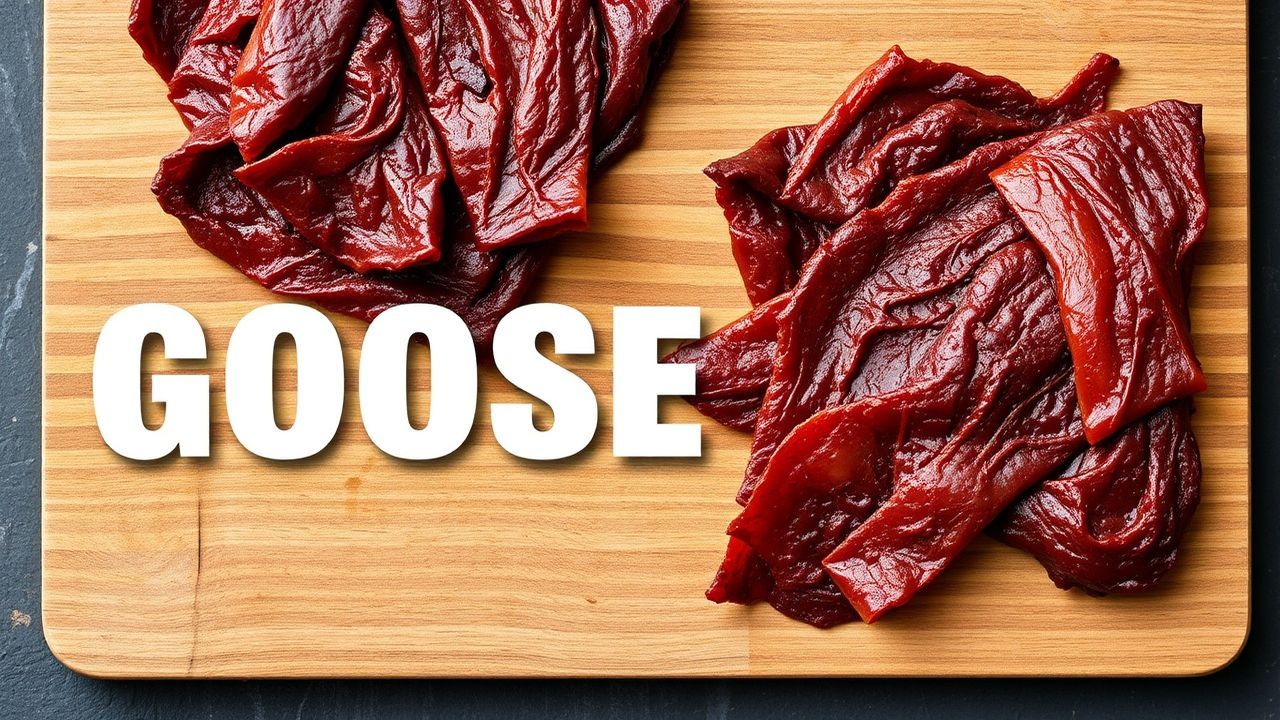

Crafting Perfect Goose Jerky: A Homemade Recipe Guide
There is a deep satisfaction in turning fresh game into shelf-stable snacks. Goose delivers a rich, gamey flavor profile that responds well to careful marinating and low-temperature drying.
- Key texture: slice against the grain for tenderness.
- Timing: marinate 12 hours, dry 6–8 hours at 160°F (71°C).
- Safety: follow low-temp drying and airtight storage.
- Flavor: balance soy, acid, sweet, and smoke for depth.
Prep and Cook Time
Preparation: 20 minutes active work. Prepare the meat and mise en place before you mix the marinade.
Marinating: allow 12 hours or overnight for full flavor infusion. This time also helps with tenderizing the lean muscle.
- Drying: 6–8 hours depending on thickness and method.
Allow extra time for cooling and sealing jars or bags. Cooling fully prevents trapped steam that can shorten shelf life.
Yield
This recipe yields approximately 8 servings, or about 200 grams of finished jerky. Yield varies with slice thickness and final moisture level.
Expect roughly a 60–70% weight loss from raw to dried meat. That estimate helps when planning how much raw breast or thigh to buy.
Difficulty Level
Skill level: medium. You need a sharp knife, basic pantry ingredients, and patience during drying.
Precision matters for safety and texture. Small technique choices—slice thickness and drying time—change the final chew and shelf life.
Ingredients
Gather ingredients before you start. Use fresh, chilled goose breast trimmed of silver skin and visible fat.
Core ingredients below form a balanced marinade that tenderizes, seasons, and helps preserve the jerky.
- 1 lb fresh goose breast, trimmed and thinly sliced against the grain (~1/8 inch)
- 1/4 cup low-sodium soy sauce
- 2 tbsp Worcestershire sauce
- 1 tbsp maple syrup or honey
- 1 tsp smoked paprika
- 1 tsp freshly ground black pepper
- 1/2 tsp garlic powder
- 1/2 tsp onion powder
- 1/4 tsp crushed red pepper flakes (optional)
- 1 tsp kosher salt
- 1 tbsp apple cider vinegar
- 1 tsp liquid smoke (optional)
Instructions
Follow these steps in order for consistent results. Work cleanly and keep raw meat chilled between steps.
Each sub-step gives an explicit cue for texture or time. Use a thermometer where noted to confirm safety and doneness.
Prepare the Meat
Trim fat and connective tissue from the goose breast; fat shortens jerky shelf life. Use a very sharp knife and consider partial freezing for cleaner slices.
Slice the meat against the grain for a tender bite. If you prefer chewier jerky, slice with the grain; either approach is valid depending on texture goals.
Mix the Marinade
Combine soy sauce, Worcestershire, maple syrup, smoked paprika, pepper, garlic and onion powders, crushed red pepper, salt, apple cider vinegar, and liquid smoke. Whisk until homogeneous and aromatic.
Adjust sweetness or acid to taste; small changes alter the final balance. Keep the marinade chilled until you add the meat.
Marinate the Goose
Submerge meat strips fully in the marinade inside a non-reactive container. Cover and refrigerate for at least 12 hours; overnight is preferred for best flavor penetration.
Turn the meat once during marination to ensure even contact. Remove meat from the fridge about 20 minutes before drying so it reaches an even temperature.
Drying: Temperature and Technique
Set a dehydrator to 160°F (71°C) or an oven to its lowest setting around 170°F (77°C). Maintain steady airflow and avoid stacking strips.
Drying time ranges from 6–8 hours. Test doneness by bending a strip: it should bend without snapping and show no wet spots in the center.
Dehydrator vs Oven
A dehydrator gives consistent airflow and exposes meat on trays for even drying. Rotate trays periodically to equalize air exposure.
In the oven, place strips on wire racks over sheet pans and prop the door open slightly to vent moisture. Watch closely and use a thermometer to ensure safe drying temperature.
After drying, cool jerky completely on racks to room temperature. Cooling prevents condensation inside storage bags that can promote mold growth.
Tips for Success in Crafting Perfect Goose Jerky
Choose lean cuts such as breast to avoid excess fat, which oxidizes and shortens shelf life. Trim carefully and discard any dark, viscous pockets of fat.
Slice uniformly for even drying and consistent texture. Use a ruler or guide if you need help keeping thickness consistent across strips.
Rotate trays in a dehydrator and flip strips halfway through to reduce cold spots. Keep a timer and check texture frequently after hour four.
For flavor variations, add cayenne for heat, mustard seed for tang, or a touch of ginger for a bright finish. Small experiments yield large flavor lessons.
Serving Suggestions
Serve goose jerky as a high-protein trail snack or as part of a rustic board. Pair with aged cheeses, tart apple slices, and whole-grain crackers for balance.
For casual entertaining, present jerky in small bowls alongside pickled vegetables and nuts. The salt and smoke cut through richer components and create pleasing contrasts.
Storage and Shelf Life
Store cooled jerky in airtight jars or vacuum-sealed bags. Refrigeration extends shelf life to several weeks; freezing preserves flavor for months.
Label packages with date and batch notes to track freshness. If you notice off-odors, sliminess, or discoloration, discard immediately to avoid foodborne illness.
Nutrition Snapshot
Typical serving provides concentrated protein with low fat when trimmed properly. A 1-ounce serving roughly yields around 110 kcal and about 22 g protein, depending on marinade uptake.
Watch sodium levels if you follow a low-salt diet; soy sauce and curing salts increase sodium content. Adjust the recipe by using low-sodium soy or reducing added salt.
| Nutrient | Per Serving (approx.) |
|---|---|
| Calories | 110 kcal |
| Protein | 22 g |
| Carbohydrates | 3 g |
| Fat | 1.5 g |
Safety and Further Reading
Practice strict hygiene: sanitize surfaces, wash hands, and avoid cross-contamination between raw meat and ready-to-eat items. Low drying temps require attention to time and airflow.
For official guidance on meat handling and safe temperatures, consult the United States Department of Agriculture resources and food-safety pages. These sources provide validated temperature and storage rules that align with home dehydration practices.
Useful background on jerky as a preserved food appears on the jerky and food-drying references linked below. They explain the science behind moisture removal and preservation.
Reference links:
- goose — species and meat characteristics
- jerky — history and methods of preservation
- food drying — dehydration principles and techniques
- smoking (cooking) — smoking techniques for flavor
FAQ
Is goose a good meat for jerky?
Yes. Goose is lean with a strong flavor that stands up to bold marinades. When trimmed and sliced correctly, it produces tender, protein-dense jerky with a gourmet profile.
For more on the bird and its culinary uses, see the linked background on goose.
How long should I marinate goose for jerky?
Marinate at least 12 hours and up to 24 hours for deeper flavor. Avoid much longer times; excessive acid or salt can change texture and make meat mushy.
Rotate pieces once during marination to ensure uniform seasoning throughout the batch.
What temperature is safe for drying jerky?
Dry at approximately 160°F (71°C). That temperature reduces risk by bringing meat surfaces into a holding zone that discourages bacterial growth while removing moisture.
Use an appliance thermometer to confirm your dehydrator or oven maintains steady heat throughout the drying cycle.
How do I store homemade goose jerky?
Cool completely, then place in airtight containers or vacuum-sealed bags. Refrigerate for several weeks or freeze for several months to maintain quality.
Label with production date and batch notes so you can rotate older jars first and monitor shelf life.
Can I experiment with flavors?
Absolutely. Goose jerky accepts a wide range of flavor profiles from sweet-savory to spicy or herbal. Small changes to sugar, acid, or smoke components produce distinct outcomes.
Keep a flavor log with measured changes so you can reproduce your favorite batches consistently.
Final Notes
Goose jerky rewards precise prep and patient drying. Follow times and temperatures, and taste as you learn what thickness and spice balance you prefer.
Make small test batches when you change a variable. That approach saves ingredients and builds reliable technique over time.
See also: Goose jerky