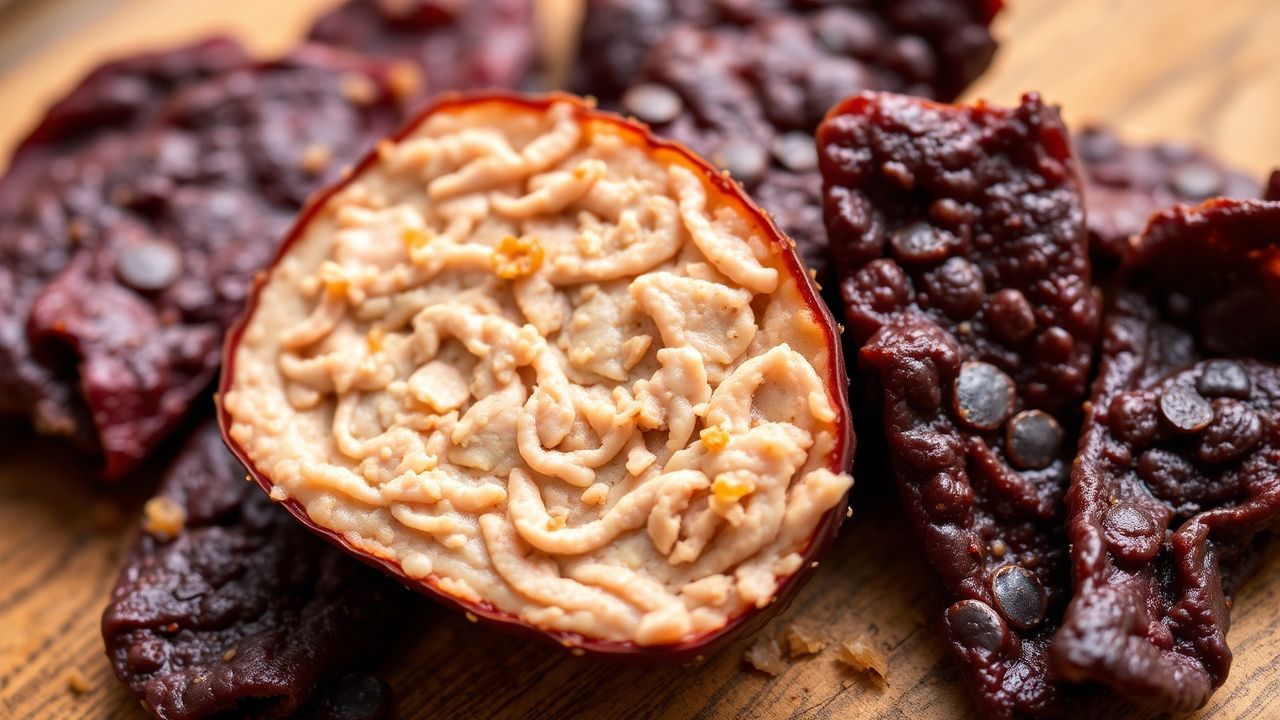

Crafting Savory Ground Turkey Jerky: A Step-by-Step Guide
Savory jerky offers a lean, protein-packed snack that performs well on hikes, workdays, and as a quick protein boost. Ground turkey transforms into a tender, flavorful jerky when you control fat content, seasoning balance, and drying technique.
- Low-fat ground turkey yields the safest, longest-lasting jerky.
- Marinate overnight for even flavor penetration and consistent texture.
- Dry at 160°F (71°C) to reach safe internal temperatures for ground meat.
- Store airtight and refrigerate or freeze to extend shelf life.
Choosing the Right Meat
Select ground turkey that is very lean. Aim for at least 93% lean or higher to reduce spoilage risk and to improve drying uniformity.
Buy fresh from a reputable source or grind whole turkey breast at home to control fat and moisture. For context on poultry and meat handling, see turkey (bird).
Mastering the Marinade Blend to Infuse Deep Savory Notes
A good marinade balances salt, acid, sweet, and aromatics. Use soy for umami, a touch of sweetener for color and mouthfeel, and aromatics like garlic and smoked paprika for complexity.
Mix ingredients thoroughly so the ground meat absorbs them evenly. For background on the condiment profile, refer to soy sauce.
Core Marinade Formula
Ingredients: low-sodium soy sauce, pure maple or brown sugar, minced garlic, smoked paprika, grated ginger, black pepper, and onion powder. Adjust salt to taste.
Combine liquids first, then whisk in dry spices to avoid clumping. Refrigerate and rest the mix briefly before adding meat so flavors marry.
Marination Timing and Technique
Marinate ground turkey for 12–16 hours. Overnight marination allows salt and acids to penetrate all protein particles evenly.
Gently mix to coat without overworking the protein. Excessive handling creates a dense texture that reduces tenderness after drying.
Shaping and Drying Techniques for Perfectly Chewy Jerky
Shape the marinated meat into uniform strips or sheets roughly 1/8 to 1/4 inch thick. Consistent thickness ensures even drying across the batch.
Press tightly to remove air pockets. Use parchment-lined trays or jerky templates for steady shapes and predictable drying times.
Oven vs. Dehydrator
Both work when you manage airflow and temperature. Dehydrators deliver consistent low heat and circulation, while ovens require a wire rack and a slightly cracked door for moisture escape.
Reference general drying methods at food drying to understand the principles behind moisture removal and preservation.
Temperature and Time Control
Set drying temperature to 160°F (71°C) when working with ground turkey. This target ensures pathogen reduction in ground meat.
Expect 4–6 hours for most ovens and dehydrators. Check for pliability—jerky should bend without snapping to avoid over-drying.
Ingredients, Measurements, and Equipment
Use one pound (450 g) ground turkey, 1/3 cup low-sodium soy sauce, 2 tbsp maple syrup, 2 cloves minced garlic, 1 tsp smoked paprika, 1 tsp grated ginger, 1/2 tsp black pepper, and 1/2 tsp onion powder.
Optional: 1/4 tsp red pepper flakes or 1 tsp smoked salt for a deeper smoke note. For consistent results, a digital probe thermometer and an accurate oven/dehydrator with thermostat control are essential.
Essential Tools
Have a reliable scale, mixing bowl, spatulas, parchment paper, wire racks, and airtight storage containers on hand. A vacuum sealer adds convenience for long-term storage.
If you want step-by-step appliance guidance, consult the internal dehydrator guide: Dehydrator Guide. For related recipes, see Healthy Homemade Beef Jerky.
Step-by-Step Instructions
Combine all marinade ingredients in a medium bowl. Whisk until sugar dissolves and spices are suspended evenly.
Add the ground turkey and fold gently until the mixture looks homogeneous. Cover and refrigerate 12–16 hours for best flavor uptake.
Shaping
Line a baking sheet with parchment. Press the marinated turkey into even strips or a flat sheet about 1/4 inch thick.
Use a ruler or template to keep strips consistent. Inconsistent thickness causes staggered drying and textural problems.
Drying
Preheat oven or dehydrator to 160°F (71°C). Arrange trays with space for airflow and rotate trays if needed for even drying.
Dry 4–6 hours. Test pieces for pliability; properly dried jerky will be firm but still flexible without a brittle snap.
Storage, Shelf Life, and Serving
Cool jerky completely on wire racks to room temperature before packaging. Trap-free cooling prevents condensation in containers.
Store in airtight containers or vacuum-sealed bags. Keep at room temperature for short-term use, refrigerate for a month, or freeze portions for longer storage.
Serving Ideas
Serve as a protein snack or as part of a travel-friendly pack. Pair with pickles, apple slices, or a mustard dip to add acidity and contrast.
Sprinkle toasted sesame or chopped parsley for a visual lift. Small garnishes help elevate simple snacks into an appealing plate.
Food Safety and Troubleshooting
Ground meat requires higher temperature to neutralize pathogens compared to whole-muscle cuts. Drying at 160°F (71°C) addresses that risk effectively.
For authoritative safety context, review food safety guidance on handling and bacterial control.
If jerky turns brittle, reduce drying time slightly next batch. If it remains tacky, extend drying in 15–30 minute increments until pliable and dry to touch.
Control humidity in your kitchen during drying; a humid environment extends drying time and can increase spoilage risk unless compensated for with time or airflow.
After storage, inspect jerky for off-odors, unusual texture, or visible mold. Discard any batch that shows signs of spoilage. When in doubt, err on the side of safety.
Rotate between shelf-stable and frozen storage depending on batch size. Freeze single-serve portions to preserve peak texture and ease of use.
Chef’s Notes & Practical Tips
Lean meat matters: Higher fat increases rancidity and uneven drying. Keep fat low and trim when possible.
Uniformity: A consistent 1/8–1/4 inch thickness produces predictable chewiness and drying times across batches.
Flavor Variations
Experiment with chipotle for smoky heat, cumin for earthiness, or a citrus zest finish for brightness. Maintain salt balance to preserve safety and taste.
For a sweeter glaze, brush with a light maple or honey wash in the last 10–15 minutes of drying to prevent caramel burn while adding sheen.
Nutrition and Yield
A typical serving (approx. 30 g) from this recipe contains about 120 calories and 18 g protein. Fat and carbs remain low when you use lean turkey and minimal sweeteners.
This recipe yields roughly 10 servings per pound of ground turkey. Adjust portions and packaging for planned storage life and use.
FAQ
Q1: Can I use fattier ground turkey for jerky?
Fattier meat increases spoilage risk and shortens shelf life because fat oxidizes and becomes rancid. Using 93% lean or higher reduces those risks.
If you must use a higher-fat grind, cook it briefly to 160°F before drying and expect shorter storage times; otherwise, trim or combine with leaner cuts.
Q2: Do I need curing salt for turkey jerky?
Curing salt (Prague powder) can inhibit botulism and preserve color in long-stored products. For short-term home use, proper drying and refrigeration usually suffice.
When using curing salts, follow measured recipes and safety instructions precisely. Overuse can cause flavor and health issues.
Q3: How do I know when jerky is done?
Jerky is done when it bends and cracks slightly but does not snap into pieces. It should feel dry to the touch and not tacky in the center.
Use short test pieces from the center of the tray to judge readiness; remove and cool samples before final assessment to avoid burns and false readings.
Q4: Can I make jerky without preservatives?
Yes. Proper dehydration, low-fat meat, and refrigeration or freezing act as natural preservation. However, shelf life shortens without curing agents or commercial preservatives.
Label homemade batches with date and use-by recommendations. When in doubt, store in the fridge or freezer to maximize safety and quality.
Q5: What internal links can help me expand jerky skills?
For method variations and related recipes, check the in-site dehydrator resources at Dehydrator Guide and our recipe collection at Healthy Homemade Beef Jerky.
These internal pages offer appliance-specific tips, drying charts, and alternative recipes to expand your jerky repertoire.
See also: turkey jerky