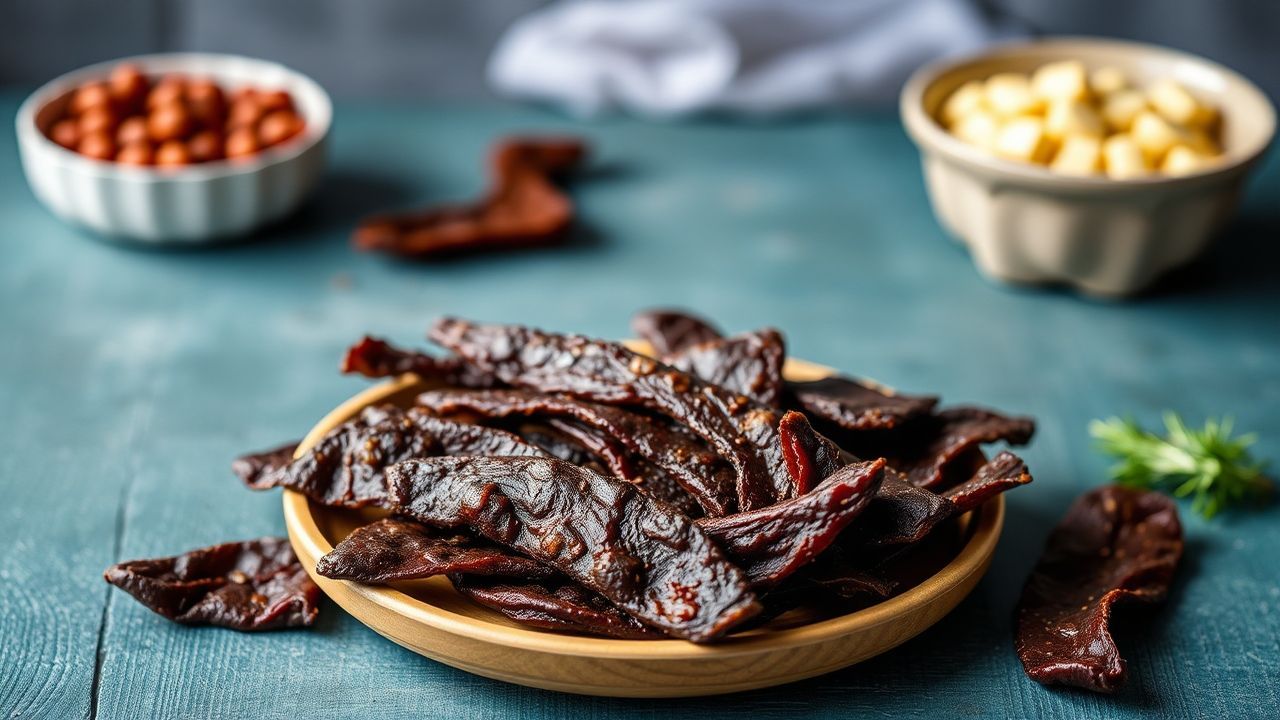

Crafting the Perfect High-Protein Jerky: A Snack Maker’s Guide
High-protein jerky blends concentrated nutrition with portable convenience. This guide shows practical, tested methods for turning lean cuts into consistent, flavorful jerky.
- Key takeaways: Use lean cuts, control drying temp, and balance your marinade for best texture.
- Safety first: Dry to safe temperatures and store airtight to prevent spoilage.
- Customization: Adjust sweetness, smoke, and heat to dial flavor without harming texture.
- Longevity: Proper sealing and refrigeration extend shelf life dramatically.
Overview & Why Jerky Works
Jerky concentrates protein by removing water, which increases protein per ounce and improves portability. The method relies on lean cuts, controlled heat, and salt or acidity to stabilize the meat.
For a concise primer on the product category, see jerky. Additionally, understanding the raw material helps; learn about the primary protein source at beef.
Prep and Cook Time
Preparation: 20 minutes active work, plus 4–24 hours marinating. Marinating infuses flavor and helps tenderize fibers without adding fat.
Drying Time: 4–8 hours based on thickness and method. Consistent thickness ensures even drying and predictable texture.
- Total Time: 5–32 hours
Yield & Difficulty
This recipe yields about eight 2-oz servings from 2 lbs of lean meat. Expect shrinkage: moisture loss concentrates nutrients and reduces final weight.
Difficulty: Intermediate. It requires careful slicing, consistent marinade coverage, and monitoring of drying temperature for best results.
Ingredients
Use lean, well-chilled beef such as top round, eye of round, or sirloin for optimal protein-to-fat ratio. Trim visible fat; fat shortens shelf life and creates off-flavors.
Core ingredients include low-sodium soy, Worcestershire, honey or maple syrup, smoked paprika, garlic and onion powders, black pepper, and optional liquid smoke. For a deeper dive into marination chemistry, consult marinade.
- 2 lbs lean beef top round, partially frozen
- 1/4 cup low-sodium soy sauce
- 2 tbsp Worcestershire sauce
- 1 tbsp honey or maple syrup
- 1 tsp smoked paprika
- 1 tsp freshly ground black pepper
- 1/2 tsp garlic powder
- 1/2 tsp onion powder
- 1/4 tsp red pepper flakes (optional)
- 1 tbsp liquid smoke (optional)
- Cooking spray or parchment for racks
Instructions
Start by trimming all visible fat and slicing the meat to uniform thickness. Cut against the grain for a more tender bite; cut with the grain for chewier texture.
Mix the marinade in a non-reactive bowl and submerge strips completely. Refrigerate for at least 4 hours and up to 24 hours for deeper flavor penetration.
- Trim and slice: Partially freeze the roast for 30–60 minutes to firm the meat for thin, even slices of 1/8″–1/4″.
- Mix marinade: Whisk soy, Worcestershire, honey, spices, and liquid smoke until homogenous.
- Marinate: Place meat in a single layer in a container and refrigerate. Turn pieces halfway through for uniform absorption.
- Dry prep: Pat strips dry to remove surface moisture, which speeds even drying and reduces drying time variance.
- Arrange and dry: Place strips without overlap on dehydrator trays or wire racks over baking sheets. Set dehydrator to 160°F (71°C) or use the oven’s lowest setting and monitor carefully.
- Test doneness: Jerky should be leathery and pliable, not moist in the center. A properly dried strip will bend and show internal color change with no visible wetness.
- Cool and store: Cool completely on racks before sealing into airtight containers or vacuum bags to prevent condensation and mold growth.
Always verify internal temperatures during drying; consistent heat reduces microbial risk while preserving texture. For technical context on dehydration principles, read food drying.
Allow pieces to rest after drying—carryover moisture equalizes and makes final texture more stable during storage.
Drying Methods Compared
A food dehydrator gives precise airflow and temperature control, producing consistent results for multiple trays. Dehydrators designed for meat typically maintain safe temperatures without hot spots.
An oven can substitute but requires circulation and frequent checks. Use the lowest stable setting and prop the door slightly for airflow if recommended by your oven’s manual.
Dehydrator Best Practices
Load trays with space between pieces to allow even airflow. Rotate trays if your unit shows uneven drying patterns to standardize finish time.
Use a reliable thermometer or the dehydrator’s calibrated probe to maintain 160°F (71°C) for initial pathogen control, then continue at lower temps to finish texture.
Oven Technique Tips
Set the oven to its lowest setting and use a rack over a sheet pan to allow circulated air. Monitor frequently to avoid over-drying; ovens tend to run hotter than indicated.
If your oven lacks a low enough temperature, use intermittent heat with longer time and short cooldown periods while checking moisture progress.
Storage & Safety
Store jerky in airtight containers, vacuum bags, or sealed jars. Cool the jerky completely before sealing to avoid internal condensation, which promotes mold growth.
For guidance on food handling and safety standards, consult authoritative resources like food safety. Proper handling reduces the risk of spoilage and foodborne pathogens.
- Short term: Refrigerate for several weeks.
- Long term: Freeze for months or vacuum seal with oxygen absorbers for extended shelf life.
After sealing, label packages with date and batch notes. Track humidity and temperature where stored to anticipate quality changes.
Tips for Success
Cut selection: Choose lean muscles like top round or eye of round to minimize fat. Less fat equals longer shelf life and cleaner flavor.
Marinade balance: Keep salt as the backbone for preservation while using sweet and smoky elements to shape flavor. Acidic components help tenderize but don’t overdo them.
Experiment with brine times and ingredient ratios in small test batches before scaling. Small adjustments to sugar or smoke can change drying time and final chew significantly.
Serving Suggestions
Serve jerky alone as a high-protein snack or pair it with sharp cheeses and whole-grain crackers for a balanced portable bite. Combine with nuts and dried fruit for trail mixes that supply fats and carbs alongside protein.
For culinary uses, chop jerky into salads or fold into grain bowls for a savory, concentrated protein boost. Rehydrate quickly in warm broth for flavor-infused additions to soups.
Q&A
Why choose jerky as a high-protein snack? Jerky provides dense protein per ounce, is shelf-stable when handled correctly, and offers a savory, satiating option for active days.
What meats work best? Lean cuts from beef, poultry, or game produce the best texture and longevity. If you use higher-fat meats, trim thoroughly and expect a shorter shelf life.
How long does homemade jerky keep? Properly dried and sealed jerky can last weeks refrigerated, months frozen, or much longer when vacuum-sealed with oxygen absorbers.
Can plant-based options mimic jerky? Yes. Proteins like seitan or textured vegetable protein can accept marinade and dehydration to make plant-based jerky alternatives with strong umami flavor.
In Retrospect
Producing reliable, flavorful jerky depends on consistent slicing, balanced marinades, and controlled drying. Each variable influences chew, safety, and shelf life.
Refine one variable at a time—temperature, thickness, or marinade concentration—to understand its effect. This controlled approach speeds learning and improves results.
| Nutrient | Per 2 oz Serving |
|---|---|
| Calories | 160 |
| Protein | 24g |
| Carbohydrates | 3g |
| Fat | 4g |
For reproducible results, keep a simple log of cut, thickness, marinade ratio, drying temp, and final texture. That log becomes your playbook for repeatable quality.
Quality control and minor documentation make batch scaling and gifting much more predictable.
FAQ
How long should I marinate the meat?
Marinate 4–24 hours depending on desired flavor intensity. Shorter times add surface flavor; longer times penetrate deeper.
Keep meat refrigerated while marinating and turn pieces once during the process to ensure even coverage and absorption.
What is the safest drying temperature?
Begin drying at 160°F (71°C) to reduce microbial load, then continue until the jerky reaches the desired leathery, pliable texture. Use a thermometer to verify temperatures.
Maintain airflow and avoid hot spots; uneven temps create variable moisture pockets that can harbor bacteria.
Can I use a home oven instead of a dehydrator?
Yes. Use the oven’s lowest stable setting and a wire rack for airflow. Monitor closely for over-drying and rotate trays if needed.
If the oven lacks a low setting, use intermittent low heat and frequent checks to avoid tough, brittle jerky.
How should I store jerky for maximum shelf life?
Cool completely, then vacuum-seal or store in airtight containers with oxygen absorbers for the longest shelf life. Refrigerate for weeks and freeze for months.
Label packages with date and batch notes so you can track quality over time and consume oldest-first.
Are there vegetarian or vegan jerky options?
Yes. Textured soy protein, seitan, and mushrooms can be marinated and dehydrated using similar methods. Adjust seasoning to enhance umami and mouthfeel.
Test small batches to balance moisture removal and flavor retention for plant proteins, which behave differently from muscle tissue.
See also: Jerky