
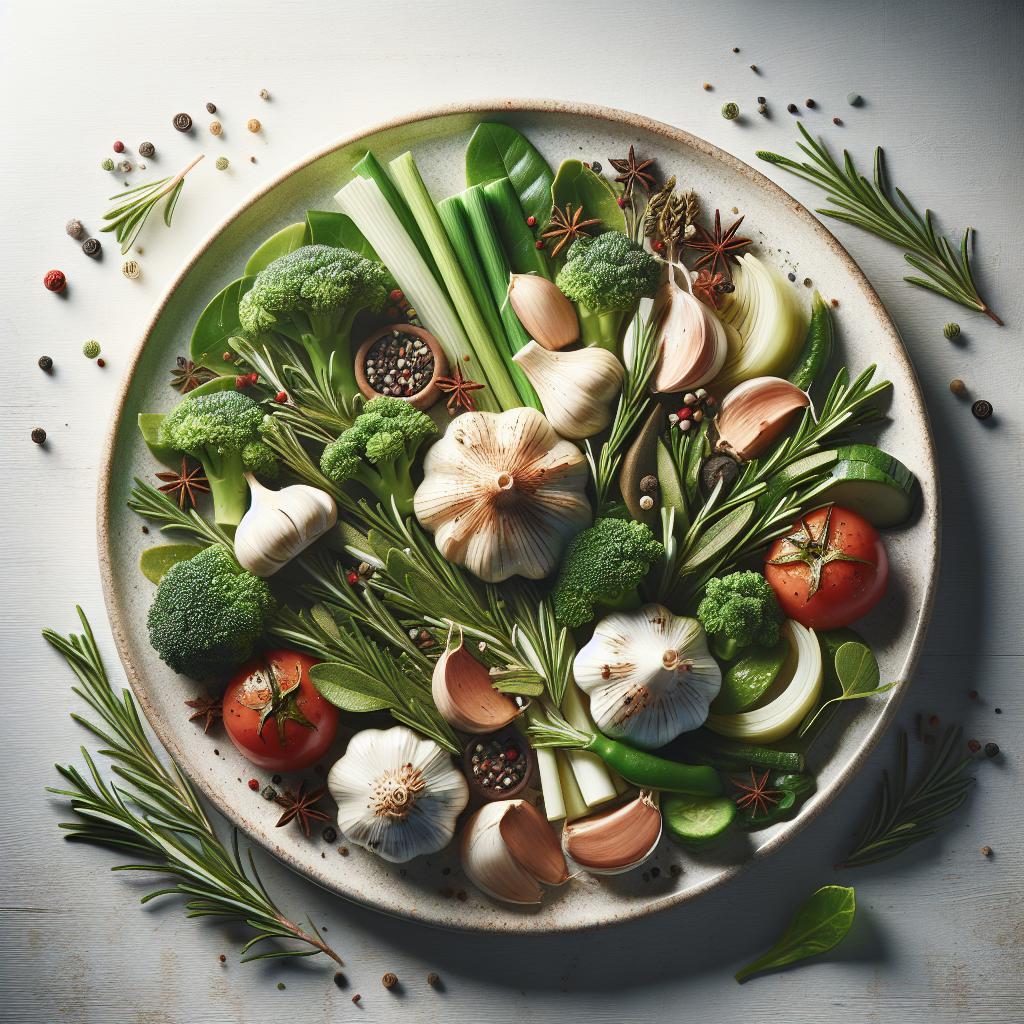

There is real alchemy when a few well-chosen herbs transform a plain broth into something layered and memorable. A well-made bouquet garni adds controlled, clean aroma to stocks, stews, and sauces without leaving stray bits in the finished dish.
- Simple technique: Fresh herbs tied or wrapped yield balanced aroma.
- Versatile tool: Works in stocks, braises, sauces, and even pickles.
- Time-saver: Make batches and freeze for weeks of use.
Choosing Fresh and Aromatic Herbs for Your Bouquet Garni
Select herbs for both backbone and brightness. The classic combination—thyme, bay leaf, and parsley stems—forms a neutral, supportive base that blends with most proteins and vegetables.
Seek herbs that show vibrant color and taut leaves. Avoid wilted stems. Learn how each herb behaves: for example, thyme releases volatile oils steadily during long simmers, while a bay leaf gives top-note warmth without vegetal cloudiness.
Balancing Classic and Unexpected Ingredients
Think of a bouquet garni as a micro-blend. Pair strong, resinous herbs like rosemary sparingly with more delicate elements such as parsley stems to avoid dominance. Use a single rosemary sprig for a long braise; use more for short, robust cooks.
Add small vegetal elements—leek slice, celery strip, or a lightly crushed clove of garlic—for layered texture without loose bits. Bright twists, such as a strip of lemon peel, provide clean acidity that lifts heavy broths.
Wrapping and Securing Your Bouquet Garni
Wrap herbs in a small square of cheesecloth or use a reusable herb sachet for easy removal. Lay stems in the center, fold edges to form a compact packet, and secure with kitchen twine so the bundle stays intact while simmering.
Alternative options include a large tea infuser or a fine mesh bag when cheesecloth isn’t available. These options prevent loose leaves from wandering through your stock while still permitting full flavor extraction.
Incorporating a Bouquet Garni into Various Dishes
Drop the bouquet garni into the pot at the start of cooking for slow-extracted flavor. For stocks and long braises, leave the bundle in for the majority of cooking time; for quicker sauces, 20–30 minutes often suffices.
Remove the bundle before finishing the dish to keep texture clean. You can also use the bouquet to infuse oils or vinegars for subtle herb notes that extend beyond soups and stews.
Prep, Yield, Ingredients and Instructions
Preparation rarely takes more than ten minutes, and a single homemade bouquet usually flavors 4–6 servings of stock or stew. Freeze extras flat in airtight bags for immediate use.
Below are clear, practical lists. Use them as a template and adjust herbs by cuisine and protein.
Ingredients
Core: 4 sprigs fresh thyme, 2 bay leaves, 4 sprigs flat-leaf parsley (stems only). Add a small sprig of rosemary if desired.
Optional: 1 leek slice (white part), 1 celery strip, 1 lightly crushed garlic clove, 1 strip lemon peel, 1 tsp whole peppercorns, cheesecloth, kitchen twine.
Instructions
Lay an 8″ square of cheesecloth flat. Place herbs and aromatics in the center so flavors distribute evenly when wrapped.
Gather corners to enclose contents, squeeze gently, and tie with twine. Place the bouquet in the pot at the start of cooking and remove with tongs or by pulling the twine before serving.
Chef’s Notes and Practical Tips
Use dried herbs when fresh are unavailable, but reduce amounts because dried herbs concentrate flavor. Generally, use half the volume of dried herbs compared with fresh.
Make multiple bouquets at once and freeze them on a tray before transferring to a sealed container. This produces ready-to-go flavor packets that reduce waste and speed weekday cooking.
Serving Suggestions and Pairings
Serve soups and stews finished with a scatter of fresh herbs and a drizzle of quality olive oil for contrast. Rustic breads or crusty toasts make excellent companions to herb-forward broths.
For sauces, strain the bouquet before reduction. The clarified liquid magnifies herbal notes without scattering textures across the final sauce.
Tools, Storage and Small-Batch Production
Tools are modest: a kitchen twine, scissors, cheesecloth or reusable sachets, and tongs for extraction. These keep the technique accessible for any home cook.
Store fresh bouquets wrapped lightly in damp paper in the fridge for up to two days. For longer storage, freeze individual bundles flat in a single layer then transfer to a sealed freezer bag to maintain potency.
Explore more related guides on our site for complementary techniques like homemade herb blends and detailed herb storage techniques to extend shelf life and flavor.
FAQ
What is a bouquet garni and how does it differ from an herb sachet?
A bouquet garni is a tied bundle of fresh herbs used to flavor liquid-based dishes without leaving loose matter behind. An herb sachet typically refers to the same concept but may emphasize dried herbs or spices in a porous container for infusion.
Both achieve the same goal: easy removal and clear texture while extracting aromatics into the cooking liquid.
Can I use dried herbs in a bouquet garni?
Yes. Use roughly half the amount of dried herbs compared to fresh. Wrap them the same way in cheesecloth or a small bag so they don’t disperse into the dish.
Dried herbs release more quickly and at higher concentrations, so check flavor earlier in the cooking process to avoid overpowering dishes.
How long should a bouquet garni simmer?
For stocks and long braises, allow the bouquet to simmer most of the cooking time to extract steady flavor. For lighter soups or quick sauces, 20–45 minutes is usually sufficient.
Stop the infusion when the aroma matches your intention. Over-long exposure can lead to harsh or bitter notes from some herbs.
Can I reuse herbs from a cooked bouquet garni?
After cooking, herbs have released most of their oils and generally lack fresh flavor. Compost them or dry the remnants for non-critical seasonal use, but do not expect the same potency for a second cooking.
Instead, prepare a fresh bundle for each major cooking session; frozen pre-made bundles provide convenience without quality loss.
Where can I learn more about the history and variations of bouquet garni?
For historical context and culinary variations, see the encyclopedic entry on the bouquet garni. For deeper herb profiles, consult pages on parsley and rosemary.
Those sources help connect classic technique with modern adaptations and regional uses.
See also: bouquet garni