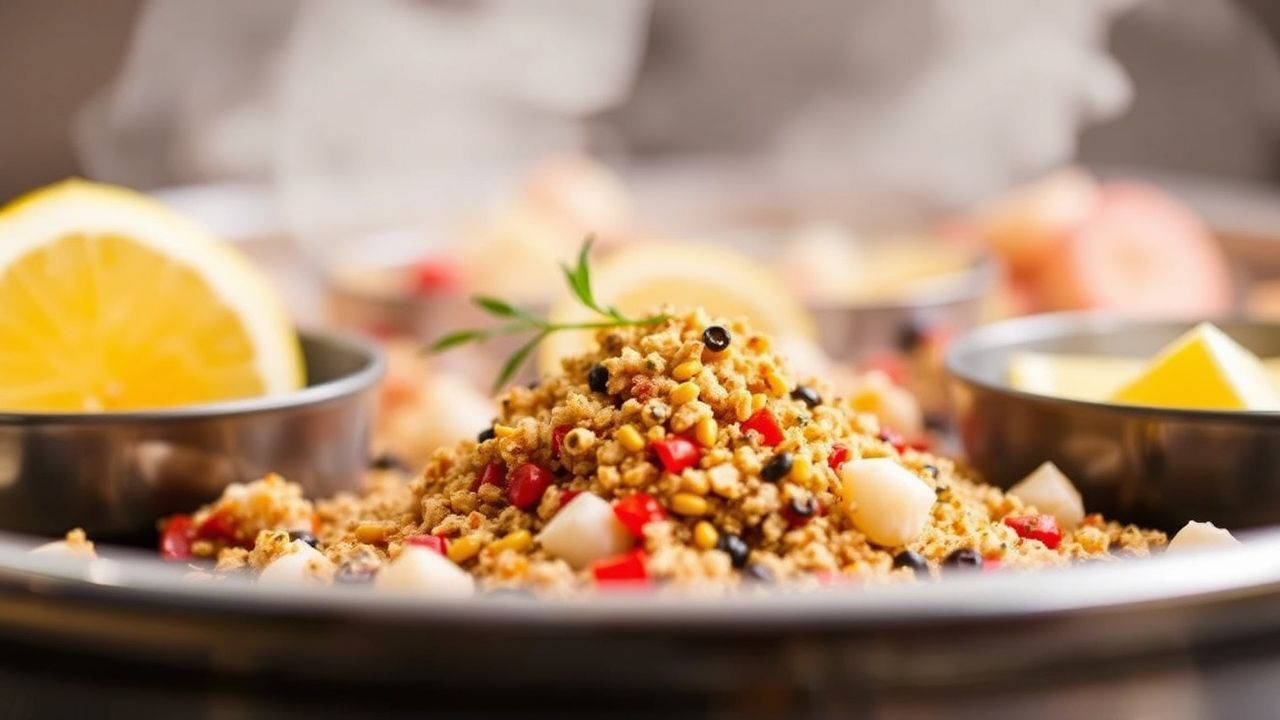

seafood seasoning anchors every great boil and coastal feast. A well-built seafood seasoning blend lifts shellfish sweetness, frames butter and smoke, and keeps every bite balanced.
- Balance smoke, heat and acid — smoked paprika, cayenne and lemon zest form a classic triad.
- Use texture deliberately — toasted mustard seeds and celery salt add crunch and saline lift.
- Rest the mix 24 hours so volatile aromatics marry and mellow for a clean finish.
- Dose conservatively first and adjust after cooking for layered flavor control.
Why the right seasoning matters
A carefully calibrated seafood seasoning preserves the natural sweetness and delicate texture of shellfish rather than masking it. A good blend creates aroma and mouthfeel that prepare guests for the first bite.
When you get the ratio of smoked, spicy and bright elements correct, every component on the table tastes cohesive and intentional. For background on the ingredient category, see seafood.
Core ingredients and how they behave
Each component in a seafood seasoning plays a functional role: color and smoke, clean heat, savory backbone, texture and acid. Treating each class of ingredient correctly preserves those roles through cooking.
Below I break down the most impactful components and short handling notes so you can adapt the mix to shrimp, crab, lobster or firm white fish.
Paprika: color and smoke
Smoked paprika supplies red color and rounded smoke without aggressive heat. It forms the visual and flavor base for many coastal-style blends.
Use a quality paprika and avoid prolonged high heat; over-toasting dissipates attractive oils and produces bitterness.
Cayenne: controlled heat
Cayenne delivers capsaicin-driven heat with minimal sweetness, so it disperses evenly and lets you dial the spice precisely. Small changes in volume create noticeable shifts in perceived heat.
Measure conservatively and test on a small portion. If you want immediate, sharp fire, add a fraction of freshly ground chili at the finish.
Garlic and onion powders: backbone umami
Powdered garlic and onion deliver savory depth that mimics a buttered finish and dissolves into sauces. They help the blend read as savory rather than solely spicy.
Prefer fine powders for a smooth texture when you want even seasoning across shells and meat. For ingredient context, consult garlic.
Mustard seed and celery salt: texture and lift
Toasted mustard seeds pop and add nutty, piquant notes; celery salt contributes vegetal saline that complements shellfish brine. Both bring a sensory contrast to soft seafood textures.
Toast mustard seeds briefly and crush lightly to preserve crunch. Keep celery salt moderate when you plan to use salted butter or brined seafood.
Lemon zest: finishing acid
Fresh lemon zest brightens a buttery boil and cuts perceived richness without adding liquid acid. Zest supplies volatile citrus oil that reads as freshness on the palate.
Zest right before combining and fold in after spices cool. For a reference on citrus, see lemon.
Step-by-step blend: technique and timing
Technique matters as much as ingredients. Work in three phases: toast, combine, rest. Each phase improves aroma and integration.
For predictable results, measure by weight when possible. If you prefer teaspoons, follow a template ratio and adjust to taste across batches.
Toast whole seeds and critical spices
Toast mustard seeds or whole peppercorns over medium heat until they emit a nutty aroma. Move them constantly; a few seconds too long produces acrid compounds.
Cool seeds before crushing in a mortar or spice mill. Keep a portion lightly crushed for texture and another more finely ground for even distribution during a boil.
Combine dry ingredients correctly
Start with a template ratio: smoked paprika 2 parts, garlic and onion powder 1 part each, herbs 1 part, heat 1/2 part. Whisk powders thoroughly to avoid pockets of heat.
Add citrus zest and dried herbs last to protect delicate oils and color. Store the finished mix in an airtight container to avoid moisture pickup.
[NOTE: The next callout is an embedded expert tip separated from the warning block below.]
Rest and store for best results
After mixing, move the blend to an airtight jar and rest it 24 hours. Resting lets volatile aromatics equilibrate and reduces sharp heat peaks for a rounder flavor.
Store in a cool, dark pantry. Use within three months if you include bright citrus; otherwise the mix keeps well up to six months when stored correctly.
Cooking with the blend: dosing and methods
How you apply the seafood seasoning affects the final result. You can add it to boiling water, toss it with butter post-boil, or rub it onto raw proteins before searing.
Each method gives distinct control: boiling extracts and mildly infuses, butter-tossing concentrates flavor on the surface, and rubbing produces a crusted exterior when seared.
Recommended dosing
Use 2–3 tablespoons of seasoning per pound for a bold boil. Scale down for delicate fish and scale up for crab or lobster, which can handle a stronger profile.
When unsure, under-season by about 20% and adjust after cooking. You can always add more at the finish but you cannot remove an excess once it has been cooked into the food.
Serving and pairing ideas
Toss cooked seafood with melted butter blended with 1–2 tablespoons of seasoning per stick of butter for a glossy, even coating. Serve with lemon wedges for fresh acid at the table.
Pair with sides that echo the seasoning: charred corn dusted lightly with the mix, roasted new potatoes, or crusty bread to sop up sauce. For crunch, finish with toasted peanuts or fried garlic chips sparingly.
Nutrition and practical notes
The seasoning adds negligible calories but contributes sodium depending on celery salt and added salt. Reduce celery salt or use a low-sodium alternative to meet dietary needs.
Portioning by the tablespoon gives a quick sense of label values and helps control sodium per serving when you scale the recipe.
Implementation checklist
To build a reliable seafood seasoning, follow this checklist: pick a smoked paprika base, measure heat in small increments, toast seeds selectively, and rest the mix. Keep notes on ratios so you can replicate winning batches.
Track changes between batches: adjust mustard seed count for texture, tweak cayenne for heat curve, and swap lemon for lime when you want a sharper finish. Small, measured changes yield repeatable improvements.
FAQ
How long does homemade seafood seasoning stay fresh?
Stored airtight in a cool, dark place, a dry spice blend stays flavorful for three to six months. Blends with fresh zest should be used within three months for peak brightness.
Can I use this blend for other proteins?
Yes. This seafood seasoning pairs well with roasted vegetables, grilled chicken and even popcorn. Adjust heat and salt to suit the target ingredient.
Do I need to toast every spice?
Toast whole seeds and a few resilient whole spices. Ground powders like paprika and garlic benefit from only light warming; aggressive toasting burns oils and creates bitterness.
What is the best way to add citrus without bitterness?
Zest only the colored peel and avoid the white pith. Add zest after spices cool and rest the blend for a day so the oils integrate without turning bitter.
How much seasoning per pound of seafood should I use?
Start with 2 tablespoons per pound for bold results or 1 tablespoon per pound for a milder finish. Taste and adjust by tossing cooked seafood with butter plus a small amount of the blend.
See also: seafood seasoning tag and full boil guide for related recipes and troubleshooting notes.
Follow these seven pro steps and you will craft a repeatable, high-impact seafood seasoning. The balance of smoked paprika, measured heat, savory powders and fresh citrus creates layers that celebrate, not compete with, the seafood.
Recommended Reading:
- Unlock Bold Flavors: Craft Your Own Five-Spice Powder
- Keep Paprika Fresh: Expert Tips for Perfect Storage
- Crafting the Perfect Homemade Bouquet Garni: A Flavor Boost