
Why Make Your Own Italian Seasoning
Making an Italian seasoning blend at home delivers fresher aroma and more control over flavor than most pre-mixed jars. You choose the herb balance, skip fillers, and tailor heat or garlic to match your cooking style.
Additionally, homemade blends let you match herb size and texture to the dish, from coarse rubs to fine finishing dust. With simple tools and pantry herbs you can create a reliable, multi-use mix that outperforms store varieties.
- Freshness and control: Adjust ratios and texture for every recipe.
- Versatility: Use on breads, sauces, proteins, and vegetables.
- Cost-effective: Bulk-dry herbs last longer than ready-made blends.
- Customizable heat: Add red pepper flakes only when you want a kick.
Prep and Cook Time
Preparation: 10 minutes. These steps require minimal active time when herbs are already dried. You can crush whole leaves quickly with a mortar or grinder.
Active Cooking: 5 minutes optional to lightly toast for extra aroma. Total time remains short which encourages making small, frequent batches.
Yield and Difficulty
Yield: Roughly 1/2 cup of seasoning, enough for several uses depending on portions. Scale the recipe linearly to make larger jars.
Difficulty: Easy. The method uses basic tools and straightforward techniques, suitable for home cooks seeking dependable results.
Ingredients
Use quality dried herbs as your base and avoid blends that contain salt or sugar. Below are tested proportions that create a balanced, classic profile.
Common herbs in Italian blends include oregano, basil, rosemary, thyme, marjoram, and optional aromatics like garlic and onion powders.
- 2 tablespoons dried oregano, crumbled
- 2 tablespoons dried basil, finely chopped
- 1 tablespoon dried rosemary, crushed
- 1 tablespoon dried thyme
- 1 tablespoon dried marjoram
- 1 teaspoon dried sage
- 1 teaspoon garlic powder
- 1 teaspoon onion powder
- 1/2 teaspoon crushed red pepper flakes (optional)
Step by Step Guide to Grinding and Mixing Your Seasoning
Start by inspecting your dried herbs: remove stems and large discolored pieces. Then break whole leaves by hand or with a mortar and pestle for consistent texture.
Combine measured herbs in a dry bowl, then add garlic and onion powders last to avoid clumping. Stir until evenly distributed and check aroma to see if adjustments are needed.
Grinding Techniques and Texture Choices
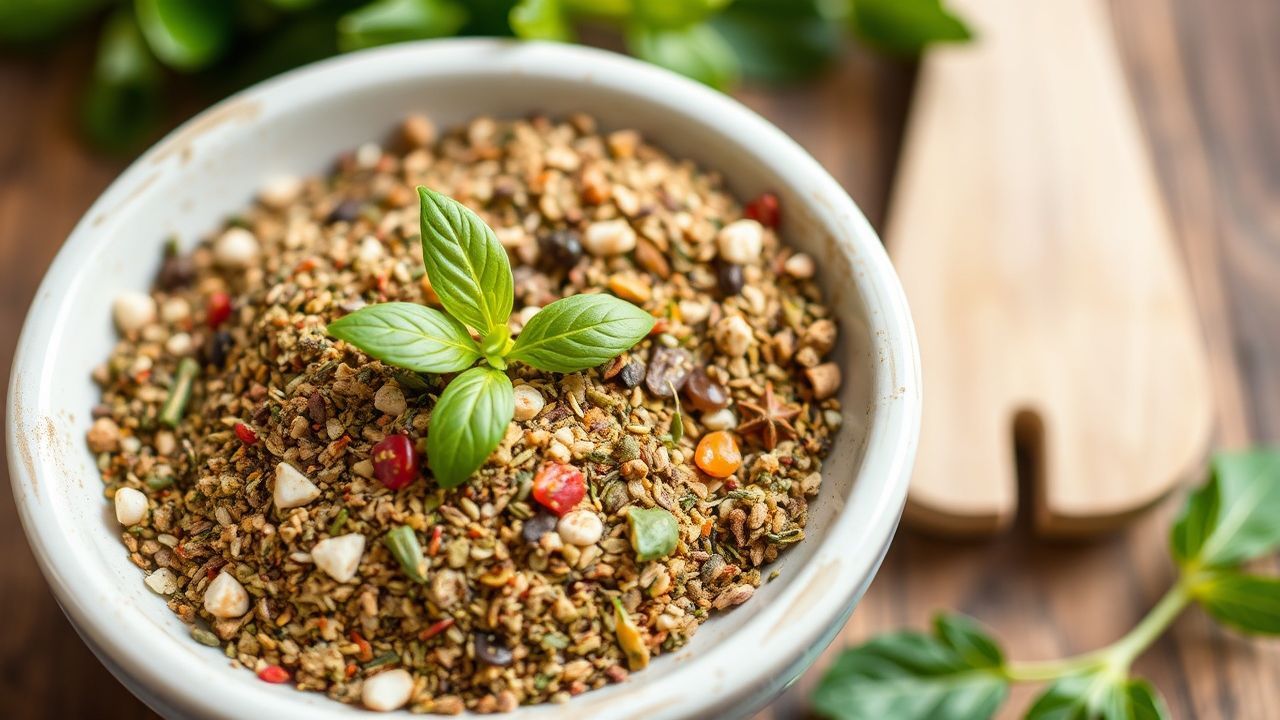
If you want a rustic finish, crush by hand or pulse briefly in a spice grinder. For fine blending, grind longer and sift through a fine mesh to remove fibrous bits.
Keep the texture in mind: coarse mixes are better for rubs while finer mixes blend into sauces smoothly. Use different textures for different culinary roles.
Optional Toasting
Lightly toasting the herb mix in a dry skillet for 1–3 minutes can deepen flavor. Work over low heat and stir constantly to prevent bitter char.
Cool the mix fully before storing to avoid condensation in jars. Toasting adds a faintly smoky note which works well on roasted vegetables.
Tips for Storing and Enhancing Your Italian Seasoning Mix
Store blends in airtight glass jars away from sunlight and heat. Proper storage preserves volatile oils in dried herbs and sustains flavor for months.
Label jars with the mix date; potency drops gradually, so plan to use homemade blends within 4–6 months for peak taste. Smaller batches retain vibrancy better than large, long-stored jars.
Customize ratios to match dishes: boost basil for sweeter notes or increase rosemary for piney depth. For finishing, sprinkle some of the dry mix and then add a few fresh herb leaves to brighten the plate.
Chef’s Notes and Substitutions
Substitute sage with fennel seed for a mild anise-like lift that appears in some regional Italian profiles. Use sparingly: fennel changes the character of the mix quickly.
To make an all-in-one finishing salt, blend the seasoning with coarse sea salt and store in a shaker. Keep pepper separate and add freshly cracked pepper to dishes at the end of cooking.
Serving Suggestions
Apply the seasoning generously to focaccia or mix into tomato sauces for immediate, authentic flavor lift. It pairs naturally with olive oil and garlic in most Mediterranean recipes.
Try the mix as a rub for roasted chicken, sprinkled over vegetables before baking, or folded into bread dough. It also enhances vinaigrettes and compound butters when used sparingly.
Nutrition Snapshot
Herb blends contribute negligible calories but deliver antioxidants and aroma compounds that influence perceived flavor. They complement dishes without adding significant macronutrients.
Below is a quick reference table for common components when used at the recipe scale; values are approximate per recipe quantities listed earlier.
| Ingredient | Approx. Amount | Calories | Protein (g) | Carbs (g) | Fat (g) |
|---|---|---|---|---|---|
| Oregano | 2 tbsp | 12 | 0.6 | 2.7 | 0.3 |
| Basil | 2 tbsp | 3 | 0.3 | 0.7 | 0.1 |
| Rosemary | 1 tbsp | 7 | 0.2 | 1.4 | 0.2 |
| Thyme | 1 tbsp | 5 | 0.3 | 1.1 | 0.1 |
| Garlic Powder | 1 tsp | 10 | 0.4 | 2.3 | 0 |
Practical Variations
Create a Southern-Italian version by adding toasted fennel seed and increasing oregano. For a lighter, herb-forward blend favor basil and marjoram with less rosemary.
To make an Italian seasoning with citrus lift, add dried lemon zest to the mix for bright top notes. Use that variation on seafood and light vegetable dishes.
For reference on Mediterranean herb usage and regional differences consult background material such as the Mediterranean cuisine overview and herb articles for context and inspiration. See: Mediterranean cuisine, Herb, and Spice.
FAQ
Q: What are the essential herbs for an Italian seasoning?
A: Classic blends typically include basil, oregano, rosemary, thyme, and marjoram. These herbs create a balanced Mediterranean profile that works across sauces and roasts.
A: Adjust the mix for personal preference by increasing one herb at a time and recording ratios until you find your signature blend.
Q: How long does homemade Italian seasoning last?
A: Stored in an airtight jar away from heat and light, a homemade mix remains flavorful for 4–6 months. The most volatile flavors fade first, so plan to consume jars relatively quickly for peak aroma.
A: If herbs lose scent, refresh a small portion by adding a pinch of freshly minced herbs when cooking to brighten the dish.
Q: Can I use fresh herbs instead of dried?
A: Fresh herbs contain much more moisture and volatile oils; they do not store the same way as dried herbs. Use fresh herbs at a 3:1 or 4:1 fresh-to-dry volume ratio when substituting in recipes.
A: For a preserved fresh-herb version, make a compound oil or freeze small aroma cubes with fresh herbs and oil for later use.
Q: Should I include salt in my Italian seasoning?
A: Keep base blends salt-free so you can apply the mix across different recipes without over-salting. If you prefer a finishing salt, make a separate jar by mixing coarse sea salt into a portion of the dried blend.
A: Salt alters shelf perception and can compact in jars, so keep it separate for best storage and versatility.
Q: What tools give the best texture for blending?
A: A mortar and pestle yields excellent control for small batches and preserves aroma. Electric spice grinders or pulse-mode blenders work for larger quantities but watch heat buildup.
A: For the finest texture, sift the final product through a fine-mesh sieve and return larger pieces for another grind cycle.
Enjoy the process: mixing Italian seasoning is a low-effort way to boost routine meals and experiment with regional flavors. Trust your palate, record successful ratios, and rotate small batches to keep the mix lively.
See also: Italian seasoning