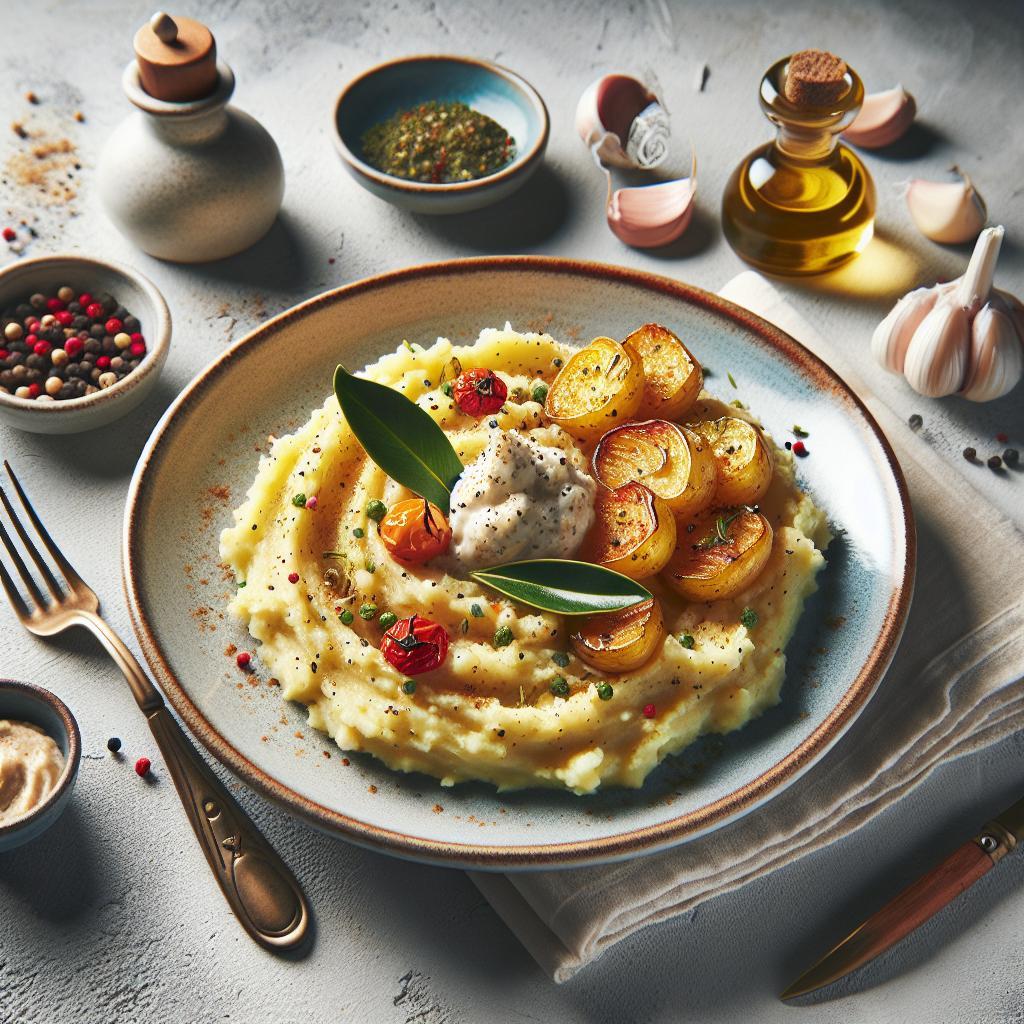

Creamy Roasted Garlic Mashed Potatoes: A Savory Twist
Creamy roasted garlic mashed potatoes upgrade a classic comfort dish into something layered, silky, and savory. Roast the garlic to mellow its bite, then fold it into warm, well-drained potatoes for natural sweetness and depth.
- Roast garlic to add caramelized sweetness without raw heat.
- Use starchy potatoes such as Russet or Yukon Gold for ideal texture.
- Warm dairy into the mash to preserve temperature and silkiness.
- Make ahead and reheat gently with extra cream or milk for best results.
Why roasted garlic matters
Roasted garlic transforms sulfurous, sharp raw cloves into soft, sweet, and spreadable flesh. That change happens through the Maillard reactions and slow caramelization that occur during roasting, which enhance the savory profile without adding salt or fat.
When you incorporate roast-softened garlic into mashed potatoes, you blend its concentrated flavor evenly through the dish. For context on the ingredient and its culinary uses, see garlic on Wikipedia.
Selecting the perfect potato
Texture begins with the tuber. Choose starchy varieties like Russet for a light, fluffy mash or Yukon Gold for a naturally creamy, buttery mouthfeel. Avoid waxy potatoes: they hold too much glue-like starch when overworked.
Different potatoes change hydration and dairy needs, so taste and test as you go. For background on varieties and botany, consult the potato overview on Wikipedia.
Prep and cook time
Preparation: 15 minutes. Cooking: 45 minutes (includes roasting garlic and boiling potatoes). Keep tasks overlapping to save time and keep potatoes hot for smoother texture.
Total time: About 1 hour. Preparing garlic while potatoes simmer is efficient and preserves heat so you can mash immediately after draining.
Yield and difficulty
This recipe yields about 6 generous servings. The technique rates as easy-to-medium because of the simple steps and attention to texture control.
Plan for a little hands-on time when mashing and adjusting dairy. If you need foundational techniques, check the internal potato basics page: Potato Basics.
Ingredients
Gather ingredients in advance and bring dairy to room temperature to avoid chilling the potatoes. Warm dairy integrates faster and keeps the mash glossy.
Core ingredients include potatoes, a whole garlic bulb, butter, cream and milk. If you prefer dairy-free options, use the internal guide on plant-based swaps: Dairy Substitutes.
- 3 pounds Yukon Gold or Russet potatoes, peeled and cut into even chunks
- 1 whole bulb garlic, halved horizontally
- 4 tablespoons unsalted butter, softened
- 1/2 cup heavy cream, warmed
- 1/2 cup whole milk, warmed
- Salt to taste (start with 1 teaspoon)
- Freshly cracked black pepper, to taste
- 2 tablespoons extra virgin olive oil (for roasting garlic)
- Chopped fresh chives or parsley for garnish (optional)
Step-by-step technique
Approach each step with temperature and timing in mind. Keep potatoes hot after draining and add warmed dairy to prevent a stiff, cooled mash.
Follow the sequence below to protect texture: roast garlic, boil and drain potatoes, mash gently, then fold in butter and warmed cream gradually. This order keeps the starch network intact and produces a smooth result.
Roast the garlic
Preheat the oven to 400°F (200°C). Drizzle halved garlic with olive oil, wrap in foil, and roast 35–40 minutes until cloves are soft and golden. Squeeze or scoop the softened flesh out when cool enough to handle.
Roast longer for deeper caramelization but avoid burning: char tastes bitter. For the chemistry behind roasting, see roasting on Wikipedia.
Cook and drain potatoes
Place chopped potatoes in cold, salted water and bring to a gentle boil; simmer 15–20 minutes until fork-tender. Cooking from cold ensures even heat penetration and prevents a waterlogged center.
Drain thoroughly and return potatoes to the hot pot off the heat for one minute to evaporate residual moisture. Excess water thins the mash and forces you to add more fat than necessary.
Mash and finish
Use a ricer for the silkiest texture or a hand masher for a rustic finish. Mash the hot potatoes directly with the roasted garlic, and fold in softened butter until incorporated.
Gradually add warmed cream and milk, stirring gently until you reach the desired consistency. Adjust salt and pepper last; roasted garlic concentrates sweetness, so small seasoning adjustments work best.
Expert tips to elevate your mash
Small technique changes yield big gains. Temperature control, gentle handling, and proper potato choice have the single biggest impact on texture and mouthfeel.
Here are tested methods professional kitchens follow to deliver consistent results every time.
When piping the mash for presentation, chill slightly so swirls hold shape, then finish with a quick torch or broil if you want a golden crust. Fresh herbs and a controlled sprinkle of smoked paprika add aromatic lift without masking garlic.
Variations and swaps
Vegan or lighter versions are straightforward: swap butter for plant-based margarine and heavy cream for unsweetened oat or almond milk. Adjust amounts to taste since plant milks vary in richness.
For added flavor complexity, blend in roasted shallots, grated hard cheese, or a small amount of browned butter. Balance additions so the roasted garlic remains the star.
Serving suggestions
These mashed potatoes pair well with roasted proteins and braised vegetables. Garnish with chopped chives or parsley for color and a mild onion note.
For holiday plating, pipe the mash into shapes and finish with a drizzle of olive oil or a scattering of toasted nuts for crunch. For more potato ideas, see our internal collection: Ultimate Potato Recipes Collection.
Nutritional information
The estimate below uses whole milk and butter. Calories and macronutrients vary with portion size and substitutions, so treat the values as a baseline rather than a precise label.
One cup (approx. 200 g) typically contains around 220 kcal, 4 g protein, 28 g carbs, and 9 g fat when prepared as directed with dairy.
| Serving Size | Calories | Protein | Carbs | Fat |
|---|---|---|---|---|
| 1 cup (approx. 200g) | 220 kcal | 4 g | 28 g | 9 g |
Q&A
The following short questions and answers cover common technique and substitution questions readers ask. Each response gives actionable steps or a clear rule of thumb.
What makes roasted garlic mashed potatoes different from regular mashed potatoes?
Roasted garlic adds caramelized sweetness and mellow depth compared with raw or sautéed garlic. The slow heat converts sharp sulfur compounds to sweeter, more complex flavor molecules that marry with potato starch and dairy.
How do you roast garlic properly for this recipe?
Trim the top, drizzle with oil, wrap in foil, and roast 35–40 minutes at 400°F (200°C) until soft and spreadable. Squeeze the cloves into the mash; no need to mince or sauté after roasting.
Can I use any type of potato?
Starchy potatoes like Russet or waxier Yukon Gold both work but yield different textures: Russet gives fluff, Yukon Gold gives creaminess. For best results, choose one primary variety and adjust dairy levels accordingly.
How do I make this dish dairy-free?
Replace butter with a plant-based alternative and swap heavy cream for a neutral, unsweetened oat or almond milk. Add a tablespoon of olive oil to mimic richness if needed.
Can I make this ahead of time?
Yes. Complete the recipe through the butter-and-dairy step, cool quickly, and refrigerate up to 48 hours. Reheat gently, stirring in warmed milk or cream to refresh texture.
The way forward
This roasted garlic mash technique scales well for weeknight meals and holiday feasts. Practice the temperature and gentle handling tips to maintain consistent, restaurant-quality texture.
For a deeper exploration of mashed potato techniques and history, consult the mashed potatoes entry on Wikipedia. For dairy context, the heavy cream reference explains why creamier dairy produces a silkier mouthfeel.

See also: mashed potatoes