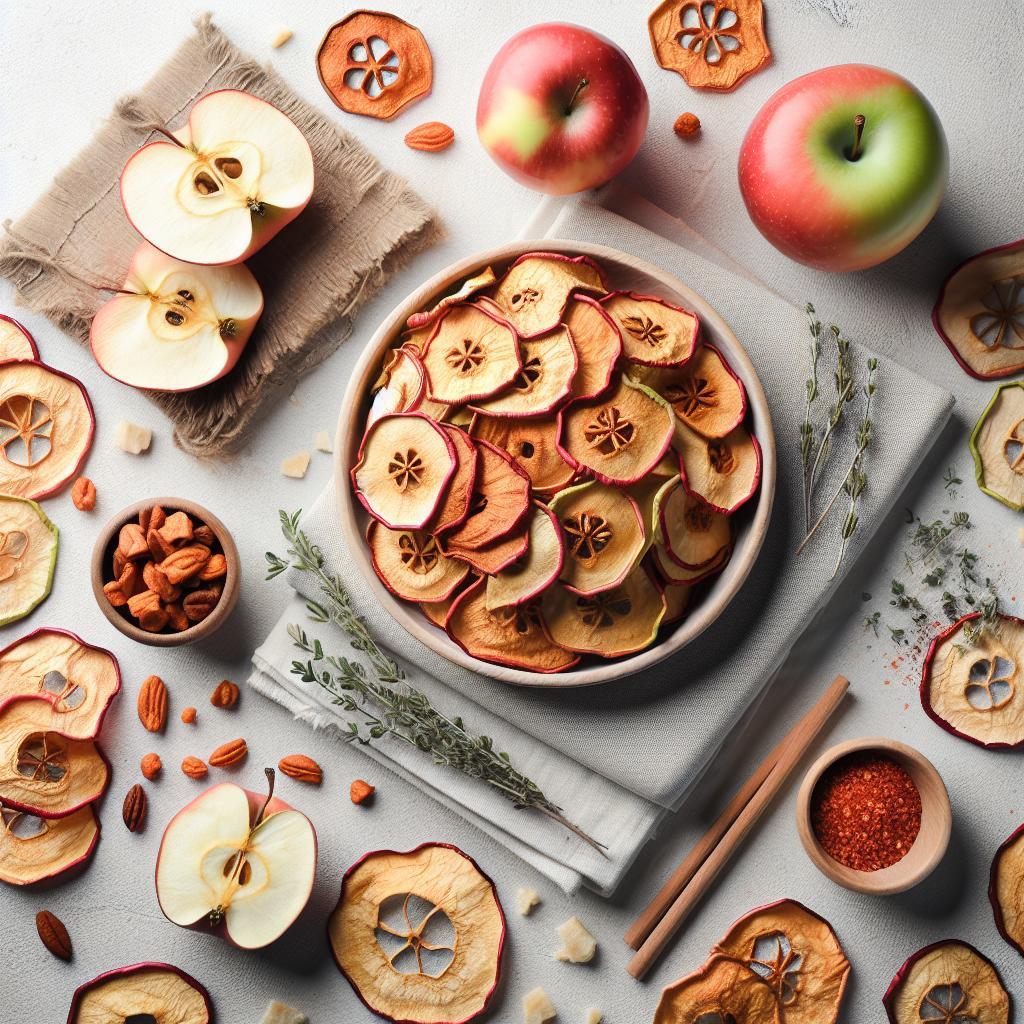

There’s something satisfying about capturing an apple’s crunch and sweetness in a snack that keeps. Dehydrated apple chips concentrate flavor and texture into a lightweight, shelf-stable bite you can make at home.
- Quick yield: Makes about 2 cups of chips from 6 large apples.
- Low-tech friendly: Use a dehydrator or an oven at low heat.
- Crisp goal: Dry until slices snap, then cool fully to avoid moisture.
Why dehydrate apples?
Drying transforms fresh apples into a snack with intensified sweetness and a long shelf life. You remove free water to slow microbial growth and enzymatic reactions while concentrating natural sugars and aromas.
Home dehydration sits inside the larger practice of food preservation, a straightforward method to extend produce usability and reduce waste. The process uses heat and airflow to reach the right textural endpoint.
Prep and cook time
Preparation: 15 minutes total to wash, core and slice. Use a sharp blade or a mandoline for uniform thickness.
Drying time: Expect 6–8 hours in a dehydrator at 135°F (57°C) or longer in a low-temperature oven. Times vary by humidity, slice thickness, and apple variety.
Yield and difficulty
Yield: Approximately 4 servings (about 2 cups). One medium apple yields roughly 6–10 chips depending on slice size.
Difficulty: Easy. The technique requires attention, not advanced tools. Patience during drying yields crisp results.
Ingredients
6 large apples — choose firm varieties that dry well. Consider blends for flavor complexity.
2 tablespoons lemon juice — diluted for a brief soak to reduce surface browning. Optionally add 1 teaspoon ground cinnamon and 1 tablespoon maple syrup or honey for a flavor lift.
Equipment and safety notes
Use a dehydrator or an oven that can maintain low temperatures. A mandoline ensures uniform 1/8-inch slices for even drying and predictable timing.
Work on a clean surface and use food-safe containers for storage. Handling hygiene and drying completeness affect shelf life and safety.
Instructions
1. Wash and core apples; retain the skin for fiber and texture. Slice uniformly to about 1/8 inch thick with a mandoline or a steady knife.
2. To slow enzymatic browning, soak slices five minutes in 2 cups cold water mixed with the lemon juice. Drain and pat dry before seasoning.
3. Lightly toss slices with cinnamon and optional sweetener. Arrange in a single layer on dehydrator trays or on parchment-lined baking sheets. Ensure air can move freely between slices.
4. Dehydrate at 135°F (57°C) for 6–8 hours in a dehydrator, or use your oven’s lowest setting with the door propped slightly open for airflow. Flip slices once halfway through to promote even crisping.
5. Test for doneness by allowing slices to cool briefly. Properly dried chips should snap rather than bend, and they must show no moist spots. Cool completely before storing to avoid condensation.
6. Store in airtight containers away from light and humidity. For extended shelf life, refrigerate or include a food-safe desiccant to control residual moisture.
Temperature and texture details
Low, consistent temperatures remove water without cooking the fruit, preserving volatile aromatics and avoiding caramelization that changes flavor. Air circulation is equally important to carry moisture away.
Aim for a brittle finish rather than leathery; brittle chips indicate the surface moisture has dropped enough to provide crispness at room temperature after cooling.
Chef’s notes: variety selection and flavor ideas
Choose apples that retain structure when heated. Varieties like Fuji, Gala, Pink Lady, and Honeycrisp provide a favorable balance of sugar and firmness for drying.
Experiment with spice blends: cinnamon, ground ginger, or a pinch of nutmeg highlight the apple’s aromatics. A light drizzle of maple syrup before drying deepens caramel notes without adding heaviness.
Try combining apple types for layered flavor. A tart variety balances a sweeter cultivar and yields more complex chips. Sampling small batches helps dial in the best combination for your palate.
Storage and shelf life
Keep chips in airtight jars or resealable bags at room temperature for up to two weeks. For longer storage, refrigerate for several months or vacuum-seal and freeze for extended preservation.
Monitor for any softening: softened chips indicate moisture ingress. Remove and re-dry any compromised pieces to avoid mold growth.
Serving suggestions
Serve as a standalone snack, add to trail mix, or crumble over yogurt and oatmeal for textural contrast. They also pair well with sharp cheeses for a sweet-salty board.
For treats, dip half the chip in melted dark chocolate and let it set. Use ground dried apple powder as an apple flavor booster in baking and spice rubs.
Nutritional snapshot
Dried apple chips concentrate carbohydrate and sugar content per gram compared with fresh fruit but retain fiber and micronutrients. Portion control makes them a nutritious snack alternative to processed sweets.
Typical per-serving estimates include about 95 calories and minimal fat. Keep serving sizes modest to balance sugar concentration with dietary goals.
| Nutrient | Per Serving |
|---|---|
| Calories | 95 |
| Protein | 0.3g |
| Carbohydrates | 25g |
| Fat | 0.1g |
Common pitfalls and troubleshooting
Thick or uneven slices lead to chewy centers and burnt edges. Slice consistently and rotate trays for uniform airflow if your dehydrator has hot spots.
Over-drying can leave chips brittle and tasteless, while under-drying invites spoilage. Test a few slices at the end of the scheduled time and adjust accordingly for your equipment and humidity.
Fixing soft chips
If chips feel pliable after a resting test, return them to the dehydrator for 30–60 minute increments until they snap when cooled. Cooling is a critical step; chips often firm up significantly after they reach room temperature.
For long-term crispness, store only fully dry chips in airtight containers with low headspace to minimize trapped moisture.
Resources and further reading
For botanical context on the fruit itself, see the apple overview at Apple on Wikipedia. It provides cultivar history and fruit characteristics relevant to drying choices.
To understand drying as a culinary and preservation method, consult the Food drying article. For spice background like cinnamon, use Cinnamon on Wikipedia.
FAQ
How do I get the crispiest apple chips?
Slice uniformly thin and dehydrate at a low, steady temperature with good airflow. Cool fully before storing; cooling allows remaining bound moisture to stabilize and the chips to firm up.
Can I use any apple variety?
You can, but choose firmer, sweeter varieties for the best texture and flavor. Mixing types gives a more complex taste profile and helps tailor sweetness versus tartness.
How long do homemade apple chips last?
Stored airtight at room temperature, expect up to two weeks of ideal crispness. Refrigeration or vacuum sealing extends shelf life to months.
Do apple chips need added sugar?
No. Drying concentrates natural sugars. Optional light sweeteners like maple syrup add depth but are not necessary for a satisfying snack.
Is a dehydrator necessary?
No. An oven on its lowest setting works, though a dehydrator provides better airflow and thermostat control for repeatable results.
Key Takeaways
Crisp dehydrated apple chips require uniform slicing, a controlled low-temperature drying environment, and careful cooling before storage. Small technique adjustments deliver big differences in texture and flavor.
Work in batches, test a few slices at the end of drying, and adapt times to your equipment and local humidity for consistent results every time.

See also: apple chips