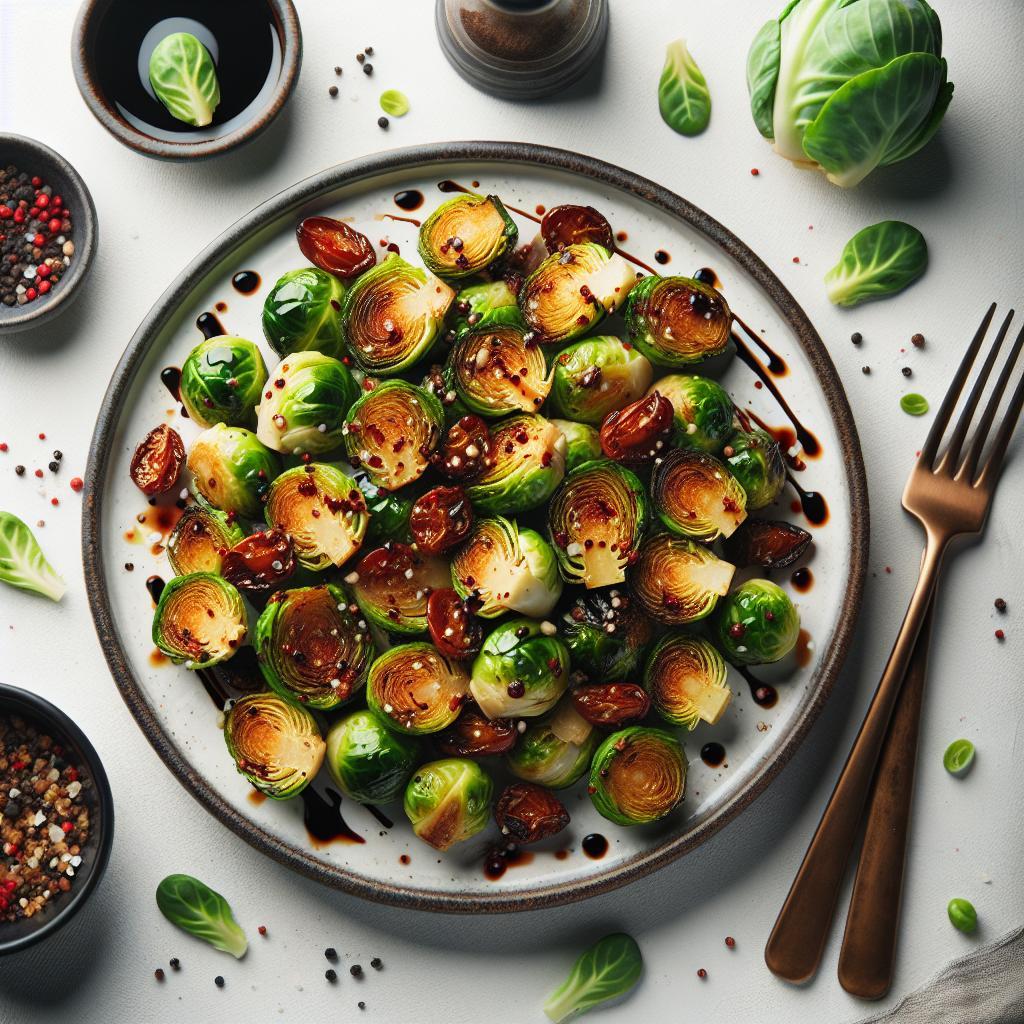

Crispy roasted Brussels sprouts with a tangy balsamic glaze turn a humble vegetable into a standout side. Roast until the outer leaves caramelize; finish with a syrupy reduction for bright, balanced flavor.
- High-heat roasting yields caramelized, crunchy edges and tender centers.
- Reduce balsamic to a thick glaze for clingy, sweet-tart coating.
- Dry and space sprouts well to avoid steaming and soggy texture.
Prep and Cook Time
Preparation: 15 minutes. Roasting: 25 minutes. Total active time lands around 40 minutes for most home ovens.
These times assume a preheated oven at 425°F (220°C) and average-sized Brussels sprouts. Adjust for very large or tiny sprouts; smaller pieces roast faster and brown sooner.
Yield
This recipe yields about 4 servings as a side dish. Portions suit a family meal or a small dinner party when paired with other mains.
Scale up by keeping sprouts in a single layer across multiple pans to preserve crispness. Overcrowding reduces surface browning and increases cook time.
Difficulty Level
Cooking this dish is easy, suitable for home cooks at all levels. The technique focuses on basic knife work, high heat, and a brief glaze reduction.
Small adjustments—oven calibration, trimming, and drying—make a big difference. Follow the steps for reliable, repeatable results every time.
Ingredients
Use fresh, firm sprouts with tight leaves for the best texture. Below are the components for a balanced glaze and crisp roast.
- 1 lb fresh Brussels sprouts, trimmed and halved
- 3 tbsp extra virgin olive oil
- Salt to taste (preferably flaky sea salt)
- Freshly ground black pepper, to taste
- 1/4 cup balsamic vinegar
- 2 tbsp pure maple syrup
- 1 tsp Dijon mustard
- 2 cloves garlic, finely minced
- Optional garnish: toasted pine nuts and freshly grated Parmesan cheese
Choose high-quality olive oil for smoke stability and clean flavor. For the glaze, use a good-grade balsamic; it concentrates well when reduced.
Instructions
1. Preheat and prepare: Set oven to 425°F (220°C). Line a large baking sheet with parchment or silicone to prevent sticking and ease cleanup.
2. Trim and dry: Trim stem ends and halve each sprout. Pat dry thoroughly; excess moisture promotes steaming instead of browning.
- Toss: In a large bowl, coat sprouts with olive oil, salt, and freshly ground pepper. Ensure even coating for uniform browning.
- Arrange: Place sprouts cut side down in a single layer. Maintain space between pieces to allow hot air circulation and crisp edges.
- Roast: Bake 20–25 minutes, stirring once halfway, until edges are deeply caramelized and crisp. Smaller sprouts may need less time.
- Make glaze: While sprouts roast, combine balsamic vinegar, maple syrup, Dijon, and minced garlic in a small saucepan. Simmer 5–7 minutes until reduced to a syrupy consistency.
- Toss and serve: Remove sprouts from the oven, drizzle warm glaze, and toss to coat. Garnish with toasted pine nuts or grated cheese as desired.
Transfer to a warm platter and serve immediately to preserve texture. Reheating works but refresh briefly in a hot oven or skillet for best crispness.
Allow the glaze to cool slightly before drizzling; very hot reduction can overly soften crisp edges. If you add cheese, do so just before serving to prevent melting into a runny layer.
Tips for Success
Use high heat to promote Maillard browning. A hot oven produces the signature crunchy edges while keeping interiors tender and sweet.
Avoid overcrowding: if sprouts touch, they steam and lose texture. Roast on two sheets if needed, then swap racks for even heat distribution.
- Cut side down: Maximizes contact with the hot pan for deep caramelization.
- Pat dry: Drying prevents surface steam and allows rapid browning.
- Finish warm: Toss with glaze while the sprouts remain hot so glaze clings.
For textural contrast, toast nuts separately and sprinkle on just before serving. Acidic finishes—like a squeeze of lemon—brighten the balsamic and round out flavors.
Serving Suggestions
Serve these roasted sprouts alongside roasted poultry or grilled fish for a classic pairing. They also complement vegetarian mains like a savory lentil loaf or roasted portobello steak.
For a party platter, spread a layer of soft goat cheese and top with warm sprouts and pomegranate arils for color and sweet-tart contrast. Try a side of herbed quinoa or a simple grain salad for a balanced plate.
Explore related vegetable sides on our site: Sautéed Green Beans with Caramelized Onions or Roasted Root Vegetables for complementary techniques and flavor ideas.
Nutritional Info
Per serving estimates give a useful baseline for menu planning. Values change with optional garnishes like Parmesan and nuts.
Approximate nutrition:
| Nutritional Info (per serving) | Amount |
|---|---|
| Calories | 160 kcal |
| Protein | 5 g |
| Carbohydrates | 15 g |
| Fat | 9 g |
These sprouts offer fiber and micronutrients while staying relatively low in calories. Add nuts for healthy fats and extra texture when appropriate.
Technique Notes and Science
Roasting relies on dry heat to drive Maillard reactions that create complex flavors and brown color. A brief, high-temperature roast speeds surface browning while preserving interior moisture.
When you reduce balsamic vinegar, you concentrate sugars and acids so the glaze adheres and balances bitter notes. For background on roasting methods, see roasting.
Smaller, fresher Brussels sprouts have less glucosinolate-derived bitterness. The combination of caramelization and a sweet-tart glaze helps mitigate any resilient bitterness. For botanical context, review Brussels sprout information.
Balsamic vinegar’s flavor profile comes from aged fermented grape must. For details on traditional production and types, consult balsamic vinegar.
FAQ
Below are precise answers to common questions about technique, timing, and ingredient swaps.
These responses aim to help you troubleshoot quickly and improve results on the first try.
What oven temperature gives the best crispness?
Set the oven to 425°F (220°C). This temperature encourages rapid surface browning and crisp edges while keeping the interior tender.
Can I use regular balsamic vinegar instead of reducing it?
You can, but a straight vinegar will be thin and may not cling. Reducing regular balsamic into a glaze or using a commercial glaze gives a superior, clingy coating.
How do I keep sprouts from becoming bitter?
Choose small, firm sprouts and trim any damaged outer leaves. High-heat roasting and a sweet element in the glaze both help neutralize bitterness through caramelization and balanced acidity.
Will this recipe work for an air fryer?
Yes. Air fry at 375–400°F (190–205°C) for about 12–18 minutes, shaking once. Check earlier for smaller pieces to prevent overbrowning.
Are there vegan topping options?
Use toasted seeds, nutritional yeast, or a tahini drizzle for savory, plant-based finishes. These preserve a vegan profile while adding texture and umami.
For more on olive oil properties and heat stability, consider the olive oil overview. For sweeteners like maple syrup, see maple syrup.
Enjoy this reliable method as a weekday upgrade or a holiday side. Small technique choices make a reproducible, crowd-pleasing dish every time.
See also: Brussels sprouts