
Roasted potatoes and carrots reach their best texture when surface moisture, heat, and timing align: crisp edges and tender centers every time. I write as a chef and food scientist who tests texture and flavor across home and commercial kitchens, and these ten pro tips reflect repeatable methods I rely on daily.
- High heat plus dry surfaces yields crisp crusts quickly.
- Parboil then roughen to accelerate browning for potatoes.
- Avoid crowding so pieces roast instead of steam.
- Reheat in a hot oven to restore crispness—skip the microwave.
Roasted potatoes: Prep and Cook Time
Plan active prep for 15 minutes and roasting for about 40–45 minutes at 425°F (220°C). These times assume 1-inch potato cubes and 2-inch carrot sticks; adjust piece size and oven type as needed.
Convection ovens usually shorten roast time by 5–10 minutes because air circulation increases heat transfer. Use an oven thermometer to verify temperature stability and reduce variability between runs.
Yield
This recipe serves four as a side when using 1.5 lb Yukon Gold potatoes and 1 lb carrots. Portions vary with appetite and accompanying dishes.
Scale ingredients linearly and split the batch across two baking sheets to avoid overcrowding. Two trays roast more evenly than one heaped pan and preserve crispness across the whole batch.
Difficulty Level
The technique rates as easy but requires attention to detail: uniform cuts, dry surfaces, and proper spacing. These small steps create a significant texture improvement over casual roasting.
Home cooks get consistent results by following the sequence: prep, temper, season, spread, roast, flip, finish. Professionals use the same sequence at scale and often add parboil plus agitation for an even crisper crust.
Ingredients
Select firm produce with intact skin for uniform roasting. Yukon Golds give a creamy interior; russets run slightly starchier and may need more oil to brown evenly.
Pick an oil with a stable smoke point and a clean flavor profile. Extra virgin olive oil adds complexity; lighter olive or avocado oil tolerates 425°F better without off-flavors.
- 1.5 lb Yukon Gold potatoes, washed and cut into 1-inch cubes
- 1 lb large carrots, peeled and cut into 2-inch sticks
- 3 tbsp olive or avocado oil
- 1 tsp sea salt, adjust to taste
- ½ tsp freshly ground black pepper
- 1 tsp garlic powder
- 1 tsp smoked paprika
- 1 tbsp fresh rosemary, chopped
- 1 tbsp fresh thyme leaves
- Optional: Zest of ½ lemon
Instructions
Follow the order: preheat, prep, temper, season, spread, roast, flip, finish. Consistent sequencing reduces mistakes and improves repeatability in home kitchens.
Drying, spacing, and a mid-roast turn maximize surface browning. Keep visual checks on color and fork tenderness rather than relying on time alone.
Step-by-step
- Preheat the oven to 425°F (220°C) with the rack centered. A fully hot oven produces the initial sear that locks texture in place.
- Prep the vegetables: rinse, peel carrots, and pat everything dry. Excess moisture causes steaming and soft edges.
- Toss with oil and seasonings in a large bowl so every surface gets a thin coat. The oil improves heat transfer and supports both Maillard browning and carrot caramelization.
- Arrange in a single layer on parchment-lined sheets; avoid overlap. Leave space so hot air moves freely around each piece.
- Roast 20 minutes, then flip to expose fresh surfaces to heat; flipping speeds even browning and shortens total cook time. Check color after the flip.
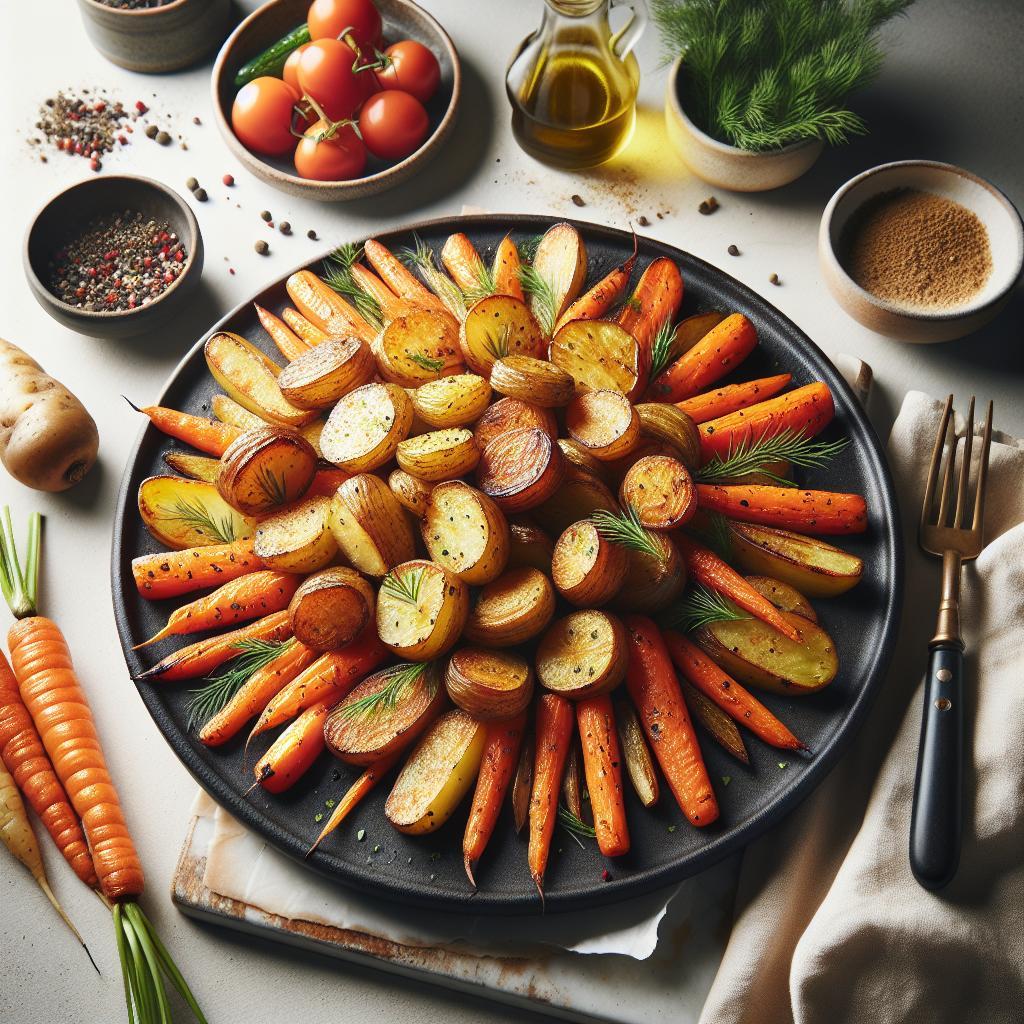
- Roast 20–25 minutes more until edges are golden and interiors yield slightly to a fork. Finish with lemon zest or fresh herbs off heat.
- Serve immediately on a warm platter for the best crisp-to-tender contrast.
Cooking Science: Why This Works
Two chemical processes govern flavor and texture: the Maillard reaction and sugar caramelization. The first produces savory brown notes; the second increases sweet, toffee-like aroma in carrots.
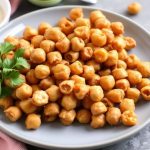
Surface starch behavior matters for potatoes. Brief parboil gelatinizes surface starch; roughening increases surface area and creates micro-cracks that brown rapidly. That combination delivers a crunchy crust and tender interior.
Tips for Success
Consistency beats improvisation when chasing crispness. Cut pieces uniformly, dry them well, and roast at high, dry heat to dehydrate exteriors while preserving interior moisture.
Salt early for penetration, but add delicate fresh herbs at the end so they retain aromatic lift. Acidic finishes like lemon zest or a splash of vinegar brighten the overall profile.
If you skip parboiling, make pieces smaller and increase oil slightly to promote thorough browning. Smaller pieces dry and brown quicker but will cook through faster, so watch color closely.
Use a heavy baking sheet or a rimmed half-sheet for steady heat transfer. Lightweight pans can slow browning and create uneven results, especially when the oven is loaded.
Serving Suggestions
These roasted vegetables pair with roasted proteins, braises, or plant-based mains. The crisp exterior and caramelized interiors balance bold sauces and simple pan juices.
Finish with chopped fresh herbs and lemon zest for contrast. For Mediterranean notes, sprinkle za’atar or crumbled feta; for smoky richness, increase smoked paprika slightly.
Nutritional Information
Roasted potatoes and carrots provide complex carbohydrates, dietary fiber, and micronutrients such as vitamin A from carrots. Fat content changes with oil type and amount used.
Adjust portion size and oil to fit dietary goals. Roasting typically preserves more nutrients than boiling when solids stay intact and juices remain in the roast.
| Serving Size | Calories | Protein | Carbs | Fat |
|---|---|---|---|---|
| 1/4 recipe (~250g) | 210 kcal | 3 g | 35 g | 7 g |
Reheating and Storage
Cool leftover vegetables quickly and store in a shallow container in the refrigerator for up to 3–4 days. Rapid cooling limits bacterial growth and preserves texture for reheating.
Reheat on a wire rack in a 400°F oven for 5–7 minutes to recover crispness. Avoid microwave reheating when texture matters; microwaves soften exteriors and make the crust soggy.
Internal resources: try related guides on our site for more techniques: Roasted potatoes tag and Roasting techniques.
FAQ
The following focused questions reflect real troubleshooting points I encounter in the kitchen. Each answer points to simple tests you can perform while roasting.
How do I get maximum crispness without parboiling?
Cut pieces small and uniform, rinse and dry thoroughly, and roast on a very hot, well-spaced sheet. Toss once at the 20-minute mark to expose fresh surfaces to heat.
Can I use other potato types?
Yes. Starchy russets yield a fluffier interior but can need slightly more oil for equivalent browning. Waxy varieties hold shape well but may be less crunchy.
Will using a convection oven change the process?
Convection speeds surface evaporation and often reduces roast time by 5–10 minutes. Watch color and flip earlier if browning advances rapidly.
How do I store and reheat leftovers?
Cool quickly, refrigerate in a shallow container, and reheat in a hot oven to recover crispness. Avoid microwaves for best texture.
For deeper context on produce and processes, consult these resources: potato, carrot, and the general roasting entry. For browning chemistry, see Maillard reaction and caramelization.
Apply these ten pro tips and the same careful sequencing every time. The rewards are predictable: crisp edges, tender interiors, and stronger flavor from efficient browning.

Recommended Reading:
- Hearty Chicken and Biscuits Casserole: Comfort Food Classic
- Savor Every Bite: Irresistible Garlic Butter Steak Bites Guide
- Savor the Creamy Delight of Mushroom Risotto with Parmesan