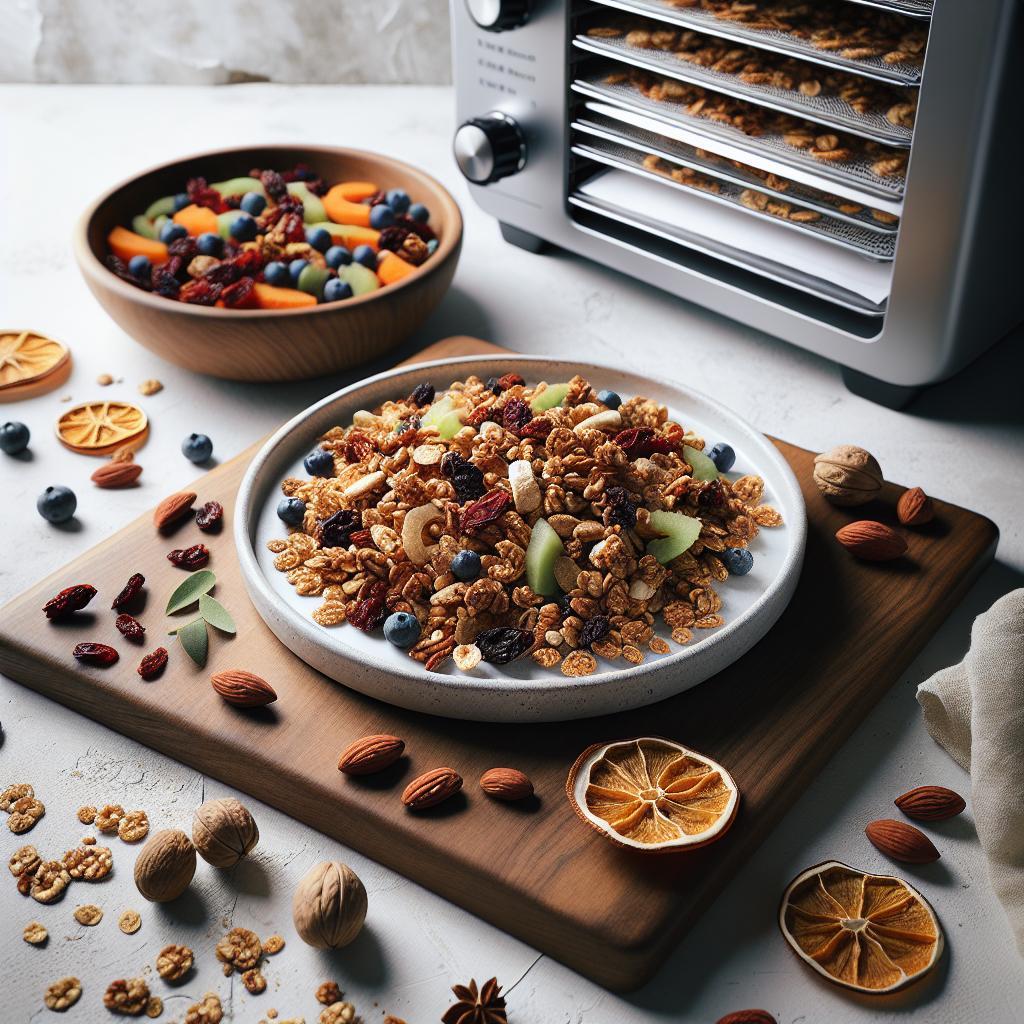

There is a special satisfaction in the first crunchy bite of homemade granola. Using a dehydrator turns simple pantry items into crisp clusters with controlled caramelization and no hot-oven stress.
- Low-temperature drying preserves oil-rich nutrients and delivers even crunch.
- Easy texture control — tweak thickness and drying time for clumps or loose granola.
- Customizable base — swap nuts, seeds, and sweeteners to match diet needs.
The dehydrator method favors slow, steady moisture removal, which locks in textures while avoiding over-browning. If you want a method that produces more predictable crunch and preserves delicate flavors, this approach performs well.
Prep and Cook Time
Plan for a short mix time and a longer dehydrating window. Active prep takes about 15 minutes; the drying step needs patience.
Dehydrating time varies by humidity, tray load, and desired clumpiness. Expect about 6 to 8 hours at 115°F (46°C) for thin spreads; thicker layers may require longer.
- Preparation: 15 minutes
- Dehydrating: 6–8 hours (check after 6 hours)
Yield and Difficulty
This batch yields approximately 6 cups of granola, enough for multiple breakfasts or snack jars. You will get crisp clusters that store well when fully cooled.
Difficulty rates as Easy to Medium. The technique suits beginners who want predictable texture and experienced cooks who want refined control.
Ingredients
Use pantry staples and a binder to get clusters that hold together. The ingredient list below balances oats, nuts, seeds, and a modest sweetener to form durable granola.
For the grain base, I recommend rolled oats because they provide a sturdy flake that toasts and binds well. Read more about oats on the Oat page for varietal context.
- 3 cups rolled oats (old-fashioned)
- 1 cup raw almonds, roughly chopped
- 1/2 cup raw walnuts, chopped
- 1/2 cup unsweetened shredded coconut
- 1/3 cup sunflower seeds
- 1/4 cup chia seeds
- 1/4 cup honey or pure maple syrup for a vegan option; see note on natural sweeteners
- 1/4 cup coconut oil, melted
- 1 teaspoon vanilla extract
- 1 teaspoon ground cinnamon
- 1/2 teaspoon fine sea salt
- 1/2 cup dried cranberries or raisins (stir in after drying)
- Optional: 1/4 cup hemp seeds or flaxseeds for extra nutrition
Ingredient swaps and notes
Swap nuts easily to change flavor and texture — pecans create a buttery note while hazelnuts add a toasty edge. Seeds like pumpkin or hemp raise mineral content and add chew.
Adjust sweetener amounts to taste; honey offers binding and shine while maple syrup gives a more neutral, vegan-friendly profile. For more on honey as a food, consult the Honey reference.
Instructions
Follow the steps below for predictable clumping and even drying. Keep layers thin and rotate trays when possible to avoid uneven moisture pockets.
Use parchment or dehydrator sheets to make removal simple and to prevent sticking. Measure thickness: 1/4 to 1/2 inch spreads dehydrate faster and produce crispier clusters.
- Mix dry ingredients: Combine oats, almonds, walnuts, shredded coconut, sunflower seeds, chia seeds, cinnamon, and sea salt in a large bowl. Toss to distribute ingredients evenly.
- Prepare wet binder: Whisk together honey or maple syrup, melted coconut oil, and vanilla until uniform. Warm slightly if honey resists mixing.
- Combine: Pour wet over dry and fold with a spatula until every flake has a light coating. Proper coating promotes clustering during drying.
- Spread on trays: Line trays with parchment and spread the mixture in a uniform layer about 1/4 to 1/2 inch thick. Avoid pile-ups that trap moisture.
- Dehydrate: Set dehydrator to 115°F (46°C). Dry for 6–8 hours, checking at 6 hours for crunch. Gently flip or stir at 3–4 hour marks to even moisture removal.
- Cool and finish: Remove trays when granola is crisp and slightly golden. Cool fully on the trays to let clusters set, then stir in dried fruit and extra seeds.
- Store: Transfer to airtight jars once completely cool. Properly dehydrated granola keeps its crunch at room temperature for several weeks.
Rotate trays if your dehydrator shows any hot spots. Consistent air flow matters more than higher temperatures to reach the right texture.
Chef’s Notes
Texture control hinges on layer thickness and tray rotation. Thinner spreads yield crisp flakes; thicker layers encourage chunkier clusters, so choose based on your preference.
Dehydrators vary. Record your machine’s performance the first time: note hours to crisp, tray layout, and ambient humidity. That log will refine every future batch.
Serving Suggestions
Sprinkle granola over Greek yogurt, plant-based yogurt, or smoothie bowls for immediate texture contrast. Add fresh berries, sliced banana, or a drizzle of extra honey when serving.
Use granola as a crunchy topping on baked fruit, in trail mix, or as a layer in parfaits. For bars, bind cooled granola with nut butter and a touch of syrup, press into a pan, and refrigerate until firm.
Nutrition and Storage
This granola balances whole grains, healthy oils, and seeds for a nutrient-dense snack. Per 1/2 cup serving estimates: about 230 kcal, 6 g protein, 28 g carbohydrates, 11 g fat.
Store in airtight containers in a cool, dark place. If you expect long storage, freeze batches in labeled bags; thaw at room temperature before use to recover crispness.
| Nutrient | Per Serving (1/2 cup) |
|---|---|
| Calories | 230 kcal |
| Protein | 6 g |
| Carbohydrates | 28 g |
| Fat | 11 g |
Why a Dehydrator Works
Dehydration removes water at low temperatures, which concentrates flavor while preventing scorching of sugars and oils. The process yields consistent texture with less risk of over-browning than high-heat ovens.
For a technical overview of drying methods, see the food dehydration resource. Low-temperature drying preserves heat-sensitive components and typically improves shelf stability.
FAQ
How long should I dehydrate granola for crisp results?
Dry at 115°F (46°C) for 6–8 hours with thin spreads. Check for crispness at 6 hours and continue in 30–60 minute increments until you reach the desired crunch.
Can I use gluten-free oats?
Yes. Use certified gluten-free rolled oats to avoid cross-contamination. They behave the same in dehydration and provide a reliable base.
Is dehydrator granola healthier than store-bought?
Homemade granola lets you control sugar and oil amounts and avoids preservatives. Using natural sweeteners and whole ingredients produces a cleaner nutrition profile than many commercial blends.
How should I store granola for maximum crunch?
Keep it in airtight jars at room temperature away from heat and light. For long-term storage, freeze in airtight bags; bring to room temperature before serving so the texture relaxes without condensation.
Can I add dried fruit before dehydrating?
Add dried fruit after dehydrating. Fresh fruit contains too much moisture and will disrupt drying; dried fruit added at the end preserves chew without reintroducing moisture.
See also: granola