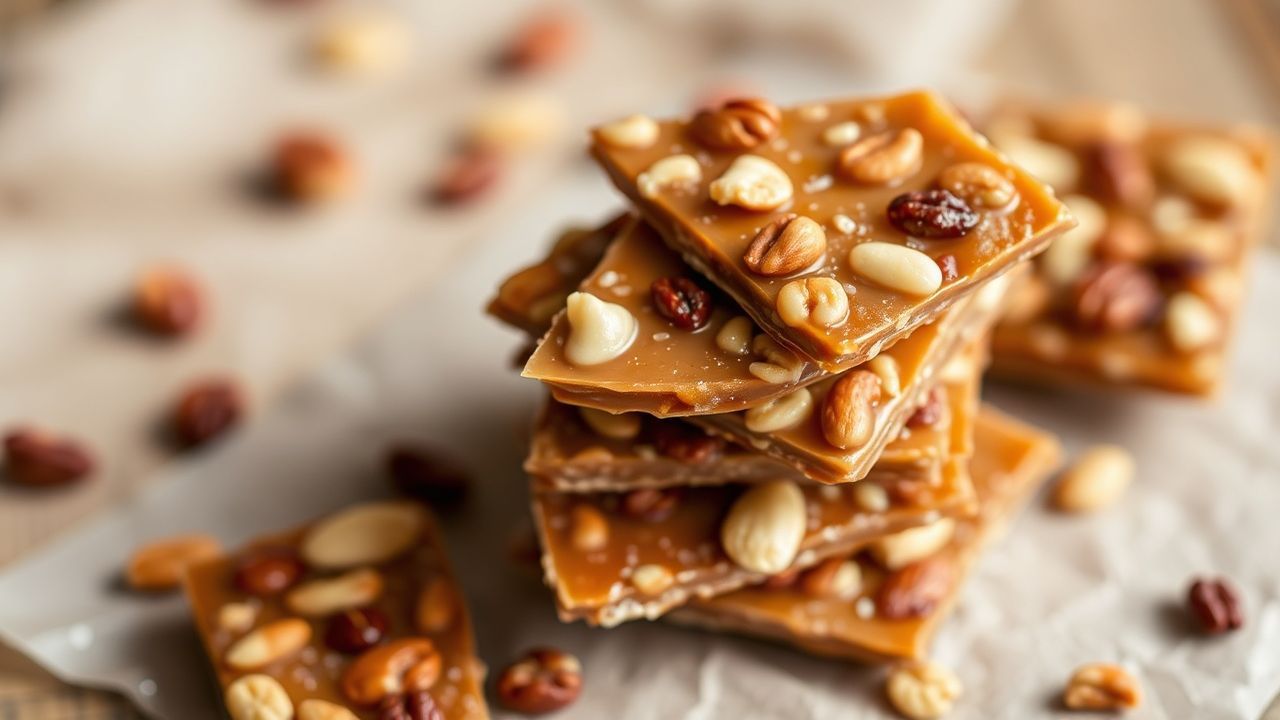

Nut brittle delivers a glassy snap and concentrated nut flavor when made with wild-sourced nuts and precise technique. This recipe focuses on control of sugar chemistry, toast timing, and handling so you get reliable, crisp results every batch.
- Master the thermometer: temperature defines texture more than intuition.
- Sourcing matters: wild nuts add variable oil and flavor that change roasting time.
- Work fast: aeration and pouring windows close in seconds; plan tools and workspace.
Before You Start: Ingredients and Sourcing
Choose fresh, unsalted wild nuts with skins intact when possible; skins contribute rustic flavor and texture. Wild nuts vary by species and oil content, which alters toast time and how the sugar sets.
Test a small sample of any newly foraged nut before committing a full batch because fattier nuts brown faster and release oils that shift caramel behavior. For botanical context on edible nuts, see nut (fruit).
Prep and Cook Time
Preparation: 15 minutes. Cooking: 20 minutes. These time windows let you dissolve the sugar fully and monitor the hard-crack stage without rushing.
Expect roughly 35 minutes active work plus at least one hour of cooling. Organize tools, cooling sheet, and measuring tools before heating sugar so you can move decisively when the syrup hits temperature.
Yield and Difficulty
This batch yields about 12 generous servings depending on break size and thickness. You can scale proportionally; maintaining sugar-to-nut ratios preserves structural integrity.
Difficulty rates medium: you must manage a boiling sugar syrup and achieve the hard-crack stage (~150°C). With one or two trials you will internalize timing and temperature cues for consistent nut brittle.
Ingredients
Measure precisely; candy success depends on accurate ratios and temperatures. Below is a tested list for a 12-serving batch that balances sugar, fat, and nuts to produce a crisp, glass-like brittle.
- 1 cup raw wild pecans, roughly chopped
- 1 cup raw wild walnuts, halved
- 1/2 cup raw hazelnuts, skin on
- 1 1/2 cups granulated sugar
- 1/4 cup light corn syrup or golden syrup
- 1/2 cup unsalted butter, cut into cubes
- 1/2 teaspoon kosher salt
- 1 teaspoon pure vanilla extract
- 1/4 teaspoon baking soda
- 1/4 cup water (to dissolve sugar)
For chemistry background on sweeteners and their behavior in candy, refer to sugar.
Instructions
Read all steps before beginning and preheat or prepare all tools. A candy thermometer and a heavy-bottomed saucepan are non-negotiable for reliable nut brittle.
Work deliberately once the syrup reaches final temperature; caramel continues to darken quickly and the working window shortens. Keep a clear workspace and have your cooling sheet within arm’s reach.
Step-by-step (10 expert steps)
1. Toast the nuts in a dry skillet over medium heat until aromatic, about 4–6 minutes, stirring constantly to avoid scorching. Spread them on a tray to cool so oils redistribute evenly before mixing into hot caramel.
2. Combine sugar, corn syrup, and water in a heavy saucepan; stir gently over medium heat until the sugar dissolves and the syrup runs clear. Dissolving sugar fully reduces the risk of premature crystallization and grainy texture.
3. Clip a candy thermometer and bring the syrup to a boil. Avoid stirring once it begins to boil; agitation can seed crystals. Monitor for deep amber color as you approach the hard-crack range (~300°F / 150°C).
4. Remove the pan from heat immediately at hard-crack. Add butter and salt and stir until incorporated, then fold in the toasted nuts and vanilla. Working off the heat gives you a few extra seconds to combine before adding baking soda.
5. Sprinkle baking soda and whisk briskly; the soda aerates the caramel, producing a lighter, frothy matrix that yields a brittle with a fine, glassy fracture. Move quickly—this aeration phase finishes in seconds.
6. Pour the mixture onto a buttered or parchment-lined sheet and spread to about 1/4-inch thickness with a heatproof spatula. The syrup remains fluid; keep a steady hand and spread in one confident pass.
7. Allow the brittle to set undisturbed at room temperature for at least one hour, or until fully hard and glassy. Do not refrigerate to speed the process because moisture condenses and softens the sugar matrix.
8. Break into irregular pieces with a heavy knife or by hand, wearing protective gloves if shards are sharp. Store in an airtight container away from humidity to maintain crispness.
9. For gifting, wrap pieces individually or layer with parchment and include a desiccant packet in humid climates. Label boxes with nut content to alert recipients with allergies.
10. If the batch crystallizes or sets too soft, record temperature and timings, then adjust heat or corn-syrup percentage on the next trial. Keep notes; small, systematic changes yield repeatable improvements.
Candy Thermometer and Sugar Stages
Always use a reliable candy thermometer to hit the hard-crack stage; color alone can mislead because lighting and pan surface change perceived hue. Hitting ~300°F (150°C) predicts a brittle that snaps crisply instead of bending or sticking.
Understanding caramelization helps control flavor: sugar molecules break and reform, producing complex aromas as temperature rises. See caramelization for technical context and expected flavor shifts.
Tips for Success: Mastering Texture and Flavor
Control heat and timing. Too low a final temperature yields sticky, chewy brittle; too high produces bitterness from over-caramelization. Small temperature adjustments create predictable changes to texture.
Toast nuts immediately before use to preserve volatile aromatics. Over-toasting dries the nut fats and flattens flavor, while light toasting releases oils and enhances crunch.
Match nut size to toasting time; halved walnuts and whole hazelnuts toast at different rates. When substituting seeds or smaller nuts, reduce toast time and test a small sample first to avoid bitter, over-roasted pieces.
Safety and Pro-Cautions
Hot sugar causes severe burns; always use long-handled tools and heatproof gloves when needed. Keep children and pets out of the workspace while cooking and pouring sugar.
Work on a stable surface and avoid distractions during the final stages when syrup temperature climbs rapidly. If a spill occurs, cool with cold water and then clean to avoid sticky residues.
Creative Variations and Serving Suggestions
Customize texture and flavor with small swaps: replace a quarter of granulated sugar with light brown sugar for a molasses note, or add citrus zest for brightness. Wild nuts marry well with warm spices like cinnamon and cardamom.
For savory balance, sprinkle flaky sea salt on the hot surface or press in dried cherries or crystallized ginger for bite. A pinch of smoked paprika introduces an unexpected smoky counterpoint to the sugar.
Nutritional Information
Portion sizes strongly affect calorie and macronutrient counts because brittle is energy-dense due to sugar and nuts. Typical values per serving are shown as a guideline and should be adjusted for your portion decisions.
Approximate per-serving values for a 12-piece batch: about 210 kcal, 4 g protein, 24 g carbohydrates, and 12 g fat. Use these figures to plan servings for events or gifting.
Storage, Gifting, and Shelf Life
Store brittle in an airtight container at room temperature away from humidity; moisture softens caramel rapidly and ruins the glassy snap. Include a silica desiccant in gift boxes for humid regions to preserve crispness.
Properly stored, nut brittle remains crisp for up to two weeks. For longer shelf life, vacuum-seal small portions and label with the preparation date to track freshness for recipients.
Related Resources and Internal Links
Explore additional candy techniques and related recipes to refine your process and expand flavor ideas. Compare sugar stages with other confections to broaden technique transfer.
See more brittle variations and recipe collections on our site: nut brittle collection and general candy technique guides at CookHarvest recipes.
Final Notes
This nut brittle method blends classical candy technique with the bold, variable character of wild nuts to make an outstanding confection. With controlled temperature and measured technique you can produce consistent, glassy brittle that highlights wild-sourced flavor.
Keep a notebook for each batch: record nut type, toast time, exact thermometer reading, and cooling time. Systematic notes accelerate mastery and help you reproduce your best nut brittle every season.
FAQ
The following questions address common issues and practical adjustments encountered when making nut brittle at home. Each answer provides concise, actionable steps to troubleshoot common faults.
What makes wild nut brittle different from regular brittle?
Wild nuts often contain more variable oil and stronger aroma than commercially processed nuts, which alters roast timing and flavor intensity. That variance yields a deeper, more rustic mouthfeel in nut brittle.
Use small test batches to calibrate toast time and note how different nuts change the caramel’s appearance and set behavior.
How do I prevent sticky or soft brittle?
Ensure you reach the hard-crack stage (~300°F / 150°C) and cool the brittle thoroughly before breaking. Under-cooked sugar remains tacky and fails to fracture cleanly into crisp pieces.
Also store the brittle dry and airtight; even correctly cooked brittle will absorb moisture and soften if left in humid conditions.
Can I substitute different nuts or seeds?
Yes. Sunflower seeds, pumpkin seeds, and pine nuts work well, but adjust toast times since smaller seeds toast and burn faster. Balance nut-to-sugar volume when swapping very high-fat or low-volume ingredients.
Test substitutions in 1/4 batch increments to learn how each change affects texture before scaling to a full batch.
Is corn syrup necessary?
Corn syrup helps prevent premature crystallization and creates a glossy surface in nut brittle. You can substitute golden syrup or controlled glucose in the same ratio to stabilize the sugar matrix.
Omitting a stabilizer increases the risk of grainy texture unless you dissolve sugar completely and shield the syrup from seeding disturbances during boiling.
Why did my brittle taste bitter?
Bitter notes usually indicate over-caramelization or scorching at the end of the cook. Small pans and thin layers of syrup heat unevenly and increase burn risk, which leads to bitter flavors in nut brittle.
Lower the heat slightly and remove the pan earlier on your next batch, then record the exact thermometer reading to repeat the successful temperature window.
Related reading on confectionery and nut varieties is available through key references such as candy and specific nut pages like pecan.
Recommended Reading:
- Wild Nuts Wonders: Elevate Your Cheese Board Flavorfully
- Unlocking Freshness: How Long Shelled Nutmeat Lasts
- Savory Nut & Herb Mix: A Flavorful Snack You’ll Love