
Deviled Eggs Delight: Classic Recipe with Bold New Twists
There is a timeless appeal to deviled eggs — those creamy, tangy bites that anchor holiday tables and casual gatherings alike. This recipe preserves the classic profile while adding structured options for bold flavor experiments.
- Balance is the goal: creamy yolk, bright acid, and a touch of salt.
- Timing matters: a precise 12-minute steam/boil and quick ice bath yield clean whites and tender yolks.
- Texture counts: smooth yolk paste wins over lumpy mixtures every time.
- Garnish smart: visual contrast raises perceived flavor and boosts plate value.
Introduction and Context
Deviled eggs trace a long culinary lineage and sit firmly in the category of classic appetizers. For background on the dish and its variations, consult the deviled egg entry for historical notes and variations.
When you refine technique and ingredient ratios, you convert a familiar recipe into a repeatable party favorite. This article lists precise timing, ingredient swaps, assembly methods, and presentation ideas so you can execute with confidence.
Prep and Cook Time
Preparation: 15 minutes. This includes gathering ingredients and readying the ice bath. Keep mise en place ready; it speeds assembly and reduces errors.
Cooking: 12 minutes sitting off heat after a rolling boil, followed by a 5-minute ice bath to stop residual cooking. This method mimics reliable practice used for cleanly set yolks in a boiled egg technique.
Yield
Makes 12 deviled egg halves from 6 large eggs. Multiply linearly for larger batches; scale mayonnaise and acid in proportion to yolks.
For events, plan on 2–3 halves per person for appetizers, and 4–6 halves if the eggs serve as a plated starter. Label variations if you present more than one flavor on a tray.
Difficulty Level
Easy to execute, with a few technical touchpoints: precise timing, careful peeling, and a smooth yolk emulsion. These steps reward attention to detail but do not require professional tools.
Anyone comfortable with basic stovetop technique can master this. Use a piping bag and a star tip for consistent presentation when serving to guests.
Ingredients
Core ingredients: 6 large eggs, 1/4 cup full-fat mayonnaise, 1 teaspoon Dijon mustard, 1 teaspoon apple cider vinegar or lemon juice, 1/2 teaspoon smoked paprika, 1/4 teaspoon sea salt, 1/4 teaspoon black pepper.
Optional bold twists: pickled jalapeño, horseradish, avocado puree, curry powder, or wasabi paste. Use small test batches to dial intensity before scaling to the full yield.
Instructions
1. Boil the eggs: Place eggs in a single layer and cover with 1 inch of cold water. Bring to a rolling boil over medium-high heat, remove from heat, cover, and let sit exactly 12 minutes to achieve firm but not chalky yolks.
2. Cool and peel: Transfer eggs to an ice bath for 5 minutes to stop cooking and tighten the membrane away from the shell. Tap and roll each egg, then peel under running cool water to minimize tearing.
3. Prepare and fill: Halve eggs lengthwise, transfer yolks to a bowl, and mash to a fine crumb before adding mayonnaise, mustard, acid, smoked paprika, salt, and pepper. Taste and adjust seasoning; add optional ingredients sparingly until the desired boldness appears.
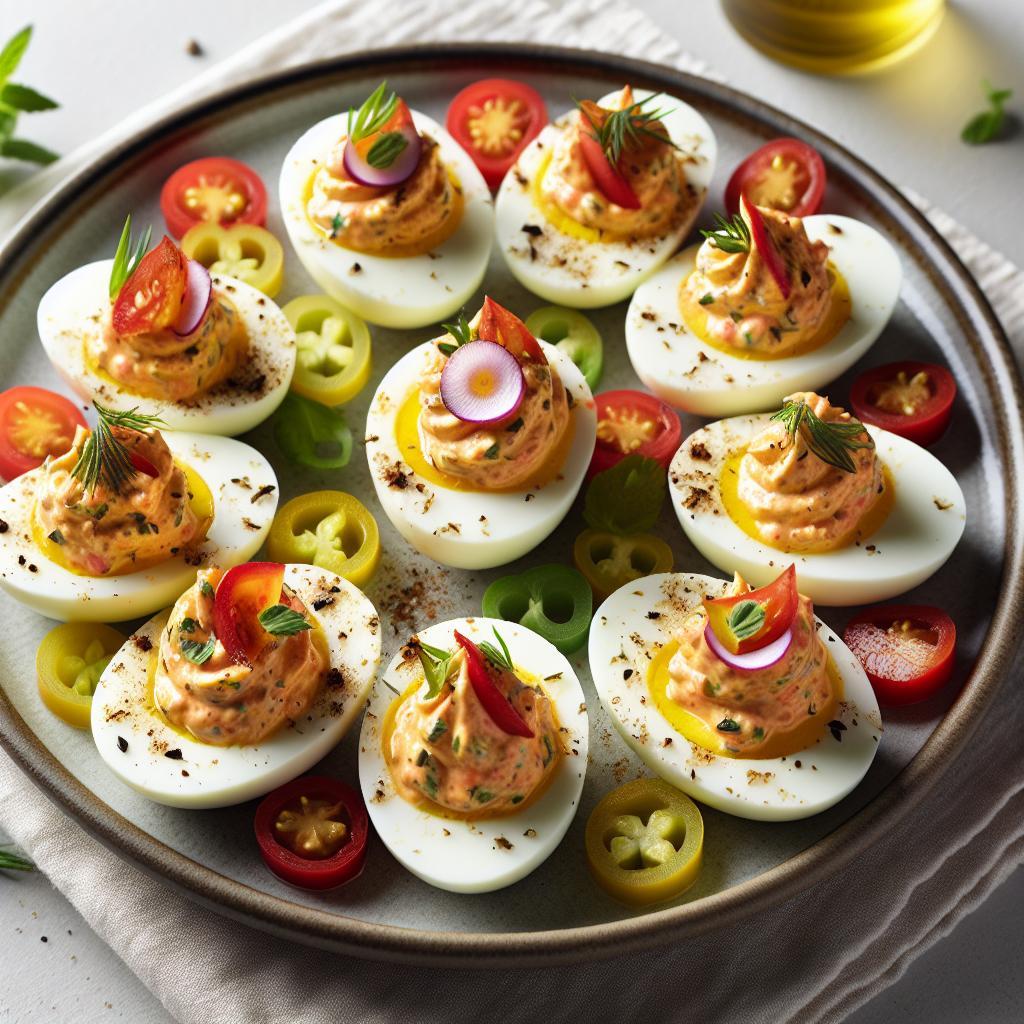
4. Pipe and finish: Use a piping bag with a star or round tip for neat presentation, or spoon the mixture for a rustic look. Garnish with a dusting of smoked paprika and chopped chives or parsley for contrast.
Let chilled deviled eggs rest in the refrigerator at least 30 minutes before serving to let flavors meld and filling firm up. Remove delicate garnishes until plating to preserve freshness and color.
Chef’s Tips for Success
Use eggs that are 5–7 days old for easier peeling; overly fresh eggs resist clean peeling due to a tight membrane. This simple selection reduces prep time and improves visual quality of halved whites.
Sift or press yolks through a fine mesh before combining when you need the silkiest filling. This mechanical step reduces grit and creates a luxurious mouthfeel that guests notice.
Flavor Variations and Experimentation
Classic deviled eggs use mustard, mayo, and vinegar for balance. To add smoke, use smoked paprika or a few drops of liquid smoke; for heat, fold in finely chopped pickled jalapeño or a dab of Sriracha.
Try regionally inspired versions: curry powder and cilantro for an Indian twist, wasabi and toasted sesame for an Asian accent, or avocado and lime for a fresher, green filling. Always taste and adjust seasoning incrementally.
Make-Ahead and Holding
Prepare components a day ahead: hard-boil and peel eggs, make the yolk filling, and refrigerate both separately. Fill the whites within a few hours of service to preserve structure and color.
If you must fill eggs earlier, keep them tightly covered and chilled. Add delicate garnishes such as microgreens or crispy bacon just before serving to maintain texture.
Serving Suggestions
Arrange deviled eggs on a matte white platter or a rustic wooden board to contrast the filling color. Use small endive leaves or toasted crostini if you want finger-food elevation and added crunch.
Pair the eggs with a bright, acidic beverage — a citrus punch or a chilled sparkling white — to cut through the richness. Consider labeling flavor variants for guest ease when presenting multiple styles.
Nutritional Information per Serving (2 halves)
Approximate nutrition for two halves: 150 kcal, 9 g protein, 1 g carbs, 12 g fat. Values vary with mayo type and optional mix-ins like avocado or bacon.
Adjust calorie and fat content by substituting part of the mayonnaise with Greek yogurt or mashed avocado. For low-carb or keto guests, this dish already fits well with minimal changes.
| Calories | Protein | Carbs | Fat |
|---|---|---|---|
| 150 kcal | 9 g | 1 g | 12 g |
Presentation and Professional Finishing
Visual contrast enhances perceived flavor intensity. Use a sprinkle of smoked paprika and a single chive cross to add color and a professional finish.
For upscale events, top selected halves with a small spoonful of caviar or finely diced pickled vegetables. These additions change the plate from casual to curated with minimal extra work.
FAQ
Q1: What makes a deviled egg classic?
The classic relies on a balanced yolk mixture of mayonnaise, mustard, and acid. These ingredients create a creamy, tangy profile that complements the egg white.
Q2: How can I prevent chalky yolks?
Use the precise cooking routine: bring to a rolling boil, remove from heat, cover, and let sit 12 minutes, then plunge into an ice bath. This produces a tender, evenly set yolk.
Q3: How long can filled deviled eggs sit out?
Filled deviled eggs should not sit at room temperature for more than two hours. For hot environments, reduce that window and keep eggs chilled until service.
Q4: Can I make vegan deviled eggs?
Yes. Use hollowed and chilled halved vegetables or small potato rounds as shells, and craft a filling from mashed chickpeas, tofu, nutritional yeast, and turmeric for color and flavor.
Q5: What garnishes work best?
Fresh herbs, smoked paprika, crispy bacon, pickled jalapeños, and microgreens all add contrast in flavor and texture. Choose garnishes that complement, not compete with, the filling.
Bring this approach to your next event: precise timing, smooth yolk texture, and mindful garnishes transform a simple staple into a standout dish. Use the techniques above to iterate with confidence and keep guests coming back for more.

See also: Deviled Eggs