
There is a warm appeal to making fruit leather at home: it concentrates fresh fruit into a chewy, portable snack that you control. This method uses a standard oven and a blender so you can create flavorful strips without specialized equipment.
- Make shelf-stable snacks: Oven-drying concentrates fruit for longer life and intense flavor.
- Minimal gear: A blender, rimmed baking sheet, and parchment paper are enough.
- Flexible recipes: Use berries, mango, or mixed fruit to vary texture and sweetness.
- Family friendly: Smooth purées and low added sugar make it great for kids’ lunches.
Prep and Cook Time
Preparation: 15 minutes for washing, peeling, and chopping. This step keeps the process efficient and prevents delays while the fruit softens.
Oven drying: 4–6 hours at the oven’s lowest temperature. Times vary by fruit type and oven; expect longer for very juicy fruits.
Yield and Difficulty
This recipe yields about four 9×3-inch rolls, roughly eight snack servings. You can scale easily by using more trays or halving the batch for trial runs.
Skill level is easy. Basic knife work, a blender, and attention during drying are the only requirements, making this suitable for beginners and busy cooks.
Ingredients
Gather fresh or well-thawed frozen fruit, a small acid like lemon to preserve color, and an optional natural sweetener. Keep quantities simple to measure and scale.
Suggested produce includes berries and tropical fruit. For example, mango and strawberry work well for texture and color.
- 4 cups fresh or frozen fruit, chopped
- 2–3 tablespoons honey, maple syrup, or agave (optional)
- 1 tablespoon lemon juice
- 1/4 teaspoon ground cinnamon or 1 tsp vanilla extract (optional)
Instructions
Follow these steps in order. Each step focuses on texture control and even drying to produce a smooth, pliable leather.
Work on one baking tray at a time if you have limited oven space. That lets you monitor drying without crowding.
Prepare the fruit
Wash all fruit thoroughly. Peel and pit larger pieces; remove stems from berries to ensure even blending.
Cut fruit into uniform chunks to speed the softening step. Uniform size ensures predictable cooking and blending.
Cook or soften the fruit
Simmer fruit gently in a saucepan for about 8–12 minutes until it breaks down. This concentrates flavor and eases pureeing.
Use a low simmer and stir occasionally to prevent burning. Softening shortens oven time and yields a deeper taste.
Blend and refine the purée
Transfer softened fruit to a blender or food processor. Add lemon juice and any optional sweetener, then blend until smooth.
For ultra-smooth texture, strain the purée through a fine sieve to remove seeds and fibers. This step helps achieve a consistent chew.
Spread the purée
Line a rimmed baking sheet with parchment or a silicone mat and lightly grease the surface to prevent sticking. Pour the purée onto the tray.
Use a spatula to spread the purée to an even thickness of about 1/8 inch. Even thickness ensures uniform drying and prevents thin spots that crisp.
Oven drying
Set the oven to its lowest temperature, ideally between 140°F and 170°F. Place the tray on the center rack and prop the door open slightly for airflow.
This method replicates the low-heat drying process used in commercial dehydration. For background on drying principles, see food drying.
Check after about four hours, then every 30–45 minutes. The leather is done when it lifts cleanly from the liner, is tack-free, and still flexible.
Cool, cut, and store
Allow the tray to cool completely so the fruit leather firms slightly. Peel the sheet from the paper and transfer to a clean surface for cutting.
Slice into strips and roll each around a small strip of parchment to prevent sticking. Store rolls in airtight containers at room temperature or refrigerate for longer life.
Tips for Success
Fruit choice affects drying time and end texture. Lower-water fruits like mango and berries dry faster and produce a richer chew.
If you use very juicy fruit such as fresh peaches, consider increasing initial simmer time to reduce water content before blending.
Choosing fruits and flavors
Mix sweet fruits with a touch of tart fruit to balance flavor. A small amount of citrus improves brightness and slows browning.
Try spices such as cinnamon or ginger for depth, or add a splash of vanilla for floral notes. Keep add-ins finely chopped to avoid interfering with drying.
Serving Suggestions
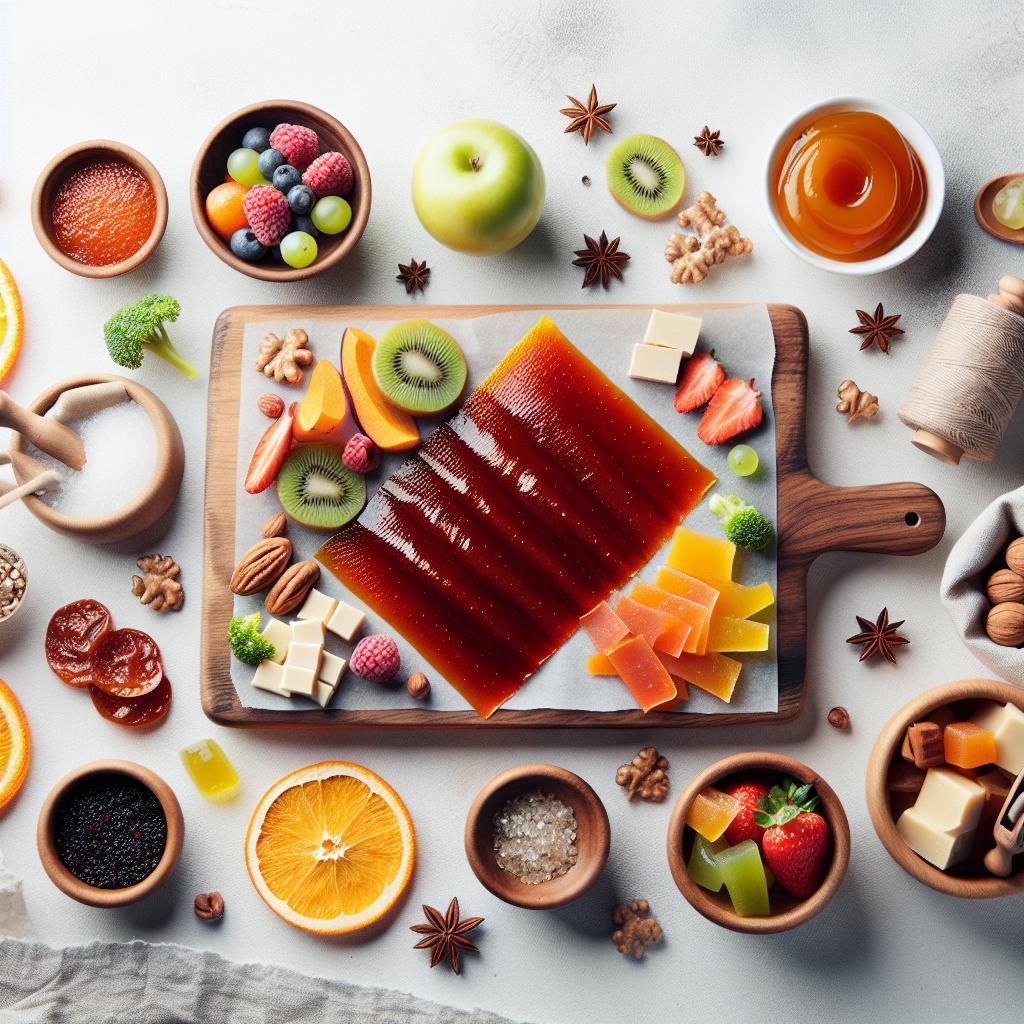
Serve fruit leather as a solo snack, pack it into lunchboxes, or pair strips with nuts and cheeses for contrast. The texture complements crunchy components.
Try slicing into small shapes with cookie cutters for parties or snack trays. Garnishing with fresh mint or citrus zest adds visual appeal.
Nutrition and Storage
Homemade fruit leather concentrates the sugars naturally present in fruit but avoids added preservatives. Portion control keeps servings balanced.
Store rolled sheets in airtight containers at room temperature up to a month. Refrigerate in humid climates or freeze for multi-month storage to retain texture.
| Nutrient | Per Serving (1 roll) |
|---|---|
| Calories | 90 |
| Protein | 1g |
| Carbohydrates | 22g |
| Fat | 0.2g |

Technical Notes on Safety and Texture
Drying lowers available moisture and thus reduces water activity, which limits microbial growth. Proper drying and clean storage increase shelf life.
Use clean utensils and trays, and ensure sheets are tack-free before room-temperature storage. When in doubt, refrigerate to extend freshness.
Quick Equipment Checklist
You need a blender or food processor, a rimmed baking sheet, parchment or silicone liner, and an oven with a low-temp setting. These tools keep the process accessible.
For consistent results, a silicone mat gives even heat distribution and easier release. If you dry frequently, a dedicated set of trays saves prep time.
Frequently Asked Questions (FAQ)
What is fruit leather made of?
Fruit leather is simply pureed fruit that has been dried into a thin sheet. The process removes most free water while retaining flavor and sugars.
Do I need a dehydrator?
No. You can use a standard oven at its lowest setting with the door slightly open to allow moisture to escape. A controlled airflow mimics a dehydrator.
How thin should the purée be spread?
Spread to about 1/8 inch thickness for a balance of chew and drying time. Thinner layers dry faster and can become brittle; thicker layers can remain tacky.
How long does homemade fruit leather last?
Stored airtight at room temperature, expect up to a month. Refrigeration extends shelf life, and freezing preserves quality for several months.
Can I add nuts or seeds?
Yes, but keep additions finely chopped and not too wet. Large pieces can create uneven drying and increase risk of mold if pockets of moisture remain.
For practical reference on oven design and heat flow, see oven. For broader context on preserving fruit and traditional methods, refer to the general fruit article.
See also: fruit leather