
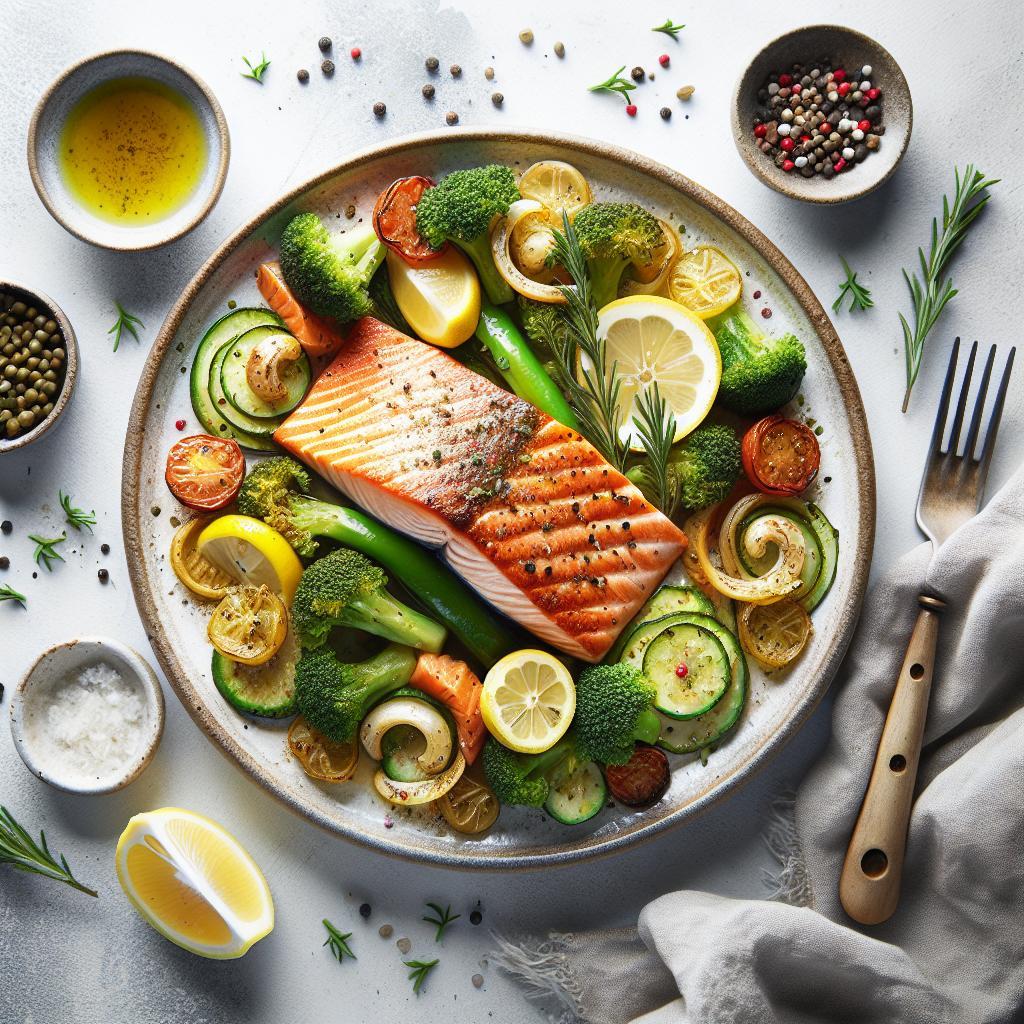

Effortless Oven-Baked Salmon: A Simple, Healthy Delight
Oven-baked salmon delivers tender, flaky fillets with minimal effort and reliable results. This method focuses on precise timing, a bright marinade, and simple technique so you get consistent texture and flavor every time.
- Quick cook: 12–15 minutes at moderate heat for most fillets.
- Minimal hands-on time: Simple marinade, little cleanup.
- Versatile: Works with quinoa, roasted veg, or leafy greens.
This approach suits busy cooks and anyone wanting a nutrient-dense dinner without fuss. The technique emphasizes skin-on, center-cut fillets, a balanced lemon-garlic-Dijon marinade, and careful oven timing to lock in moisture and flavor.
Choosing the Perfect Salmon Cut for Maximum Flavor and Texture
Start with the right cut to control cooking time and mouthfeel. A center-cut fillet gives uniform thickness, which bakes evenly and reduces risk of overcooked edges.
For stronger flavor and a firmer bite, choose a steak cut or bone-in portion. Look for bright, firm flesh and a clean scent; learn more about the species and life cycle of salmon to select sustainably and seasonally.
Mastering the Marinade: Simple Ingredients to Elevate Your Oven-Baked Salmon
A balanced marinade enhances natural oils without masking the fish. Combine extra virgin olive oil, minced garlic, citrus, and a touch of Dijon or honey to add acidity and a hint of sweetness that promotes caramelization.
Use high-quality oil and bright citrus for best results; the oil aids heat transfer and herb adhesion while acid brightens the flesh. For background on one common ingredient, see extra virgin olive oil and its flavor profiles.
Mix the marinade in a small bowl and whisk until emulsified so the lemon and oil bind. Apply by brushing or spooning over fillets just before baking, or marinate briefly in the refrigerator for added depth.
Optimal Oven Settings and Timing for Tender, Moist Results
Preheat the oven to 400°F (200°C) for predictable Maillard color and intact moisture. This temperature crisps the top layer while letting the interior remain tender when timed correctly.
Place fillets skin-side down on parchment or a lightly oiled pan to prevent sticking and to concentrate heat on the flesh. Bake 12–15 minutes for a standard 1-inch fillet; thicker pieces may need 15–18 minutes, while thinner cuts finish in 10–12 minutes.
Check doneness by flaking the thickest section with a fork; the flesh should separate into moist flakes and retain a faintly translucent center if you prefer medium. Allow a 1–2 minute rest out of the oven to let residual heat finish the cook gently.
Creative Serving Suggestions to Complement Your Healthy Salmon Delight
Pair baked salmon with sides that absorb its juices and echo its bright notes. Herbed grains and simple roasted vegetables keep the plate balanced while highlighting the fish.
Serve on a bed of fluffy quinoa or couscous to capture the pan juices and add textural contrast. Learn more about the grain option and its nutritional profile at the quinoa article.
Finish plates with lemon wedges, a scattering of fresh herbs, or a light yogurt-based sauce for cooling acidity. Small touches—like toasted nuts or seeds—add crunch without competing with the salmon’s flavor.
Prep and Cook Time
Prep Time: 10 minutes. Keep mise en place ready: measure oil, juice citrus, and mince garlic.
Marinating Time: 15–30 minutes optional. Brief refrigeration deepens flavor without altering texture dramatically.
Cook Time: 12–15 minutes. Monitor thickness and oven variance; the fish will finish cooking during the brief rest.
Yield
Serves 4 people when using four 6-ounce fillets. Scale ingredients linearly for larger batches; larger fillets increase cook time proportionately.
For consistent portions, opt for center-cut fillets so each serving cooks at the same rate and presentation remains uniform.
Difficulty Level
Easy. The technique relies on timing and simple seasoning rather than advanced culinary steps.
Perfect for home cooks who want reliable results without specialized equipment or skills.
Ingredients
Assemble ingredients before you start to streamline the process and minimize active hands-on time. Use fresh citrus and freshly minced garlic for the brightest flavor.
- 4 salmon fillets (6 ounces each), skin-on, center-cut
- 2 tablespoons extra virgin olive oil
- 2 cloves garlic, minced
- 1 tablespoon fresh lemon juice
- 1 teaspoon Dijon mustard
- 1 teaspoon honey
- Salt and freshly ground black pepper, to taste
- 1 teaspoon fresh thyme leaves or chopped dill
- Lemon wedges, for serving
Instructions
Organize your steps so the oven preheats while you mix the marinade. This reduces total elapsed time and keeps the process efficient.
- Preheat: Set oven to 400°F (200°C) and line a baking sheet with parchment or lightly oil a roasting pan.
- Make the marinade: Whisk olive oil, garlic, lemon juice, Dijon, honey, thyme, salt, and pepper until combined.
- Marinate: Pat fillets dry, brush marinade over the flesh, and optionally refrigerate 15–30 minutes for deeper flavor.
- Arrange: Place fillets skin-side down, spacing them to allow air circulation.
- Bake: Bake 12–15 minutes, checking the thickest fillet for flake and translucency at the center.
- Rest: Remove and let rest 1–2 minutes before serving with lemon wedges.
Tips for Success
Use skin-on fillets to protect the flesh and improve moisture retention; the skin crisps and gives texture when exposed to direct heat. Trim excess connective tissue for even presentation and eating quality.
Do not marinate in strong acid more than 30 minutes; prolonged citrus exposure can firm the surface and alter texture. For a consistent finish, use a kitchen timer and visual checks rather than guessing.
Serving Suggestions
Plate salmon with complementary textures and flavors to make the meal satisfying and balanced. Quick sides keep dinner fast while improving nutrient density.
Try herbed quinoa, steamed asparagus, or a crisp green salad with lemon vinaigrette. Small additions like toasted almonds or a dollop of yogurt-dill sauce enhance mouthfeel and freshness.

| Nutrient | Per Serving |
|---|---|
| Calories | 350 kcal |
| Protein | 34 g |
| Carbohydrates | 3 g |
| Fat | 22 g |
For consumers focused on nutrients, salmon provides abundant high-quality protein and long-chain omega-3 fatty acids, which contribute to heart and brain health. Consult reputable sources or your healthcare provider for guidance on frequency and portion sizes based on dietary needs.
Q&A
What makes oven-baked salmon a healthy choice?
Salmon contains high-quality protein and omega-3 fatty acids that support cardiovascular and cognitive function. Baking uses minimal added fat while preserving natural oils, so the cook method is nutrient-efficient.
How do I keep salmon moist and flaky without a thermometer?
Watch the thickest part: it should flake easily yet remain slightly translucent in the center for a moist finish. Remove the fish a minute or two before you expect it to be fully done; residual heat will complete the process.
Which seasonings complement salmon without overpowering it?
Keep flavors bright and light: lemon, dill, thyme, garlic, and a touch of mustard pair well. A small amount of sweetener balances the acid and encourages gentle browning on the surface.
Can I prepare salmon ahead for busy evenings?
Yes. Portion and season fillets, then refrigerate briefly before baking to save prep time. Cooked salmon reheats well in foil at low oven temperature, or serve chilled over salads for meal prep bowls.
Is baked salmon suitable for special diets?
Oven-baked salmon fits many eating plans: low-carb, paleo, Mediterranean, and high-protein diets. Adjust sides and marinades to meet specific dietary requirements or restrictions.
To Wrap It Up
Baked salmon is an efficient, reliable weeknight option that delivers nutrition and flavor with modest technique. Focus on a centered fillet, a balanced marinade, and precise timing to achieve tender, flaky results consistently.
Use the steps and safeguards above to tailor the method to your oven, preferred doneness, and side dishes. With a few minutes of prep and attention to timing, you can serve an elegant, healthful salmon dinner any night of the week.
See also: baked salmon