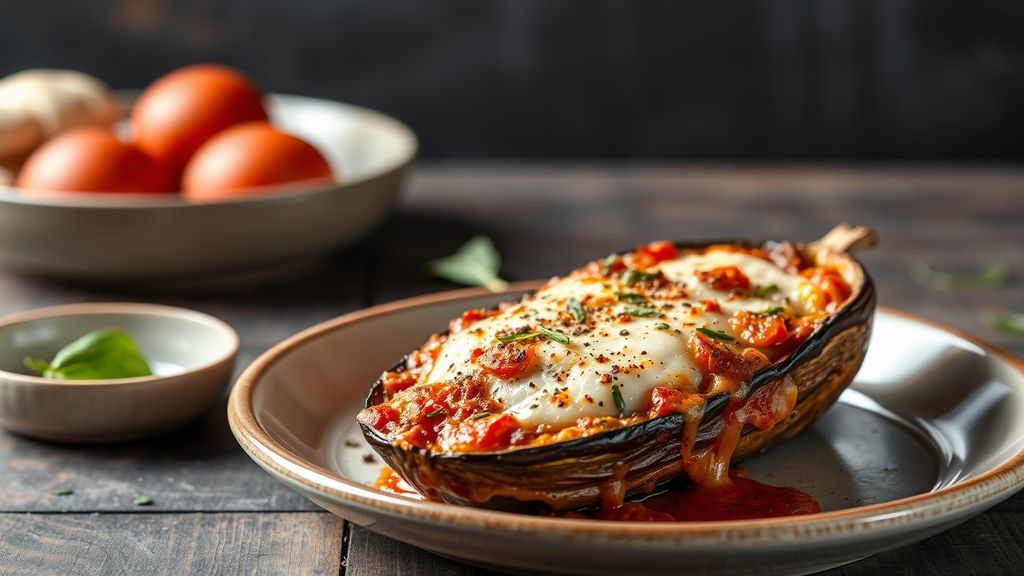

Eggplant Parmesan — Crispy Baked & Lighter
Eggplant Parmesan balances a crisp, golden crust with bright tomato sauce and melty cheese to deliver a satisfying main that reads lighter than its fried cousins. This oven-forward method uses moisture control, staging, and targeted heat to cut fat without sacrificing texture.
- Crisp crust without deep frying using a light breadcrumb coating and a high initial oven temperature.
- Moisture control through salting, patting, and air-drying to maintain bite and adhesion.
- Diet-friendly swaps such as gluten-free crumbs and part-skim cheeses keep flavor while reducing calories.
- Staged baking — par-bake slices, assemble, then finish — for consistent results.
Follow precise steps: salt to remove moisture, set the crust, and finish assembled layers at moderate heat for even melting. These tactics make the dish reliable whether you serve two people or a table of guests.
Key Takeaways
The core technique centers on moisture control and staged baking to preserve bite and crispness. Salted eggplant and an initial high-heat bake create a firm, golden base ready to hold sauce and cheese.
Use lighter cheese choices and portion control to reduce calories while keeping richness. Small swaps — part-skim mozzarella, less Parmesan, or more sauce — yield a noticeably lighter casserole with the same comforting profile.
Introduction
Eggplant, often called aubergine, gives this dish a dense, meat-like mouthfeel that soaks up sauce and seasoning. Salting and drying concentrate flavor and firm up slices so they crisp without collapsing in the oven.
This recipe adapts Southern Italian technique to an oven-first approach that trims oil. Expect crisp edges, tender centers, and a tomato-and-cheese balance that reads indulgent yet controlled.
Ingredients
Measure carefully to keep layers even and bake times predictable. The list below supports a 9×13-inch casserole that serves about four people and keeps bake windows tight.
Core ingredients:
- Two large eggplants (about 1.5 kg total)
- Tomato sauce: 4 cups (946 ml), rich and smooth
- Mozzarella cheese, shredded: 2 cups (about 210 g) — see cheese profile at Mozzarella
- Parmesan cheese, grated: 1 cup (about 90 g) — use a hard-grating cheese like Parmigiano-Reggiano
- Breadcrumbs or gluten-free breadcrumbs: 1 cup (90 g)
- Eggs: 2 large, beaten
- Olive oil: 2–3 tbsp (30–45 ml)
- Salt and pepper: to taste
- Fresh basil leaves: a handful, torn
For a clean acid balance, select a tomato base with minimal added sugar. For technique-focused guidance on the sauce, see our internal tomato-sauce primer and a roasting reference to pair with baked vegetables: Tomato sauce guide and Vegetable roasting basics.
Preparation
Begin with salt-curing to extract excess moisture from eggplant. Slice into 1/4–1/3 inch (6–8 mm) rounds, salt both sides, and rest 20–30 minutes on a rack to drain liquid and reduce potential bitterness.
After resting, rinse lightly if you used coarse salt and pat slices dry with paper towels. Drying most directly impacts crust adhesion and final texture, so be thorough but gentle to avoid tearing the flesh.
Prepping the Dredge
Set up a shallow station with beaten eggs and seasoned breadcrumbs. Add a teaspoon of grated hard cheese to the crumbs to boost savory impact, especially for gluten-free mixes.
Dip each slice evenly, shake off excess, and place coated rounds on a wire rack to air-dry for 10 minutes. This resting step helps the crust set and reduces the need for oil during baking.
Assembly and Baking
Preheat the oven to 425°F (220°C) for the initial bake. Lightly oil a parchment-lined sheet and arrange slices single-layered to encourage Maillard browning instead of steaming.
Initial bake: bake slices 15–18 minutes, flipping once, until edges develop color. Crowded pans trap steam and yield limp crusts, so bake in batches if needed.
Layering the Casserole
Spread a thin layer of tomato sauce in the baking dish, add a single layer of baked eggplant, spoon sauce, scatter mozzarella, and sprinkle Parmesan. Repeat to create two layers, finishing with sauce and cheese.
Lower the oven to 375°F (190°C) and bake 20–25 minutes until cheese bubbles and edges brown. Use the broiler for short bursts (1–2 minutes) to deepen color, watching continuously to prevent burning.
Rest the casserole 5–10 minutes before slicing so layers set and hold cleanly. Resting improves portioning and presentation.
Flavor Building
Enhance the sauce by gently sautéing garlic and a pinch of dried oregano before adding tomatoes. Searing aromatics briefly releases their oils and deepens the sauce without adding fat.
A splash of aged balsamic or a small amount of roasted tomato purée adds umami and rounded sweetness. Add sparingly; a little intensifies without overpowering the dish.
Variations and Dietary Substitutions
Swap breadcrumbs with certified gluten-free crumbs or finely ground nuts like almonds for a nutty crust. When using nuts, keep them slightly coarser to retain crunch under the layers.
For lighter cheese builds, use part-skim mozzarella and reduce Parmesan by 25–30%. Add dollops of ricotta mixed with lemon zest for creaminess without heavy fat.
Nutritional Info
Estimated per serving (about 1 cup assembled, ~250–300 g): Calories 320–420 kcal, Protein 14–20 g, Carbohydrates 28–34 g, Fat 16–22 g, Fiber 5–7 g, Sodium 520–760 mg. These ranges reflect differences in cheese and breadcrumb choices.
To cut sodium, rinse salted eggplant slices or use a low-sodium tomato base. To reduce fat, scale back cheese by a quarter and increase the proportion of sauce and herbs.
Expert Pro-Tips
Golden-brown edges come from high initial heat and good air circulation. Use a hot oven and space slices on a rack for uniform color and faster crust set-up.
Assemble the casserole slightly underdone if you plan to reheat. Hold for up to 24 hours refrigerated before the final bake to allow flavors to meld without losing texture.
- Whisk garlic into the sauce for an integrated savory thread.
- Add grated hard cheese to crumbs when using gluten-free mixes to boost flavor and browning.
- Rest before serving 5–10 minutes so slices hold shape and slice neatly.
Practical Notes on Tools and Timing
A wire cooling rack and a rimmed baking sheet matter more than many expect. They free hot air around slices and accelerate crust set-up without extra oil.
If you use a broiler to finish, position the rack so the cheese surface sits 4–6 inches from the element. Broil in very short bursts and monitor closely to prevent burning.
Conclusion
This baked approach preserves the comforting profile of Eggplant Parmesan while trimming oil and making results consistent. Salt, dry, and stage your bakes to keep texture and flavor aligned across servings.
Use the suggested swaps and timing guidelines to tailor the dish to dietary needs and kitchen rhythm. A reliably crisp, lighter casserole rewards precise technique more than exotic ingredients.
FAQ
What is the best way to salt eggplant for Eggplant Parmesan?
Slice the eggplant and sprinkle both sides with salt. Rest slices 20–30 minutes to draw out moisture, then pat dry; this firms the flesh and reduces potential bitterness.
Can I make Eggplant Parmesan ahead of time?
Yes. Par-bake the eggplant and store sauce and shredded cheese separately. Assemble up to 24 hours ahead and finish baking just before serving for the best texture.
What cheese combinations work best for Eggplant Parmesan?
A mix of shredded mozzarella for melt and grated hard cheese for bite works best. Try part-skim mozzarella for fewer calories and keep at least a cup of hard cheese for savory depth; see the Mozzarella and Parmigiano-Reggiano profiles for specifics.
How can I make this recipe gluten-free?
Use certified gluten-free breadcrumbs or substitute crushed nuts plus a small amount of gluten-free flour. Confirm that your tomato sauce and all packaged ingredients are labeled gluten-free to avoid cross-contamination.
Where can I read more about the core ingredients?
Background on eggplant appears at the aubergine page. Cheese details live at the Mozzarella and Parmigiano-Reggiano pages. For tomato basics, consult the Tomato sauce entry for technical differences among canned products.
See also: explore our Tomato sauce guide and Vegetable roasting basics for complementary techniques and sauce-building tips.
See also: Eggplant Parmesan