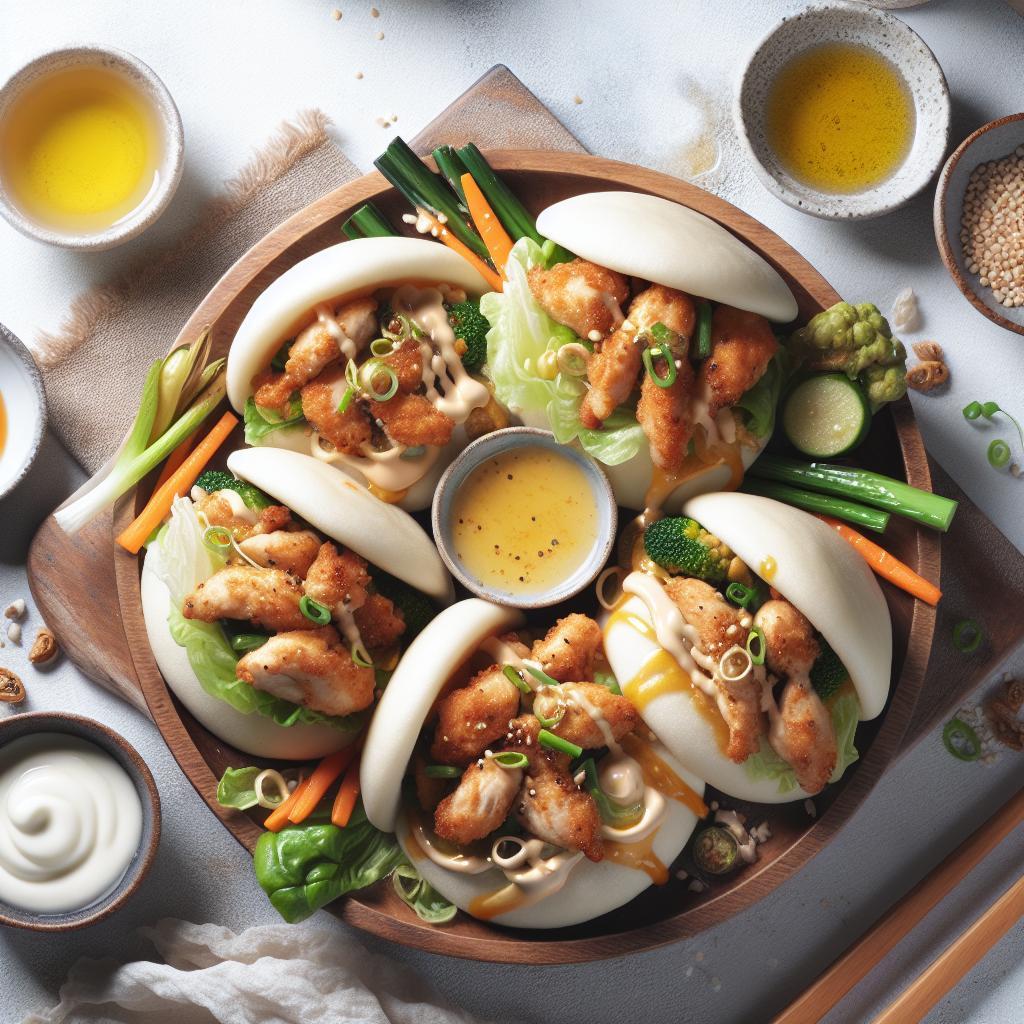

Fluffy chicken bao buns pair cloud-like dough with a savory, well-seasoned chicken filling. This recipe clarifies technique so you can reproduce restaurant-style texture at home.
- Key actions: precise dough hydration, correct proofing, gentle steaming.
- Timing: active prep about 45 minutes, steam 12–15 minutes.
- Yield: makes roughly 12 medium bao buns; serves 4–6.
- Storage: refrigerate shaped buns up to 24 hours or freeze for longer.
Overview and culinary context
Bao buns descend from East Asian filled breads known as baozi. The classic technique uses yeast and steam to yield a soft, hydrated crumb that yields when bitten.
This guide focuses on chicken as the filling to highlight lean protein and quick cooking. I use tested methods from professional kitchens so home cooks can achieve reliable results.
Prep and cook time
Preparation: about 45 minutes of active time including kneading, plus bench rests and proofing. Keep a thermometer handy for water temperature; aim near 110°F for yeast activation.
Cooking: steaming takes 12–15 minutes per batch. Allow a 3-minute post-steam rest to avoid collapsing the structure when lifting the lid.
Yield and difficulty
This recipe yields approximately 12 medium bao buns, suitable for 4–6 people as a share plate. Adjust portion size by dividing dough into smaller pieces for sliders or larger pieces for more substantial buns.
Skill level rates as medium: you must manage dough feel, proof timing, and steady steaming. With practice, the steps become repeatable and predictable.
Ingredients
Measure ingredients precisely for consistent dough behavior. Small shifts in water, sugar, or oil change fermentation speed and final texture.
Split ingredients into two sub-lists for dough and filling so mise en place stays organized at the bench.
Dough
Ingredients:
- 2 cups all-purpose flour, sifted
- 2 teaspoons instant yeast
- 3 tablespoons granulated sugar
- ¾ cup warm water (~110°F)
- 2 tablespoons vegetable oil
- ¼ teaspoon salt
Use room-temperature ingredients and weigh if possible. For slightly more structure, replace half the flour with bread flour to increase gluten strength.
Chicken filling
Ingredients:
- 1 lb ground chicken (thigh for moistness)
- 2 tablespoons soy sauce
- 1 tablespoon oyster sauce (optional)
- 1 tablespoon grated fresh ginger
- 2 cloves garlic, minced
- 1 tablespoon sesame oil
- 2 green onions, finely chopped
- ½ teaspoon white pepper
- 1 teaspoon brown sugar
- 1 cup finely shredded napa cabbage (optional for crunch)
Mix the filling ingredients lightly; overworking ground meat will tighten texture. Let the mixture rest at least 15 minutes so salt and acid balance penetrate the protein.
Instructions
Work systematically: make dough first, then the filling while dough proofs. That parallel approach reduces idle time and ensures components are ready together.
Follow eight clear steps below; each step includes the rationale so you understand the why behind each action.
Step 1: Prepare the bao dough
Combine sifted flour, instant yeast, sugar, and salt in a large bowl. Add warm water gradually and stir until a rough dough forms.
Turn the dough onto a lightly floured surface and knead for 8–10 minutes until smooth and elastic. Add oil midway through kneading for tenderness.
Step 2: First rise and handling
Place the dough ball in an oiled bowl, cover, and proof in a warm spot until doubled, about 45 minutes. This bulk fermentation builds gas and flavor.
Gently deflate the dough after the rise; avoid vigorous punching. Strong handling strips gas and reduces final loft.
Step 3: Prepare filling and shape buns
While the dough proofs, combine ground chicken with soy, oyster sauce, ginger, garlic, sesame oil, scallions, white pepper, brown sugar, and cabbage. Mix to distribute seasoning evenly.
Divide dough into 12 equal pieces, shape into balls, and flatten each into a 4-inch disk. Add about 2 tablespoons of filling, then pleat and seal the edge to form the bun.
Step 4: Proof and steam
Place each shaped bun on parchment squares inside your steamer. Let them rest another 15 minutes to puff slightly before steaming—this second proof reduces dense cores.
Steam over simmering water for 12–15 minutes. Keep heat steady and resist lifting the lid; a sudden temperature drop collapses the crumb.
Tips for success
Small technique choices change results markedly. Control water temperature, use a consistent kneading rhythm, and maintain a stable steaming environment to build repeatable quality.
Flour mix: all-purpose works well, but a 50/50 AP-to-bread flour blend increases chew and structure without losing softness.
Resting periods are not optional. They allow enzymes to relax the gluten, trap gas, and create the soft crumb typical of bao. Time your steps so proofing is uninterrupted by chores or distractions.
Creative serving suggestions
Serve baos hot from the steamer on bamboo baskets for visual appeal. Add crunchy pickles or quick-pickled vegetables to contrast the soft bun and rich filling.
Try fresh herbs like cilantro or Thai basil at the last second to add bright aromatics. Pair with a dipping sauce of soy, rice vinegar, and chili oil for tang and heat.
Nutritional information and storage
Estimate roughly 160 kcal per bun with about 12 g protein, 18 g carbs, and 4 g fat depending on specific ingredients. Use lean chicken and omit sugar to reduce calories further.
Store shaped buns in the fridge up to 24 hours or freeze on a tray then transfer to a sealed container. Proof from frozen before steaming to restore loft.
| Nutritional Info (per bun) | Calories | Protein | Carbs | Fat |
|---|---|---|---|---|
| Chicken Bao Bun | 160 kcal | 12 g | 18 g | 4 g |
Technique notes and troubleshooting
If buns collapse after steaming, the most common causes are under-proofing or a sudden lid lift. Under-proofed dough has less gas to expand and may deflate under heat.
Dough that feels sticky or tears when shaping likely needs more kneading or a small dusting of flour. Avoid adding too much flour; target a tacky but not wet feel.
For gluten-free attempts, substitute rice-based flour blends and a binding agent like xanthan gum. Expect different texture; steamed rice-flour buns will not match wheat-based elasticity but can still be enjoyable.
To understand fermentation basics and yeast behavior, consult reliable sources such as the yeast overview on Wikipedia. For steaming methods and equipment, the steaming article gives practical context.
Further reading and culinary links
For broader context on chicken and its culinary uses, refer to the general chicken entry. For the cultural history of filled buns, review the baozi article again to see regional variations.
Keep technique-focused references at hand as you practice; culinary outcomes improve quickly when you standardize temperatures and timings.
FAQ
What makes chicken bao buns fluffy?
Fluff comes from trapped steam and well-developed gluten. Yeast fermentation produces gas that expands during steaming and the steam sets the dough into a soft, hydrated crumb.
Maintaining correct proof times and steady steam preserves those gas pockets until the dough sets. Avoid sudden lid lifts that collapse the structure.
Can I use ground chicken breast instead of thigh?
Yes, but breast meat yields a leaner filling and can dry faster. Consider adding a small amount of grated onion or a teaspoon of oil to maintain juiciness.
Thigh meat gives more forgiving results for texture and moisture when steamed inside the bun.
How do I prevent buns from sticking to the steamer?
Cut parchment squares or lay cabbage leaves under each bun to create a barrier. Greasing the parchment slightly also helps release after steaming.
A clean, dry steamer with consistent simmering water reduces condensation that can force buns to adhere to the surface.
Can I make these ahead of time and reheat?
Yes. Refrigerate shaped buns up to 24 hours or freeze for longer storage. Thaw and give them a final proof before steaming to regain lift.
Reheat by steaming directly from chilled or lightly thawed state for best texture; microwaving will compress softness and create a denser crumb.
Are there vegetarian alternatives that match this texture?
Vegetarian fillings like seasoned tofu mixed with mushrooms and water chestnuts provide similar mouthfeel and moisture. Keep the dough recipe identical to preserve soft texture.
For plant-based protein alternatives, use finely chopped or crumbled textures that mimic ground meat to maintain filling cohesion inside the bun.
See also: Chicken Bao