
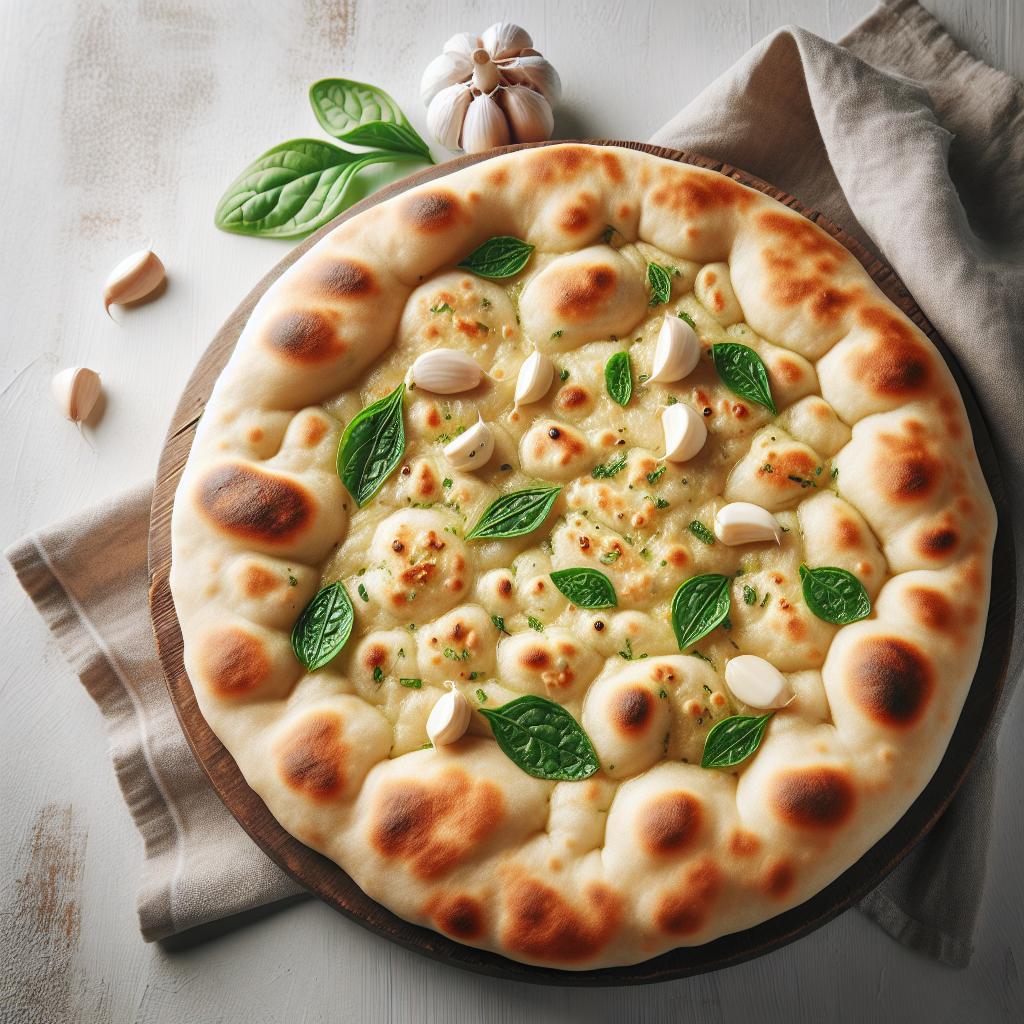

Garlic naan delivers soft, pillowy bread with a bright garlic-butter finish that elevates any meal. This guide focuses on reliable technique: active yeast, correct hydration, and a hot skillet for fast blistering.
- Airy texture: Active yeast plus a slightly wet dough yields a soft crumb with large pockets.
- Speed: A preheated cast-iron surface gives rapid charring and lift without special ovens.
- Finish: Brush hot naan with garlic butter to lock in moisture and flavor.
- Make-ahead: Cold fermentation deepens flavor and improves dough handling.
Essential Ingredients for Authentic Flavor and Texture
Choose ingredients that contribute structure and richness. Use active dry yeast, full-fat yogurt, and a little oil to support extensibility and softness.
Learn the basic background for core ingredients like naan, yeast, and yogurt to understand how each element affects crumb and flavor.
- 2 cups all-purpose flour — forms the tender base and gluten matrix.
- 1 teaspoon sugar — feeds the yeast for active fermentation.
- 1 teaspoon active dry yeast — primary leavening to create light air pockets.
- ½ cup warm water (105–115°F) — activates yeast without killing it.
- ¼ cup plain yogurt — lends acidity and moisture for a soft crumb.
- 2 tablespoons vegetable oil or melted ghee — improves elasticity and mouthfeel.
- ½ teaspoon salt — strengthens gluten and balances taste.
- 4 cloves garlic, minced — mixed into melted butter for brushing.
- 2 tablespoons unsalted butter, melted — for finishing hot naan.
- Fresh cilantro, chopped (optional) — bright garnish.
Prep, Timing and Yield
Plan for short active handling and longer passive fermentation when possible. The dough benefits from time to develop flavor and structure.
Preparation: 20 minutes active. Rising: 1 hour at room temp or 8–24 hours in the refrigerator for slow fermentation. Cooking: 15 minutes for a batch. Total time varies with cold proofing.
Yield
This recipe makes 6 medium garlic naans, roughly plate-sized. Scale ingredients proportionally for larger batches.
Smaller portions cook faster and may blister differently; adjust cooking time by 10–20 seconds per side as needed.
Difficulty Level
Rated Easy–Medium. No specialized equipment required beyond a heavy skillet or griddle.
Key technique points: correct water temperature for yeast activation, dough hydration, and high, even heat for blistering.
Step-by-Step Guide to Crafting Irresistible Garlic Naan
Work methodically through activation, mixing, and cooking. Short rests and steady heat control deliver consistent bubbles and char.
Use a heavy skillet or griddle to mimic tandoor-style blistering. Preheat it until it radiates steady, even heat and you see faint smoke at the surface.
- Activate the yeast: Stir sugar into ½ cup warm water and sprinkle yeast on top. Wait 5–7 minutes until foamy; this confirms yeast viability.
- Mix the dough: Combine sifted flour and salt in a bowl. Add yogurt, oil, and the yeast mix. Stir to form a slightly sticky dough.
- Knead for softness: Turn dough onto a lightly floured surface and knead 8–10 minutes until smooth and elastic. Keep the dough tacky to promote an open crumb.
- First rise: Lightly oil a bowl, place dough inside, cover with a damp cloth, and let rise until doubled—about 1 hour at room temperature.
- Divide and shape: Gently deflate the dough, divide into six pieces, and shape each into a tight ball. Rest 10 minutes to relax the gluten.
- Roll out: Roll each ball into a ¼-inch thick oval or tear-drop shape. Slightly wetter dough will yield larger air pockets during cooking.
- Cook: Preheat a cast-iron skillet until very hot. Cook each naan 1–2 minutes per side until bubbles form and brown spots appear. Flip and cook the other side quickly.
- Garlic butter finish: Combine melted butter and minced garlic. Brush hot naan generously, then garnish with cilantro and serve immediately.
Expert Tips for Flawless Cooking and Serving
Small adjustments significantly change results. Control dough hydration: a slightly wetter dough produces more open pockets and softer crumb.
Preheat your cookware thoroughly. A cast-iron surface replicates the rapid heat transfer of a tandoor and promotes quick blistering and charring.
Brush naan immediately after cooking so butter melts into the pores and keeps the interior tender. For a richer profile, use melted ghee instead of plain butter.
Want extra char? After skillet cooking, place the naan under a hot broiler for 20–30 seconds to mimic an open flame finish, watching closely to prevent burning.
Serving Suggestions and Pairings
Garlic naan pairs exceptionally well with rich, saucy curries and grilled proteins. Its texture makes it a versatile vehicle for dips and wraps.
Serve hot with a pat of butter, lemon wedges, or a cool raita. For a meal, pair with roasted vegetables or a yogurt-based sauce to balance richness.
For quick ideas, use naan as a base for flatbread-style pizzas or fold it around spiced kebabs for handheld servings.
See related guides on best butter for bread and homemade flatbread techniques for more on finishes and shaping.
Nutrition and Storage
Calories vary by size and finish. A medium garlic naan with butter typically contains roughly 180–220 kcal depending on portion and added fats.
To store, cool completely and wrap each piece in foil or plastic. Keep at room temperature up to two days, refrigerate up to a week, or freeze for up to one month.
| Nutrition | Per Naan |
|---|---|
| Calories | 180 kcal |
| Protein | 5 g |
| Carbohydrates | 30 g |
| Fat | 5 g |
Recipe Variations and Substitutions
Small swaps can adapt this recipe to dietary needs. For a vegan option, use a plant-based yogurt and vegan butter alternative for brushing.
For gluten-free, use a tested gluten-free flour blend with xanthan gum to mimic structure; expect a different crumb and handle the dough gently.
Flavor variations: fold chopped roasted garlic into the butter for a mellow profile or add nigella seeds for traditional topping texture and aroma.
For a richer bread, swap some water for milk or add 1 tablespoon of melted ghee to the dough for extended softness and a golden finish.
FAQ
What causes dense naan?
Dense naan usually signals inactive yeast, under-proofing, or too much flour during kneading. Confirm yeast foams during activation and keep the dough slightly tacky.
Also check water temperature and proof time; cold dough needs more time to rise after refrigeration.
Can I cook naan in the oven?
Yes. Use a preheated baking stone or heavy sheet at very high heat (about 500°F) and finish under the broiler to encourage blistering.
The skillet method remains faster and excellent for small batches, while the oven suits larger quantities and simultaneous baking.
How long can I refrigerate the dough?
Refrigerate dough up to 48 hours for optimal flavor development. Longer storage may reduce yeast viability; freeze portions if you need extended storage.
Bring refrigerated dough to room temperature before shaping to make rolling easier and to recover some activity from the yeast.
Should garlic go in the dough?
Keep fresh garlic out of the dough for best fermentation and flavor. Garlic in the dough can interfere with yeast and change fermentation dynamics.
Instead, combine minced garlic with melted butter and brush onto hot naan to preserve pungency and aroma.
How do I reheat leftover naan?
Reheat in a hot skillet 30–60 seconds per side, or wrap in foil and heat in a 350°F oven until soft. Add a small pat of butter after reheating for restored tenderness.
For quick microwave reheating, cover with a damp paper towel to maintain moisture, though texture will differ from skillet reheating.
With these methods and attention to dough feel, you can reproduce restaurant-quality garlic naan at home consistently. Practice hydration and heat control to refine results.

Related reading: Learn more about the history and technique behind flatbreads on Naan, fermentation science at Fermentation, and cookware behavior at Cast-iron cookware.
See also: garlic naan