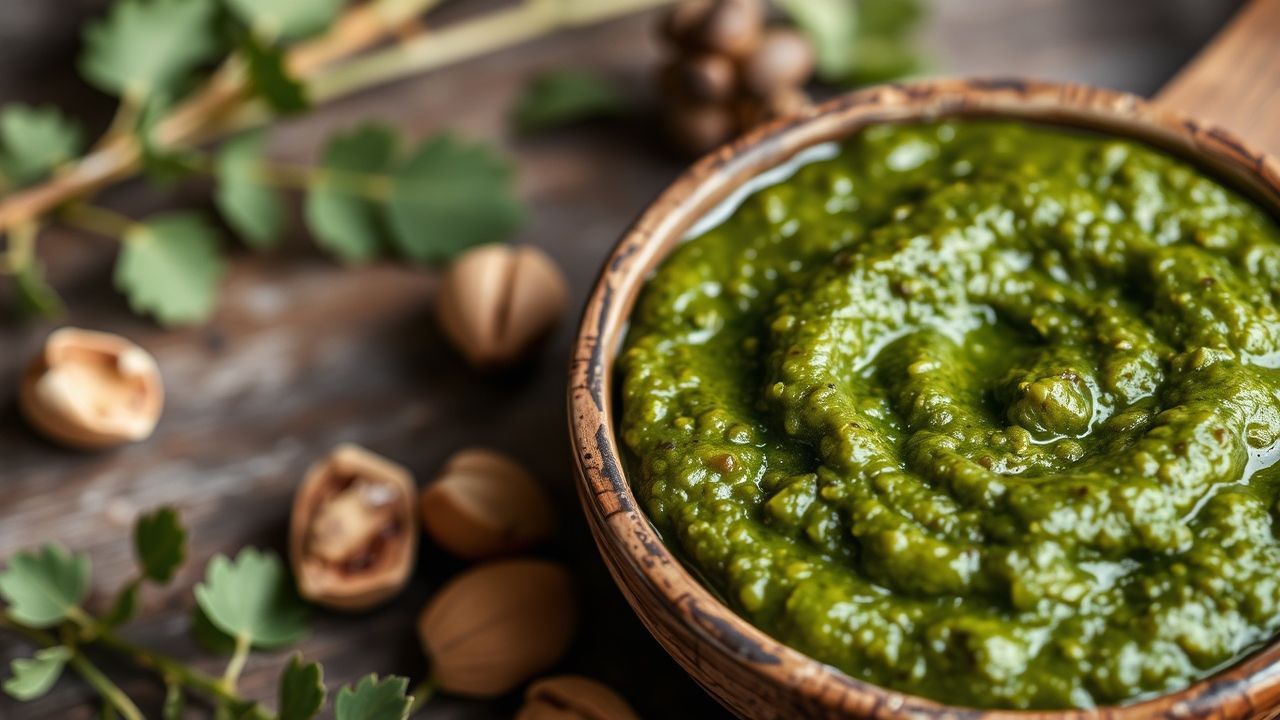

Foraged Flavor: Crafting wild pesto with nuts brings bright, untamed herbs into a classic emulsion and turns seasonal greens into concentrated sauce-ready flavor. This guide begins with safe plant identification and moves through blanching, nut to green balance, emulsification technique, and storage so you get repeatable results.
- Pick young leaves for a tender texture and manageable bitterness.
- Toast nuts briefly to develop aroma without overwhelming the greens.
- Blanch then ice to lock vivid color and remove raw edge from tougher herbs.
- Seal with oil in jars or freeze small portions for peak flavor later.
Foraging Fundamentals — Unlocking the Best Wild Greens for Pesto
Accurate plant identification reduces risk and improves flavor outcomes. Use multiple references and, when possible, learn local phenology and seasonal windows from experienced foragers.
Start with mild young leaves such as ramsons (wild garlic) or young nettles to avoid overwhelming bitterness that masks the nut and oil notes. For botanical context, review the Allium ursinum entry for wild garlic and the Urtica dioica page for nettles.
Harvest from clean locations away from heavy traffic, agricultural runoff, or industrial sites. Always photograph specimens and compare them with field guides before taking any plant home to your kitchen.
When handling stinging or fibrous species, use gloves and carry scissors or snips to avoid unnecessary damage to the plant and to yourself. Respect local regulations and take only a sustainable portion of a patch to preserve future growth.
Recipe Snapshot
Prep Time: 15 minutes active. Cook Time: 1–2 minutes blanching and a few minutes for toasting and blending. Short, deliberate heat steps preserve color and volatile aromatics.
Yield: About 1 cup (roughly 4–6 servings at 2 tablespoons each). Scale in batches for larger quantities to preserve texture and avoid overheating blends.
Difficulty: Medium. Technique is straightforward but requires sensory judgment around bitterness, acidity, and mouthfeel.
Ingredients
Use clean, well-trimmed greens and quality nuts. Fresh olive oil and a hard aged cheese stabilize the emulsion and add savory depth.
- 2 cups fresh wild greens (young nettles, dandelion leaves, or wild garlic, washed and trimmed)
- 1/2 cup nuts (toasted walnuts or hazelnuts)
- 2 cloves garlic, peeled
- 3/4 cup extra virgin olive oil
- 1/2 cup finely grated aged cheese such as Parmesan
- 1 tbsp fresh lemon juice
- Salt and pepper to taste
For dairy-free versions use nutritional yeast or a firm plant-based grated cheese. To reduce oil, add small amounts of chilled water while blending to reach a spoonable texture without thinning the flavor.
Substitute nuts based on flavor goals: walnuts add earthy weight; hazelnuts bring sweetness; pine nuts produce a creamier, more traditional mouthfeel.
Instructions
Work methodically to preserve color and volatile aromatics. Use a timer during blanching and an ice bath to stop cooking immediately.
1. Blanch: Bring salted water to a rapid boil, add greens for 1–2 minutes until bright, then plunge into ice water. This removes raw edge, tames irritants, and sets color.
2. Drain well: Squeeze or spin until dry; excess water dilutes oil and prevents a stable emulsion. Drying is a non-negotiable step for bright flavor and proper texture.
3. Toast nuts: Dry-skillet toast over medium heat, stirring constantly for 3–5 minutes until fragrant. Cool before blending; hot nuts release oils differently and can alter the final texture.
4. Pulse the base: In a food processor pulse the cooled nuts, blanched greens, and garlic until coarsely chopped. Avoid over-processing to retain pleasant bite.
5. Emulsify: With the processor running, drizzle in olive oil until creamy yet textured. Stop and scrape frequently for even blending and temperature control.
6. Finish: Add lemon juice and grated cheese, then pulse briefly. Taste and adjust salt and pepper to balance bitterness and acidity for a clean, layered profile.
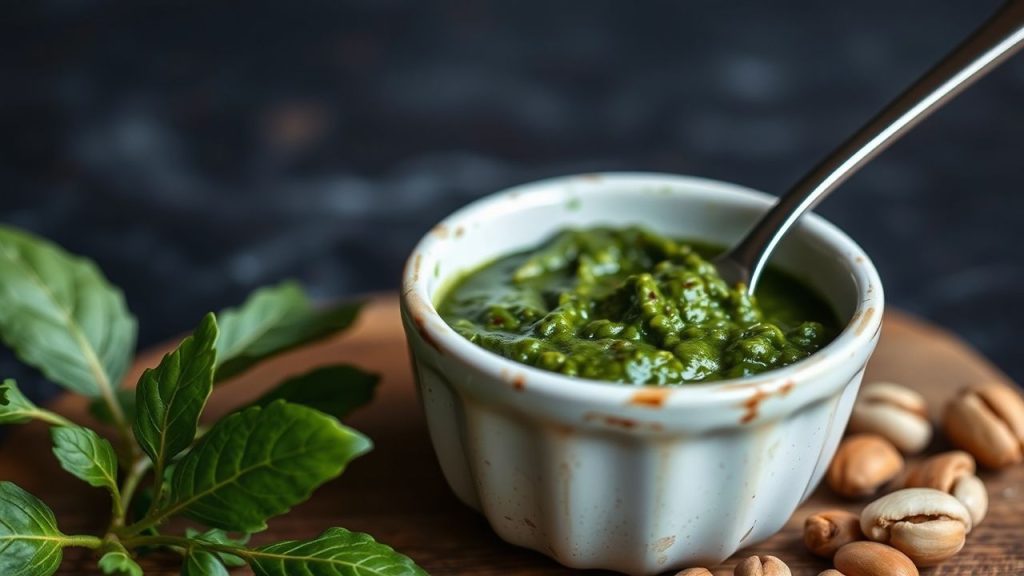
7. Store: Transfer to a clean jar, level the surface, and pour a thin oil film to limit air contact. Refrigerate up to three days or freeze in small portions for up to three months.
Tips for Success
Balance defines a successful wild pesto: greens, nuts, acid, salt, and fat must complement rather than compete. Make small adjustments of lemon and salt because each change shifts the whole profile.
When blending, use short bursts to control heat and texture. Overheating mutes color and volatile aromatics, so keep the processor cool with pauses and small batches.
Keep notes about which wild patches produced the best flavor each season. Over time you build a reliable local repertoire and predictable outcomes, which improves both foraging and culinary decisions.
Serving Suggestions
Wild pesto stretches beyond pasta. Spread on grilled bread, toss with roasted vegetables, fold into grain bowls, or finish grilled proteins for an herbal lift.
For presentation, add toasted whole nuts, a sprinkle of grated cheese, and fresh lemon zest for brightness. Pair with crisp white wines or herb-forward cocktails to accent seasonal menus.
Nutrition
Calories depend largely on olive oil and nuts. Two tablespoons deliver concentrated fats and a modest protein contribution from nuts and cheese.
To lower calories, reduce oil and increase water or vegetable stock sparingly. For vegan swaps eliminate cheese and use nutritional yeast or ground seeds to add savory depth and texture.
Herbal Notes and Pairing Science
Different wild herbs contribute specific chemical families that shape taste. Sulfides produce allium notes; bitter glycosides supply green edge; volatile terpenes contribute aroma.
Pair fats and acids deliberately because fats carry volatile aromatics while acids sharpen green flavors and tame bitterness. For botanical context on classic pesto technique consult the Pesto article.
Walnuts pair well with bitter greens by adding sweet, tannic counterpoints; see the Walnut entry for basic nut chemistry. Olive oil acts as the aromatic carrier—review Olive oil for varietal effects.
Storage and Scaling
Freeze pesto in ice-cube trays or small tubs for single-use portions that thaw quickly without major loss of aroma. Label with date and composition so you can track which combinations perform best.
When scaling up, process in smaller batches to avoid overheating and uneven texture. Taste each batch and adjust lemon and salt because larger volumes can mute perceived acidity and saltiness.
Return to your recipe box with notes on patch, harvest date, and flavor outcomes. That record-keeping is a practical path to repeatable, seasonally driven results.
FAQ
Can I use raw wild greens instead of blanching?
Yes, if the leaves are very young and tender, such as early ramsons. However, blanching improves color, softens fibers, and neutralizes irritants in species like nettles.
What nuts give the best texture and flavor?
Walnuts add earthy depth and work well with bitter greens; hazelnuts provide a sweet, buttery tone. Pine nuts yield a classic, creamier profile but cost more.
How long will homemade wild pesto last?
Refrigerated and sealed with an oil film, pesto stays at peak flavor for about three days. For longer storage, freeze small portions for up to three months.
Are there safety concerns for eating foraged pesto?
Yes. Confirm plant ID and avoid harvesting from polluted areas. When handling stinging species, use gloves and blanch to neutralize potential irritants.
Can I scale this recipe for larger batches?
Yes. Scale ingredients proportionally and process in batches to avoid overheating. Taste and tweak lemon and salt per batch because perceived acidity shifts with volume.
For further inspiration within our site, explore related recipes and seasonal guides at wild pesto and the general recipes index. Those internal resources help you apply the method across menus and pantry scenarios.
By following decisive technique—clean harvest, brief blanch, correct nut toast, and careful emulsification—you transform seasonal wild leaves into a consistently excellent condiment. The method preserves color, brightens herbal notes, and yields a versatile pesto that integrates across dishes.
Return to your recipe box with small frozen portions for quick use, and record which wild patches delivered the best flavor each season. Over time, you build a reliable local repertoire that highlights place through taste.
Recommended Reading:
- Soothing Plantain Salve: 7-Step DIY Bug Bite Relief
- Fresh & Flavorful Watercress Recipes: 2 Soup and Salad Ideas
- Wild Greens Mastery: 7 Steps to the Perfect Wild Green Salad