
Fresh Flavors: Crafting the Perfect Greek Salad with Feta
Classic Greek salad captures clean, vibrant Mediterranean flavors with minimal fuss. This guide breaks down ingredient selection, dressing balance, and plating for reliably excellent results.
- Key balance: ripe tomatoes, crisp cucumber, briny olives and creamy feta.
- Dressing ratio: olive oil to acid roughly 4:1 for a bright finish.
- Texture matters: chunky cuts preserve crunch and visual appeal.
- Serve fresh: dress just before serving to keep vegetables crisp.
The Art of Selecting Crisp Vegetables for Authentic Greek Salad
Start with the freshest produce you can find, and choose items that offer contrasting textures. For a reliable benchmark, pick tomatoes that feel heavy for their size and cucumbers that are firm to the touch.
When possible, source market tomatoes that show deep color and natural aroma; they deliver both sweetness and acidity. For basic botanical context on common salad ingredients, see Greek salad for the traditional component list and variations.
Vegetables to prioritize
Choose ripe tomatoes, firm cucumbers, sweet red onion and crisp green peppers to preserve the salad’s signature contrasts. Each vegetable contributes a distinct mouthfeel that the feta and dressing should complement rather than mask.
For cucumber background and varietal differences, consult cucumber resources; Persian and English types differ in skin thickness and seed size. Use thin-skinned varieties for a quick-prep salad and peel thicker-skinned types to avoid bitterness.
Chopping and texture
Cut tomatoes into wedges and cucumbers into chunky half-moons to retain juice and crunch. Keep onion slices thin to moderate their sharpness and prevent them from overwhelming milder elements.
Maintain consistent bite-size pieces so every forkful combines two or three ingredients. Chunky cuts also photograph well and match the rustic identity of the dish.
Unlocking the Secret to Creamy and Tangy Feta Choices
Feta should taste tangy and slightly salty, with a crumbly yet moist texture that breaks into satisfying chunks. Seek authentic Greek-style feta for the rich sheep-or-blend flavors that define the salad’s profile.
For a concise primer on the cheese itself, reference feta to understand milk origin and protected designation of origin (PDO) rules. Choosing PDO-certified feta often ensures a balanced acidity and proper aging profile.
Bring feta to room temperature before plating so its flavors open up and the mouthfeel softens. Room-temperature cheese produces a creamier sensation and integrates with dressing without becoming greasy.
Reserve a portion of larger feta chunks for topping and fold smaller pieces through the salad for distributed salt. A mix of chunked and crumbled feta gives both visual appeal and layered taste experience.
Balancing Zesty Dressings to Elevate Every Bite
A simple vinaigrette highlights fresh produce when you use quality oil and a bright acid. Stick to a basic ratio of about four parts extra virgin olive oil to one part lemon or mild vinegar, then season to taste.
Use an unadorned cold-pressed olive oil to carry aromatics and herbs without overpowering vegetables. For background on the primary fat component and its culinary uses, see olive oil for production types and flavor notes.
Quick dressing formula
Whisk together 1/4 cup extra virgin olive oil, 2 tablespoons fresh lemon juice, 1 tablespoon mild vinegar, salt, pepper and a pinch of dried oregano. Emulsify briefly so oil and acid bind, then taste and adjust salt to balance the acidity.
Add oregano sparingly so herbs echo the salad without converting it into a herbed bowl. If fresh oregano is available, tear a few leaves into the dressing for brightness rather than shredding them into small pieces.
Presentation Tips to Make Your Greek Salad Irresistibly Fresh
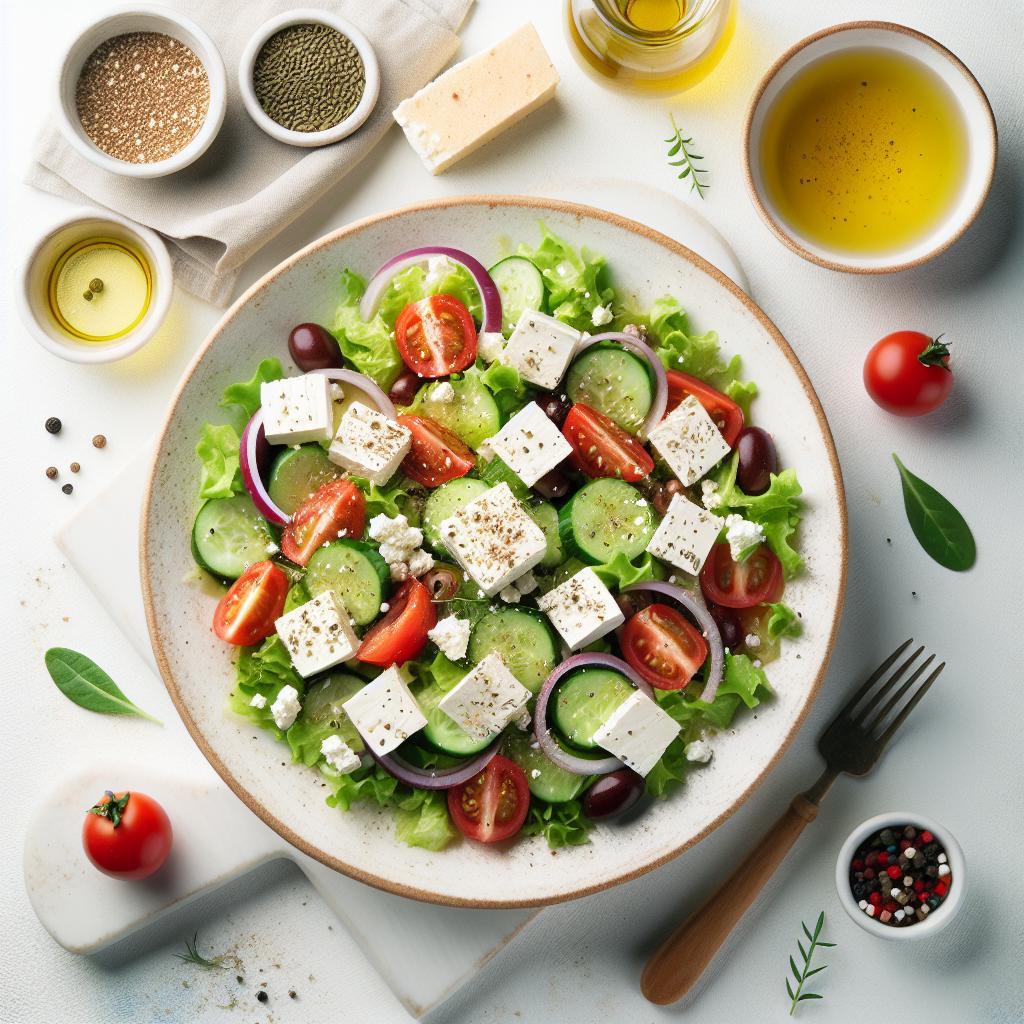
Lay ingredients in chunky, colorful layers or scatter them for a casual, rustic look that invites people to dig in. Top with larger feta chunks and finish with a light grind of black pepper to signal flavor depth.
Use a shallow bowl or platter to showcase contrast; the white feta and glossy tomatoes create strong visual appeal. For herb context and common Mediterranean garnishes, consult oregano for its role in regional cooking.
Garnish and serving ideas
Sprinkle torn flat-leaf parsley or a few fresh oregano leaves to add aromatic lift and color. Consider a few whole Californian- or Greek-style olives for salty pops and to honor traditional pairings.
Serve the salad alongside warm, crusty bread or as a companion to grilled proteins like lemon-herb chicken or shrimp. Present the dressing on the side if guests prefer to control moisture levels and saltiness.
Practical plating tips
Aim for balanced distribution: avoid clumping all tomatoes or cucumbers in one area of the bowl. Place larger feta pieces on top so the cheese remains visually dominant and easy to portion.
Take photos in natural light and keep backgrounds neutral to emphasize color contrast. A shallow depth-of-field highlights textures and makes the salad look mouthwatering in social posts or recipe galleries.
Prep and Cook Time
Prep Time: 20 minutes. The salad needs no cooking, so focus time on clean, precise cutting and dressing preparation.
Cook Time: 0 minutes. This dish is fresh and raw, which preserves nutrients and the pure vegetable flavors.
Yield and Difficulty
Yield: Serves 4 generously; adjust quantities linearly for larger groups. The recipe scales easily without altering the texture balance when you maintain cut sizes.
Difficulty: Easy. This salad emphasizes technique more than technique equipment; a sharp chef’s knife and a whisk produce the best results.
Ingredients
List the core components before assembling to streamline prep and ensure proper ratios. Use fresh produce and a quality block of feta for straightforward, reliable flavor.
- 4 medium ripe tomatoes, cut into wedges
- 1 large cucumber, peeled and sliced into half-moons
- 1 green bell pepper, thinly sliced
- 1 small red onion, thinly sliced
- 200g authentic Greek feta cheese, crumbled into chunks
- ¼ cup extra virgin olive oil
- 2 tbsp fresh lemon juice
- 1 tbsp mild vinegar
- 1 tsp dried oregano
- Sea salt and freshly ground black pepper, to taste
- Fresh oregano or flat-leaf parsley, for garnish
Instructions
Follow a logical sequence: wash, slice, dress, top and serve to protect texture and flavor. Keep tools and bowls dry so cut produce does not become diluted by excess water.
- Prepare the vegetables: Wash and dry everything thoroughly. Cut tomatoes into wedges, slice cucumber into half-moons, and thinly slice bell pepper and red onion.
- Make the dressing: Whisk olive oil, lemon juice, mild vinegar, sea salt, black pepper and dried oregano until combined. Taste and adjust the balance; a drop more acid brightens, a pinch more salt grounds the flavors.
- Assemble the salad: Combine tomatoes, cucumber, bell pepper and onion in a large bowl. Drizzle dressing lightly and toss gently to coat without crushing the vegetables.
- Add feta: Place feta chunks on top or fold in small pieces, reserving larger crumbles for visual contrast. Let feta rest at room temperature beforehand to maximize creaminess.
- Toss lightly: Use two large spoons to gently combine, then finish with a sprinkle of fresh oregano or parsley. Serve immediately with bread or grilled sides.
Tips for Success
Dress the salad just before serving to preserve crunch and avoid dilution from released juices. If you must dress early for transport, keep dressing separate and combine at the last minute.
Experiment with heirloom tomatoes for visual complexity and nuanced sweetness. Swap lemon for lime for a subtle citrus variation, but keep the oil-to-acid ratio steady for balance.
- Use medium-sized feta chunks for taste bursts.
- Keep cut sizes consistent for even eating.
- Reserve a light finishing drizzle of oil at plating for gloss and aroma.
- Toast a few pine nuts sparingly for textural contrast if desired.
Serving Suggestions
Pair with grilled proteins or a mezze spread to create a fuller meal centered on bright flavors. Offer warm bread for soaking up juices and for a pleasing temperature contrast against chilled vegetables.
For a lighter presentation, serve the salad over lemony grilled fish or alongside chilled chickpea salads. Garnish with whole olives or capers to enhance salinity and visual depth.
| Nutrient | Per Serving |
|---|---|
| Calories | 210 |
| Protein | 7g |
| Carbohydrates | 12g |
| Fat | 17g |

Q&A
Q1: What makes a Greek salad truly authentic?
A1: Authentic Greek salad emphasizes simplicity: ripe tomatoes, crisp cucumbers, red onion, Kalamata olives and sizable blocks of feta. Traditional seasoning uses olive oil, a dash of acid, and dried oregano to let each element speak.
Q2: How important is the feta and which type should I use?
A2: Feta anchors the salad with saline creaminess; choose Greek or PDO-style feta for characteristic tang and texture. Balanced feta avoids an overly chalky or excessively salty profile and blends better with the dressing.
Q3: Can I assemble in advance?
A3: Assemble lightly but keep dressing separate until just before serving to prevent moisture release and limp vegetables. If transport is required, pack ingredients in layers and combine at the venue.
Q4: What ratio makes a reliable dressing?
A4: A practical starting point is 4 parts oil to 1 part acid, then adjust with salt and a pinch of oregano. Taste and tweak to match the tomatoes’ natural sweetness and the feta’s salt level.
FAQ
How do I choose the best tomatoes for flavor?
Pick tomatoes that feel heavy for their size and emit a fresh tomato aroma. Heirloom varieties often offer better flavor depth and color contrast.
Should I remove cucumber seeds for this salad?
Not always; remove seeds if cucumbers are watery or large-seeded. Persian cucumbers typically do not require de-seeding and maintain crispness.
Can I substitute a different cheese?
For a variation, try a firm white cheese with tang, but avoid creamy fresh cheeses that will mix into dressing. The texture contrast of block feta is central to the dish.
What olive type pairs best with a Greek salad?
Kalamata or similar briny, dark olives provide ideal salt and complexity. Choose pitted olives when serving to make eating easier for guests.
How should leftovers be stored?
Store leftovers undressed or with dressing separate in the fridge for up to 24 hours for best texture. Dress only before serving to reduce water release and sogginess.
For further study on traditional ingredients and regional variations, consider reading the encyclopedia entry on Greek salad and the cheese entry on feta to deepen your technical understanding.
See also: Greek salad