
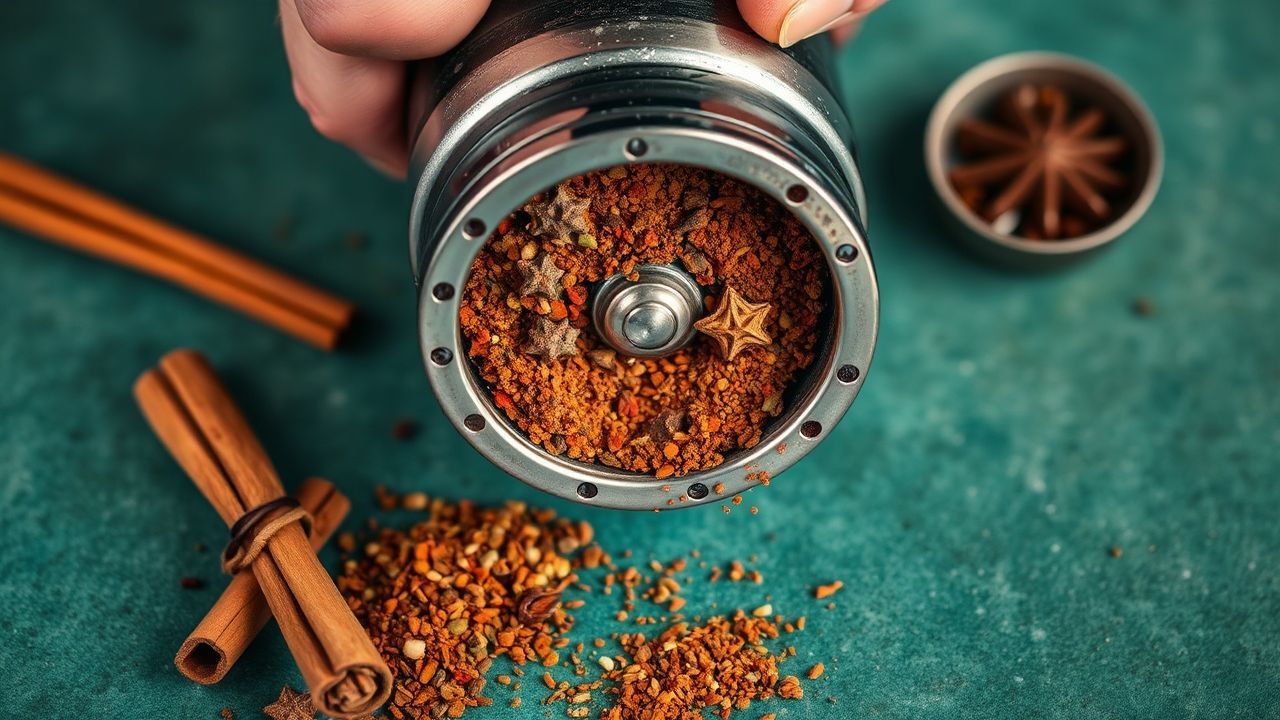

Fresh & Flawless: Mastering the Art of Cleaning Your Spice Grinder explains practical, tested methods to remove oil, residue, and lingering aromas from both electric and manual spice grinders. Clean grinders produce true spice flavor, reduce cross-contamination, and extend blade life.
- Quick wins: Pulse uncooked rice to absorb oils and loosen debris.
- Deep clean: Use baking soda or vinegar soaks on removable parts to neutralize odors.
- Routine care: Short, regular maintenance keeps blades sharp and flavors pure.
Why clean your spice grinder?
Residue from oily seeds, dried herbs, and strong aromatics builds up inside grinders and alters flavor over time. That buildup creates cross-flavor contamination, which makes delicate spices taste muted or off.
Cleaning also protects mechanical components. Moisture and trapped particles can dull blades, corrode metal, and shorten the life of plastic parts.
Tools and materials you need
Gather a small soft brush, a lint-free cloth, uncooked white rice, baking soda, mild dish soap, and optional white vinegar. These items let you tackle both quick maintenance and deeper odor removal safely.
For reference on common ingredients used as abrasives or deodorizers, see rice, sodium bicarbonate, and vinegar.
Step-by-step cleaning: core routine
Start each session by unplugging the unit or removing batteries and disassembling removable parts. Work on a clean, well-lit surface and collect parts in a single tray so nothing gets lost.
Keep steps short and repeatable: dry abrasive pulsing, brushing, and a final wipe are enough for routine maintenance. If odors persist, move to the deep-clean section below.
Electric grinders: quick maintenance
Unplug the grinder before you touch the motor housing. Remove the grinding chamber, lid, and any detachable blades or burrs so you only clean non-electrical parts with liquids.
Pour 1–2 tablespoons of uncooked white rice into the chamber and pulse until the rice powders. The rice acts as a dry abrasive to collect oils and loosen stuck particles. Discard the powder and brush remaining bits into the trash.
Manual grinders: quick maintenance
Disassemble the manual grinder; most models separate into lid, hopper, grinder body, and base. Use a soft brush or a clean toothbrush to sweep away trapped spice fragments in crevices and gear teeth.
If the manual unit’s parts are ceramic or stainless steel, rinse them briefly under warm water with mild soap, then dry immediately. Avoid soaking wooden or untreated metal parts; they can warp or rust.
Deep cleaning and odor removal
When simple maintenance leaves residual aroma, targeted cleaners neutralize odors. Use a paste of baking soda and water for stubborn smells, or a short vinegar soak for removable non-electrical parts.
Make the baking soda paste (about 1 teaspoon baking soda to a few drops of water), apply it to surfaces, wait five minutes, then rinse thoroughly and dry. For vinegar, dilute two tablespoons in a cup of warm water and soak parts for ten minutes, then rinse well.
After any liquid cleaning, dry parts completely with a lint-free cloth and leave them to air-dry with good ventilation overnight. Moisture traps lead to mold or rust, and even slight dampness can degrade spice quality.
Pro precautions and care
Always avoid immersing the motor housing or any part with wiring and switches. Moisture and electronics do not mix; wipe those surfaces with a damp cloth only and let them dry thoroughly before reassembly.
Burr vs. blade grinders: how cleaning differs
Burr (or mill) grinders use two abrasive surfaces and require careful brushing between burrs and housings. Remove and clean burrs per manufacturer instructions to avoid changing calibration or grind settings.
Blade grinders chop with high-speed blades that can develop residue near the motor coupling. Use dry methods and short pulses for blades, and only clean parts that the manual permits for wet washing.
Maintenance schedule and storage
Establish a simple routine: pulse rice every 5–6 uses or after switching between heavy aromatics and delicate spices. Perform a moderate clean with brushing and a wipe weekly for frequent cooks.
Store the grinder with the lid off or slightly ajar if you won’t use it for several days. Keep it in a cool, dry cabinet away from direct sunlight to protect finishes and stored spice integrity.
Practical tips to keep flavors pure
Use separate grinders for coffee and spices if possible to prevent cross-flavor contamination. If you must use the same unit, clean thoroughly between uses and run a mild abrasive like rice to reset the chamber.
Consider labeling grinders by function and maintain a small care checklist taped to your cabinet: quick rice pulse, brush, wipe, and monthly deep clean. These small habits maintain high flavor fidelity with little effort.
| Item | Amount | Purpose |
|---|---|---|
| Uncooked white rice | 1–2 tbsp | Dry abrasive to absorb oils and loosen residue |
| Baking soda | 1 tsp (paste) | Neutralizes odors |
| White vinegar (diluted) | 2 tbsp in 1 cup water | Optional deodorizing soak for removable parts |
Serving suggestions after cleaning
With a neutral, clean grinder you can recreate spice blends that taste true-to-recipe. Freshly ground spices released immediately after cleaning will show clearer aromatics and brighter top notes.
Try grinding a small test pinch of cumin or black pepper after maintenance to evaluate aroma. If off-notes persist, repeat a short baking soda grind and wipe before using reserved spices.
References and further reading
For background on spices and their properties see the general overview of spice. For details on grinders used in similar contexts consult the article on coffee grinders, which explains common mechanisms shared with spice units.
Understanding materials helps when choosing cleaning methods; consult entries on rice and sodium bicarbonate for their absorptive and chemical properties.
FAQ
How often should I clean my spice grinder?
Pulse rice after every 5–6 uses and perform a brushing and wipe weekly for frequent cooks. If you grind oily seeds or constantly switch spice types, increase frequency to weekly deep cleans.
Can I use soap and water on all parts?
Do not wet any electrical components. Removable metal, glass, or ceramic parts can be washed with mild soap and rinsed, then dried thoroughly. Wooden parts need dry methods only.
Will rice damage my grinder?
No. Short pulses with uncooked white rice act as a gentle abrasive and are safe for most spice grinders when used sparingly. Do not run rice continuously; use only 10–20 second bursts.
What removes stubborn smells?
Baking soda paste and short vinegar soaks on removable non-electrical parts neutralize lingering odors effectively. Follow with thorough rinsing and complete drying.
Is it worth having separate grinders for different spices?
Yes. Dedicated grinders preserve purity and reduce cleaning frequency. If space or budget prevents multiple units, clean rigorously between different uses and avoid mixing strong aromatics with delicate spices.
See also: spice grinder