

Golden Goodness: Crafting Perfect Homemade Ghee Step-by-Step guides you through a precise, repeatable method to make clear, nutty ghee at home. Follow measured timing, low heat, and proper straining to capture that signature golden flavor.
- Make shelf-stable fat: Properly rendered ghee keeps for months at room temperature.
- Use quality butter: Grass-fed, unsalted butter delivers the best aroma and color.
- Watch the cues: Foam, clear liquid, and a nutty aroma signal readiness.
- Strain well: Cheesecloth filtration yields a bright, long-lasting ghee.
What is ghee?
Ghee is a form of clarified butter produced by simmering butter until water evaporates and milk solids separate and brown. It concentrates butterfat and imparts a toasted, nutty aroma that many cooks prize.
For background on traditional uses and history, see the ghee entry on Wikipedia. For the technical distinction, consult the clarified butter article for comparison.
Prep and cook time
The process is efficient: plan about 35–45 minutes total from melting to jarred ghee. Most of that time is passive simmering while you monitor color and aroma.
Temperature control affects cook time; a low, steady simmer prevents scorching and maintains clarity. Keep a timer handy for the 30–40 minute window, but prioritize sensory cues over exact minutes.
- Preparation Time: 5 minutes
- Cook Time: 30–40 minutes
- Total Time: 35–45 minutes
Yield and difficulty
A pound of unsalted butter yields roughly 1 cup (about 225–240 g) of finished ghee, depending on moisture loss. The conversion varies slightly with butter composition.
Skill level rates as easy to medium. You need patience, a heavy-bottomed pan, and an eye and nose for the final stages; you do not need specialized equipment.
Ingredients
For consistent results, choose one high-quality ingredient: unsalted butter. Prefer grass-fed butter for deeper color and richer flavor.
Use fresh butter with no additives for the cleanest finish. For more on butter composition and how it affects cooking, see the butter overview.
- 1 pound unsalted, high-quality grass-fed butter (preferably organic)
Instructions
Work on low heat and in small batches until you master the cues. A heavy-bottomed saucepan disperses heat evenly and reduces the risk of burning.
Keep tools ready: a fine mesh sieve, cheesecloth, a heat-proof jar, and a spoon for skimming. Clear the workspace in case you need to pour quickly.
Step-by-step method
1) Place the butter in a heavy-bottomed saucepan and melt it over low heat. Avoid medium or high flames; slow melting prevents foaming too vigorously.
2) As the butter melts, it will separate into three layers: foam on top, clear golden fat in the middle, and milk solids sinking to the bottom. Gently skim the white foam with a spoon to keep the liquid clear.
3) Maintain a gentle simmer. Tiny bubbles should rise from the bottom and the liquid should not roar. Continue until the milk solids at the base turn a warm golden-brown and the aroma shifts to nutty.
Straining and storage
Remove the pan from heat when the base solids are caramelized but not burned. Let the fat settle for a few minutes so suspended particles drop out of the liquid.
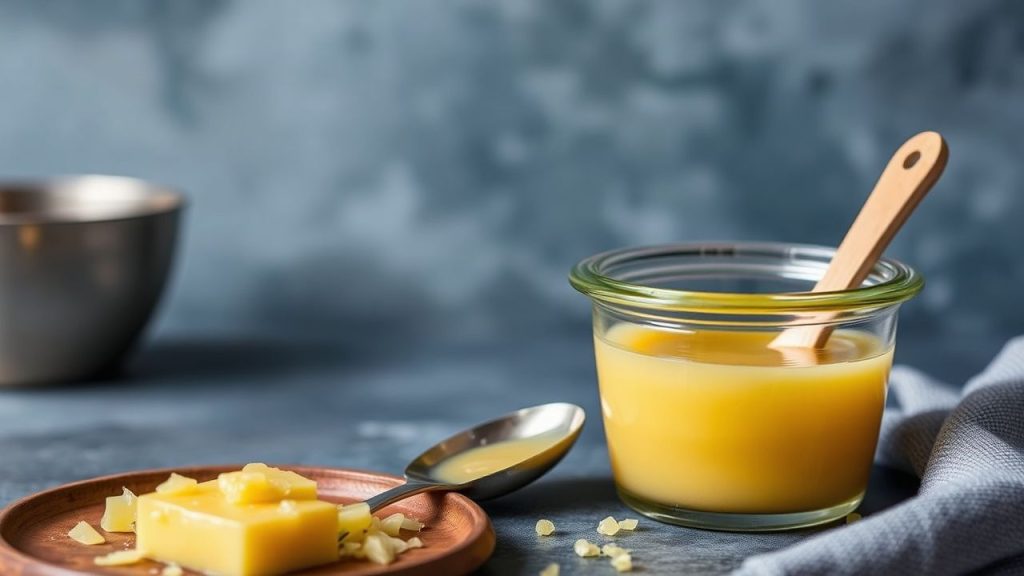
Line a fine mesh sieve with cheesecloth and strain the ghee into a clean, dry jar. Seal once fully cooled and store in a cool, dark place; refrigeration extends life but is optional.
Chef’s notes: tips for success
Butter selection matters: Grass-fed butter contains higher carotene levels, which yield a warmer golden color and richer mouthfeel. Salted butter can alter shelf stability and flavor consistency, so avoid it when making ghee.
Temperature control: Keep the flame low to prevent burning the milk solids; slow, even heat preserves clarity and aroma. Use visual and olfactory cues as primary signals.
If you plan flavored ghee, add aromatics like crushed garlic, turmeric, or dried herbs during the early simmer. Remove aromatics when you strain to keep the ghee stable and clear.
Serving suggestions
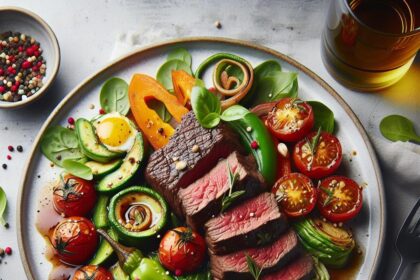
Ghee works as a high-heat cooking fat, a finishing drizzle, or a spread substitute that adds depth to simple dishes. Its toasty notes pair well with grains, legumes, and roasted vegetables.
Use ghee to sauté spices at the start of recipes, to finish rice or lentils, or to brush on flatbreads for extra sheen and aroma. The high smoke point makes it ideal for searing proteins and for shallow frying.
Nutrition and storage
Ghee is almost pure fat, so it is calorie-dense and contains negligible protein and carbohydrates. The table below gives typical values per tablespoon.
| Nutrient | Per 1 Tbsp (14 g) |
|---|---|
| Calories | 112 |
| Protein | 0 g |
| Carbohydrates | 0 g |
| Fat | 12.7 g |
Store ghee in an airtight glass jar away from heat and moisture to maintain quality. Properly rendered and sealed ghee can remain stable for several months at room temperature.
For readers concerned about burning during high-heat cooking, refer to the general concept of smoke point to understand why ghee suits high-temperature techniques.
Practical troubleshooting
If your ghee smells burned or appears dark brown to black, the milk solids have overcooked. Discard and start again; use a lower flame and shorter final simmer next time.
If your clarified butter remains cloudy after cooling, you may have residual water or microscopic particulates. Reheat gently, skim foam, and re-strain through fresh cheesecloth.
FAQ
Q: What exactly is ghee and how does it differ from butter?
Ghee is butterfat that has been simmered to remove water and milk solids, leaving a concentrated fat with a nutty aroma. Unlike butter, ghee lacks most lactose and casein, which affects texture and shelf life.
Q: Is ghee suitable for people with lactose intolerance?
Because the removal process extracts most milk solids, ghee contains virtually no lactose or casein, which can make it tolerable for many who avoid lactose. For specific sensitivities, review guidance on lactose intolerance and consult a clinician.
Q: How can I tell when ghee is perfectly done?
Perfect ghee appears clear and amber with milk solids that are golden-brown on the bottom of the pan. You will also notice a pronounced toasted, nutty aroma; that scent signals readiness.
Q: Can I flavor ghee while making it?
Yes. Add whole spices, garlic, or herbs during the simmer and remove them when you strain. Infused ghee stores well when strained thoroughly and kept dry.
Q: How long does homemade ghee last?
Stored in a sealed jar away from moisture and heat, homemade ghee can last for several months at room temperature. Refrigeration extends its life and keeps it firmer in cool climates.
Closing remarks
Mastering ghee requires attention to heat and sensory cues more than complicated technique. With a consistent method, you can produce clear, flavorful, long-lasting ghee that elevates everyday cooking.
Experiment with small flavored batches once you have the basic technique locked. The reward is a versatile, shelf-stable fat that adds instant depth and warmth to countless dishes.
See also: Homemade Ghee