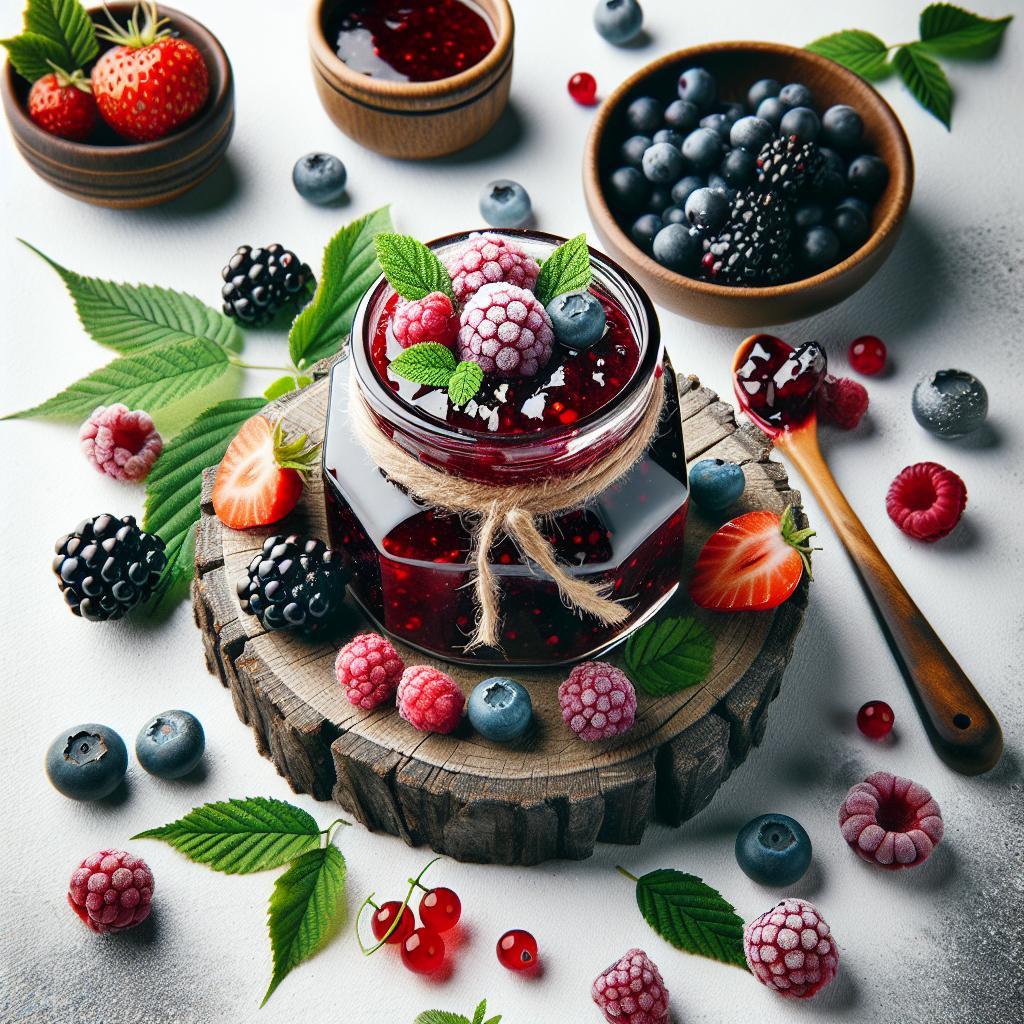

There is a simple alchemy in turning freshly foraged wild berries into a bright, jarred jam. Careful picking, precise sugar balance, controlled heat, and correct jar processing all combine to preserve color, aroma, and shelf stability.
- Small-batch focus: use fresh berries and test gel early for best color.
- Acid matters: lemon juice helps pectin set and stabilizes flavor.
- Process safely: sterilize jars and use a water-bath to prevent spoilage.
- Store smart: unopened jars last up to a year in cool, dark storage.
Overview: Why Wild Berries Make Distinctive Jam
Wild berries often have concentrated flavors and higher acidity than many cultivated varieties. That concentrated profile yields a jam with pronounced fragrance and layered tart-sweet balance when you handle the fruit carefully.
Understanding fruit structure helps you control texture and set. Refer to berry anatomy to predict how skins, seeds, and pulp will behave during cooking.
Prep, Yield & Timing
Preparation: 30 minutes | Cooking: 25 minutes | Total: 55 minutes. These times assume ripe, clean fruit and a single large saucepan.
Yield: about 4 half-pint jars (8 servings). Small batches preserve intensity and reduce waste while you fine-tune sweetness and texture.
Ingredients
Use ripe, firm berries for the best texture. Remove stems, underripe pieces, and any debris before cooking.
- 4 cups fresh wild berries (blueberries, raspberries, blackberries, or a mixed harvest), rinsed and drained
- 3 cups granulated sugar (adjust to taste and berry sweetness)
- 1 packet (1.75 oz) fruit pectin (use natural pectin if you want a quicker set)
- 2 tablespoons lemon juice (freshly squeezed to balance acidity)
- 1/4 cup water for initial simmer
Instructions
Below are structured steps from harvest to jar with practical checks so you can reproduce quality batch after batch. Follow the timing and the gel test to avoid overcooking or under-setting.
Each subsection contains focused actions: harvesting strategy, fruit prep, cooking mechanics, and final jar processing.
Harvest: When and How to Pick
Pick berries in the cool hours of the morning after dew dries but before mid-day heat. Cooler fruit retains firmness and aromatics that translate directly into brighter jam.
Aim for fully ripe, deeply colored fruit. Avoid bruised or insect-damaged pieces because they release excess liquid and bitter notes; gentle handling preserves texture.
Prepare: Cleaning and Maceration
Rinse berries briefly in cool water and let them drain on paper or a clean towel. Remove stems, leaves, and any green or underripe bits that will sour the overall balance.
Lightly macerate with a fork or potato masher to release juices while preserving some fruit integrity. This approach gives a desirable chunk-and-spread texture favored in artisanal preserves.
Cook & Pectin Management
Combine berries, lemon juice, and water in a heavy-bottomed saucepan. Bring to a gentle simmer to loosen juices before adding pectin so the powder disperses evenly.
Sprinkle the pectin gradually while whisking; once incorporated, add sugar and bring the mixture to a full, rolling boil. Use the plate test to check for gel: place a spoonful on a chilled plate and see if it wrinkles when nudged.
Boiling, Skimming and Final Checks
Boil hard for 1-2 minutes after reaching a rolling boil, then test. Do not overboil; long high-heat exposure darkens color and flattens fresh berry notes.
Skim off foam with a metal spoon for a clear appearance and cleaner flavor. If jam fails the gel test, boil for 30–60 second increments and re-test until it sets.
Jar Sterilization & Water-Bath Processing
Sterilize jars and lids by boiling for 10 minutes or using a hot dishwasher cycle. Keep jars warm until filling to prevent thermal shock when you add hot jam.
Fill jars leaving a 1/4-inch headspace. Wipe rims clean and tighten lids fingertip-tight. Process sealed jars in a boiling water bath for 10 minutes to ensure shelf stability.
Tips for Success
Balance sugar to the fruit’s natural sweetness; use a small test batch if you want to reduce sugar and confirm setting. Remember that sugar affects both flavor and shelf life.
Rising acidity activates pectin. Adjust lemon juice if fruit seems low in tartness. Consult the pectin chemistry overview at pectin for technical context on gel formation.
To preserve vibrant color, work quickly once the jam reaches a boil; prolonged heating dulls pigments. Cook in a wide pan to speed evaporation so you can hit set point without extenuating heat exposure.
Serving Suggestions
Serve your wild berry jam on crusty toast, swirled into yogurt, or as a topping for pancakes. The pronounced wild-berry aroma pairs well with mild cheeses for balanced savory-sweet bites.
Consider using small jars as gifts; label with date and fruit mix. Small-batch presentation enhances perceived value and encourages rotation through your preserves.
Nutritional Snapshot
The nutritional profile reflects sugar-forward preserves: about 90 kcal and 23 g carbohydrates per serving, depending on recipe adjustments. Fresh-berry micronutrients will decline with heat but remain a flavorful source of antioxidants.
For dietary adjustments, reduce sugar and extend cooking time to concentrate natural pectin, or use low-sugar pectin formulations designed for higher fruit ratios.
| Nutrient | Per Serving |
|---|---|
| Calories | 90 kcal |
| Protein | 0.5 g |
| Carbohydrates | 23 g |
| Fat | 0.1 g |
Safety and Storage
Store unopened jars in a cool, dark place and use within a year for peak quality. Once opened, refrigerate and use within three weeks for best freshness.
Check seals before storing: lids should be concave and firm. Discard any jar with off-odor, mold, or a broken seal; do not taste suspect preserves.
Related Techniques and Further Reading
Expand your skill set by learning more about traditional preserving and cellar storage techniques. The broader context of home preservation can improve consistency and safety.
For technical background on home canning and processing methods, see the overview at canning. Foraging principles that inform ethical and safe harvest come from resources on foraging.

FAQ
Common questions appear below with concise, actionable answers to help you refine technique and troubleshoot batches.
These entries are formatted for quick schema-ready consumption and easy scanning by readers and search engines.
How long should I boil jam to reach a set?
Boil until you achieve a rolling boil that cannot be stirred down, then maintain for 1–2 minutes before testing. Rely on the plate test rather than a fixed time alone.
Cooking duration varies with pan width, batch size, and fruit pectin. Test every minute once you approach likely set point to avoid overcooking.
Can I omit commercial pectin?
You can omit pectin for high-pectin fruits like blackberries or when using longer cook times to concentrate natural pectin. Expect a looser set and plan for longer evaporation.
If you want a firmer set with lower sugar, use a low-sugar pectin designed for reduced-sugar recipes rather than standard pectin formulas.
How do I adjust recipes for low-sugar preferences?
Replace some granulated sugar with alternative sweeteners carefully, and consider pectin formulated for low-sugar jams. Lower sugar changes both flavor and preservation dynamics.
Test pH and set as you cook; increase lemon juice slightly if the fruit lacks acidity to ensure proper gel formation and safety.
What common mistakes should I avoid?
Avoid under-processing jars, skipping the foam skim, and using damaged fruit. Each of these errors affects shelf stability, clarity, and flavor negatively.
Also, do not overcook to the point of caramelizing sugars; that will darken color and mask delicate wild-berry aromatics.
Where can I learn more about fruit chemistry and preservation?
Technical resources on fruit pectin and preservation provide deeper context for timing and ingredient choices. See the pectin overview at pectin for a scientific baseline.
Combine practical kitchen testing with reference material on berry types and canning methods to build reproducible results.
From harvest through processing, treat each batch as a learning iteration. Document measurements, timing, and sensory cues so you can replicate favorites and avoid past mistakes.
See also: Berry jam