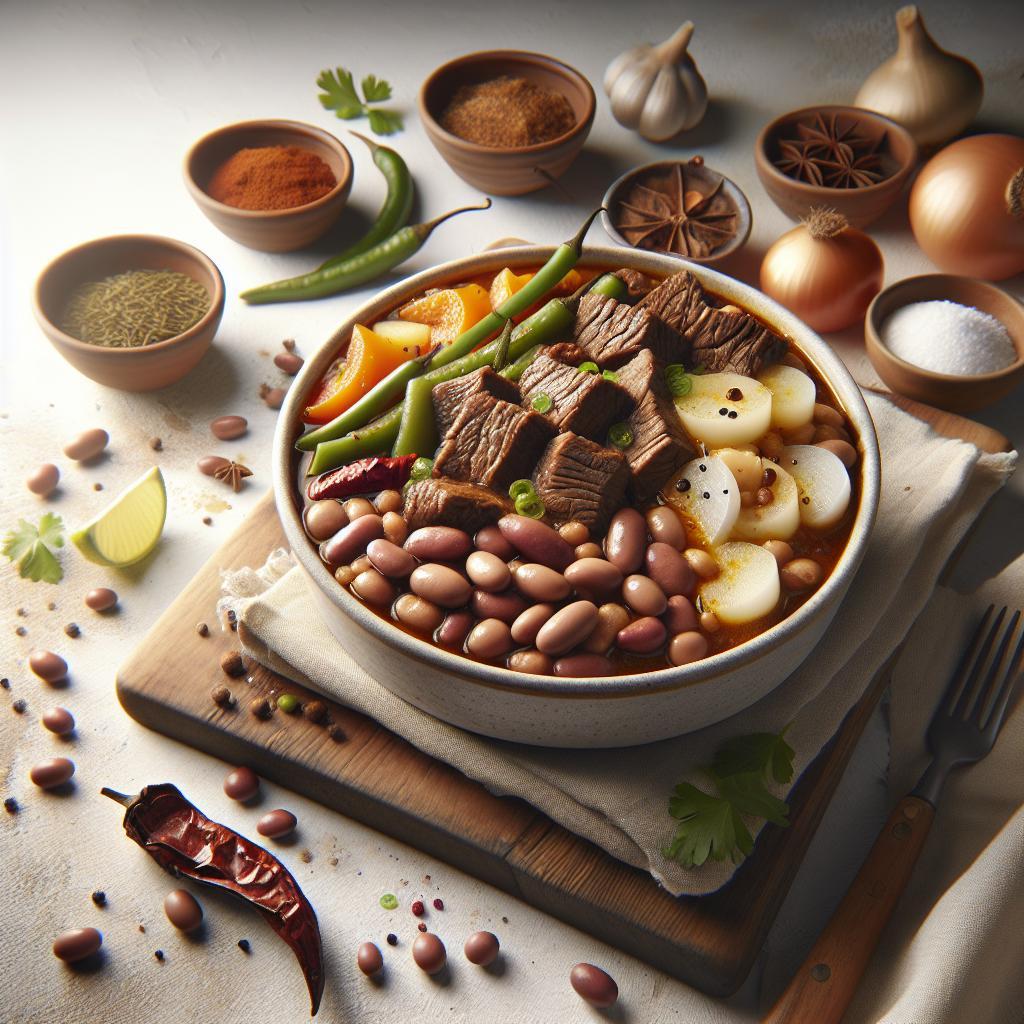

When cold weather or a long day calls for something substantial, a well-made beef and bean stew delivers comfort and nutrition in one pot. This recipe focuses on technique and ingredient choices that produce tender beef, creamy beans, and a rich, savory broth.
- Slow-simmered beef yields tender meat and natural gelatin for body.
- Two bean types add texture, protein, and fiber for a satisfying bowl.
- Browning and deglazing develop deep savory flavors via the Maillard reaction.
- Proper storage preserves texture and boosts flavor on reheating.
Hearty Ingredients That Build Rich Flavors
Hearty Beef and Bean Stew begins with the right cuts and properly prepped beans. Select a cut such as chuck roast or brisket; these release collagen when cooked slowly and create a silky mouthfeel.
Beans contribute bulk, protein, and fiber while absorbing the stew’s savory notes. For background on legumes, see beans and their culinary uses.
Ingredients
- 2 lbs beef chuck roast, cut into 1½-inch cubes
- 1 cup cannellini beans, soaked overnight and drained
- 1 cup kidney beans, soaked overnight and drained
- 1 large yellow onion, finely diced
- 4 cloves garlic, minced
- 3 medium carrots, peeled and sliced
- 2 stalks celery, chopped
- 3 tbsp tomato paste
- 6 cups beef broth, low sodium
- 1 cup crushed tomatoes, canned
- 2 tbsp olive oil
- 1 tsp smoked paprika
- 1 tsp ground cumin
- ½ tsp ground black pepper
- 1 tsp sea salt, adjust to taste
- 2 sprigs fresh rosemary
- 3 sprigs fresh thyme
- 1 bay leaf
Swap to canned beans for speed, but adjust simmer time to avoid over-softening. Fresh herbs like rosemary add a bright top note; read more about rosemary at Rosemary.
Use low-sodium broth so you control final seasoning. If you prefer richer stock, substitute one cup of beef broth with a concentrated beef stock or a bone broth for extra mouthfeel.
Mastering the Perfect Simmer for Tender Beef and Beans
Start by searing beef over high heat to form a deeply colored crust. This step triggers the Maillard reaction, which builds complex savory notes lost if you skip browning.
After searing, sauté vegetables in the same pot to pick up fond, then build flavors with tomato paste and spices. Deglaze with crushed tomatoes and broth to lift browned bits into the liquid.
Step-by-step
- Brown the beef: Heat oil in a heavy pot, sear beef in batches without overcrowding for 4–5 minutes per batch.
- Sauté vegetables: Add onion, carrot, and celery; cook until softened, then stir in garlic for a minute.
- Build flavors: Stir in tomato paste, smoked paprika, and cumin to bloom the spices.
- Deglaze: Add crushed tomatoes and scrape the pot to release brown bits into the liquid.
- Combine: Return beef and add soaked beans, broth, herbs, salt, and pepper.
- Simmer: Bring to a boil, then reduce to low and simmer covered partially for 2–2½ hours until beef and beans reach the desired tenderness.
- Finish: Remove herb stems and bay leaf, then adjust seasoning before serving.
Long, gentle simmering lets collagen break down into gelatin and softens bean cell walls without splitting them. For a primer on slow-cooking techniques, consult slow cooking.
When you skim fat, do it early for a clearer broth or late for richer mouthfeel. Taste in stages and adjust acidity, salt, or heat at the end to preserve layered flavors.
Balancing Spices and Herbs to Elevate Your Stew
Use smoked paprika and cumin to add depth and a gentle heat; they pair exceptionally well with beef. Add spices early to allow their oils to bloom, but reserve delicate herbs until near the end to keep brightness.
Fresh rosemary and thyme add aromatic lift that cuts through richness. Taste and layer; start modestly with strong seasonings and increase gradually while simmering.
Flavor Tweaks
To enhance brightness, add a splash of lemon juice or a teaspoon of apple cider vinegar just before serving. Acidity wakes up the savory profile and balances fat.
For thicker stew texture, mash a few beans against the pot side in the last 10 minutes to naturally thicken the liquid without flour or roux.
Serving Suggestions and Storage Tips for Lasting Comfort
Serve the stew piping hot with hearty sides like crusty whole-grain bread or mashed potatoes to sop up broth. Garnish with chopped parsley or a dollop of Greek yogurt for a cooling contrast.
Leftovers often taste better after a day as flavors meld. Cool the stew quickly, store in airtight containers, and refrigerate up to 4 days or freeze portions for up to 3 months.
Reheating and Repurposing
Reheat gently on low heat, adding a splash of broth if it thickens too much. For variety, use leftovers as a filling for savory pies, as a topping for baked potatoes, or folded into a grain bowl.
For a weeknight shortcut, try a slow-cooker adaptation; see our internal guide at Slow Cooker Beef Stew for an easier hands-off method. For tips on braising basics and technique, see Braising Techniques.
Chef’s Notes
- Quicker option: Use rinsed canned beans; add late in cooking and reduce simmer time to 90 minutes.
- Vegetarian swap: Replace beef with mushrooms and vegetable broth for a rich, meatless stew.
- Thickening tip: Mash 1–2 cups of beans or use a cornstarch slurry if you prefer a glossy finish.
- Acidity: A small splash of vinegar brightens flavors without changing texture.

Q&A
The Q&A below answers common technique and ingredient questions from experienced home cooks. Each reply draws on standard culinary science and practical kitchen tests.
These answers help refine timing, texture, and flavor control when you prepare this stew at home.
Q: What makes a beef and bean stew “hearty” and comforting?
A: A hearty stew combines tender, slow-cooked beef with beans that absorb and thicken the broth. The resulting texture and concentrated flavors give a sustained, satisfying mouthfeel.
Q: Why choose beans for this stew?
A: Beans add protein, fiber, and body. They act like sponges for flavor and provide nutritional balance while keeping the bowl substantial and filling.
Q: Which beef cuts work best?
A: Use tough, collagen-rich cuts such as chuck, brisket, or round. These breaks down into gelatin during slow cooking and enrich the broth with natural body.
Q: Can I speed this up with a pressure cooker?
A: Yes. A pressure cooker or Instant Pot reduces cook time dramatically while still tenderizing beef. Adjust liquid levels slightly and follow your device’s guidelines for beans and meat.
Q: How should I store and reheat leftovers?
A: Cool quickly and refrigerate in airtight containers up to 4 days, or freeze in portions for 3 months. Reheat over low heat, adding broth if necessary to loosen the stew.
Final Thoughts
This beef and bean stew combines straightforward technique with ingredient choices that reward patience. Browning, slow simmering, and thoughtful seasoning create a bowl that feeds both body and appetite.
With modest adjustments, the recipe adapts to time constraints, dietary needs, and flavor preferences while remaining reliably comforting. Keep experimenting with small tweaks until you find your perfect version.
Explore related internal resources for more one-pot recipes and method guides: Slow Cooker Beef Stew and Braising Techniques.
See also: Beef Stew