
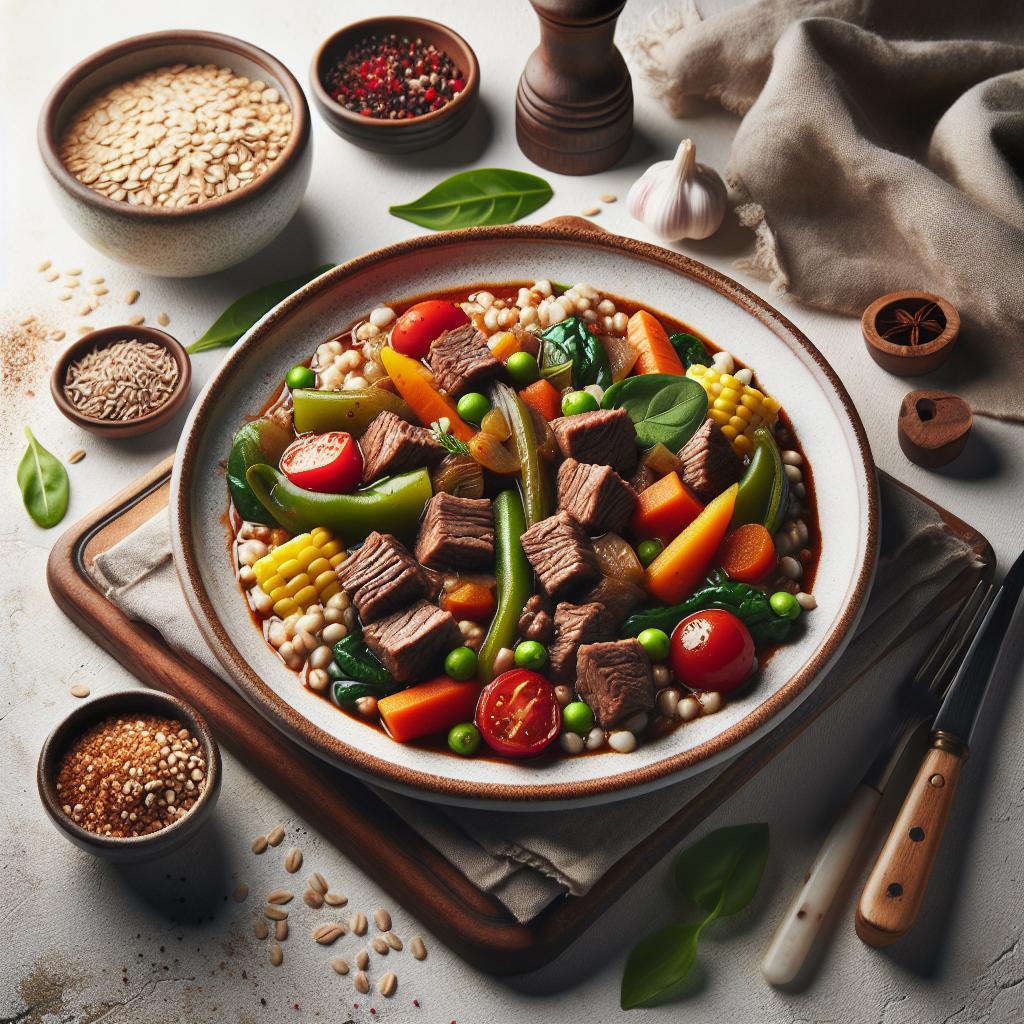

Hearty Beef Barley Stew blends tender, slow-braised beef with nutty pearl barley and a colorful mix of vegetables to produce a bowl that comforts and fuels. This recipe honors traditional technique while emphasizing nutritional balance, efficient prep, and tips that improve texture and flavor every time.
- Key protein and fiber balance: beef and barley deliver sustained energy and satiety.
- Slow simmer for depth: low, steady heat converts collagen into glossy mouthfeel.
- Make-ahead advantage: flavors meld overnight; stew often improves with rest.
- Simple swaps: use mushrooms and vegetable stock for a hearty vegetarian alternative.
This guide preserves the classic elements while adding technical notes for cooks who want reliable results. I integrate culinary science with practical steps so you can repeat success across batches and seasons.
Prep and Cook Time
Preparation: 20 minutes. Gather mise en place: diced onions, sliced carrots, cubed chuck, rinsed pearl barley, and measured stock. Small steps done first speed the cook and limit overcooking.
Cooking: 2 hours 15 minutes active simmering. A low simmer for at least 1 hour 45 minutes gives the beef time to tenderize and the barley time to plump without turning mushy.
Yield
This recipe yields 6 generous portions, making it appropriate for a family meal or for meal prep across several weekdays. Portion size accounts for solid food, broth, and a filling grain element.
Adjust yield by scaling protein and barley proportionally: for every additional 1/2 pound of beef, add roughly 1/3 cup barley and about 1 cup of broth to maintain texture and cooking time.
Difficulty Level
Medium: this preparation requires basic braising technique, timing, and occasional stirring to monitor thickness. The most demanding task is patience—maintain a gentle simmer and resist high heat.
Cooks comfortable with browning meat and deglazing will execute this recipe well. If you own a heavy-bottom pot or Dutch oven, flavor retention and temperature control become easier.
Ingredients
The ingredient list focuses on robust components that contribute both flavor and nutrition. Use chuck or other well-marbled cuts for collagen-rich results; rinse pearled barley to remove dust and surface starch.
Below is the tested ingredient list. Quantities scale linearly; swap stocks and aromatics to suit dietary needs without altering cook times drastically.
- 1 ½ pounds beef chuck, cut into 1-inch cubes
- 1 cup pearl barley, rinsed thoroughly
- 2 tbsp olive oil or neutral oil
- 1 large yellow onion, finely diced
- 3 cloves garlic, minced
- 3 medium carrots, peeled and sliced
- 2 stalks celery, thinly sliced
- 6 cups beef broth (low-sodium recommended)
- 1 cup diced tomatoes (canned or fresh)
- 2 tsp fresh thyme leaves or 1 tsp dried thyme
- 1 tsp smoked paprika
- 2 bay leaves
- Salt and freshly ground black pepper to taste
- Fresh parsley for garnish
Instructions
Follow the steps below in sequence to replicate the texture and depth expected from a classic beef barley stew. Maintain medium-high heat for browning, then lower heat for a sustained simmer.
Use a heavy-bottomed pot to minimize hot spots. When in doubt, err on the side of a longer gentle simmer rather than an aggressive boil.
Browning the Beef
Preheat oil over medium-high heat. Add beef in batches to avoid overcrowding, and sear until a deep brown crust forms on all sides; this Maillard reaction creates base flavor for the finished broth.
Remove browned pieces and hold them aside. If meat steams rather than browns, raise the heat slightly and ensure the pan surface is dry between batches.
Sautéing Aromatics and Deglazing
Lower heat to medium, add onions, carrots, and celery; cook until softened and fragrant, about 6 minutes. Add garlic and sauté briefly to release aromatics without browning it excessively.
Deglaze with a splash of broth, scraping up fond (the browned bits) to incorporate into the base. Return beef to the pot and add barley, tomatoes, herbs, paprika, bay leaves, and remaining broth.
Simmer and Finish
Bring to a boil, then reduce to low and simmer partially covered. Target a gentle, steady simmer for 1 hour 45 minutes to 2 hours, until beef is fork-tender and barley has softened but retains bite.
Adjust thickness by removing the lid or adding a bit of stock. Season with salt and black pepper at the end and discard bay leaves before serving.
Chef’s Notes and Tips for Success
Choosing the right cut of beef matters: chuck and brisket have connective tissue that breaks down into gelatin, enriching mouthfeel. Avoid ultra-lean cuts that can dry during long cooking.
Soak pearl barley for 30 minutes if you want to shave simmer time and improve chew. Rinsing removes dust and reduces surface starch that can thicken the broth prematurely.
Make-ahead storage improves flavor. Refrigerate in airtight containers for up to three days or freeze in portioned tubs for three months. Reheat gently to preserve texture.
Serving Suggestions
Serve the stew steaming hot in deep bowls with a scattering of chopped parsley to add a bright contrast. A wedge of crusty bread or a smear of mashed potato pairs well for soaking up the broth.
For balance, add a simple steamed green such as green beans or sautéed kale. A lighter red wine, like Pinot Noir, complements the savory profile without overpowering it.
Nutrition and Portioning
This stew balances macronutrients: high-quality protein from beef, complex carbohydrates and soluble fiber from barley, and micronutrients from vegetables and herbs. A typical serving supplies sustained energy and aids recovery after activity.
Below is an approximate per-serving nutrient summary based on the listed ingredients and six servings. Values vary with ingredient brands and exact portion sizes.
| Nutrient | Per Serving |
|---|---|
| Calories | 380 kcal |
| Protein | 32 g |
| Carbohydrates | 28 g |
| Fat | 12 g |
Barley contributes soluble fiber (beta-glucan), which supports steady blood glucose and digestive health. For more on barley’s composition, see barley on Wikipedia.
Beef supplies iron, zinc, and B vitamins essential for energy metabolism and cellular repair. For an overview of beef as a food source, consult beef on Wikipedia.
Technique and Culinary Science
Browning meat creates flavor via Maillard reactions; those browned bits dissolve into the broth when you deglaze. Monitor pan temperature to favor browning over steaming.
Slow simmering converts collagen into gelatin, enriching texture without additional thickeners. For context on cooking methods and heat control, see cooking on Wikipedia.
Barley swells and absorbs liquid, acting as a natural thickener. If you prefer a brothier stew, hold back some barley or add extra stock near the end of cooking.
Variations and Dietary Swaps
To create a vegetarian or vegan version, substitute mushrooms for beef and use vegetable broth. Searing mushrooms in oil builds savory, umami depth that mimics roasted meat flavors.
For gluten-free needs, swap barley for quinoa or millet, adjusting liquid and cooking time. These swaps change mouthfeel and absorption, so test small batches first.
FAQ
What makes Beef Barley Stew a timeless comfort food?
Its combination of warm broth, tender beef, and chewy barley evokes home-cooked comfort and provides balanced nutrition. Texture and aroma create a sensory memory that many associate with family meals.
Slow-cooked dishes concentrate flavors over time, giving each spoonful layered savory and vegetal notes that feel restorative on cold days.
How should I store and reheat leftovers?
Cool the stew to room temperature, then refrigerate in airtight containers for up to three days. For longer storage, freeze in meal-sized portions for up to three months.
Reheat gently on the stovetop over low heat to prevent barley from over-softening. Add a splash of stock or water if the stew has thickened in the fridge.
Can I speed up the cooking process without sacrificing quality?
Use a pressure cooker to reduce active cooking time significantly; adjust barley timing per manufacturer recommendations. Alternatively, soak barley for 30 minutes beforehand to shave simmer time.
However, rapid, high-heat methods will not develop the same depth of flavor achieved by a slow simmer, so balance time savings against taste preferences.
Which beef cuts work best for this stew?
Chuck and brisket perform best because they contain connective tissue that converts to gelatin during long, moist cooking. This yields tender meat and a silky broth.
Avoid very lean cuts such as round or sirloin unless you plan to reduce cooking time and use techniques to preserve moisture, like careful searing and resting.
How can I make this stew gluten-free?
Substitute barley with quinoa, millet, or certified gluten-free oats while noting their different liquid absorption rates. Increase or decrease broth accordingly to maintain desired consistency.
Test the chosen grain in a small pilot batch to confirm texture and timing before cooking a full pot.
For deeper context on stews and soup categories, consult stew on Wikipedia.
See also: Beef Barley