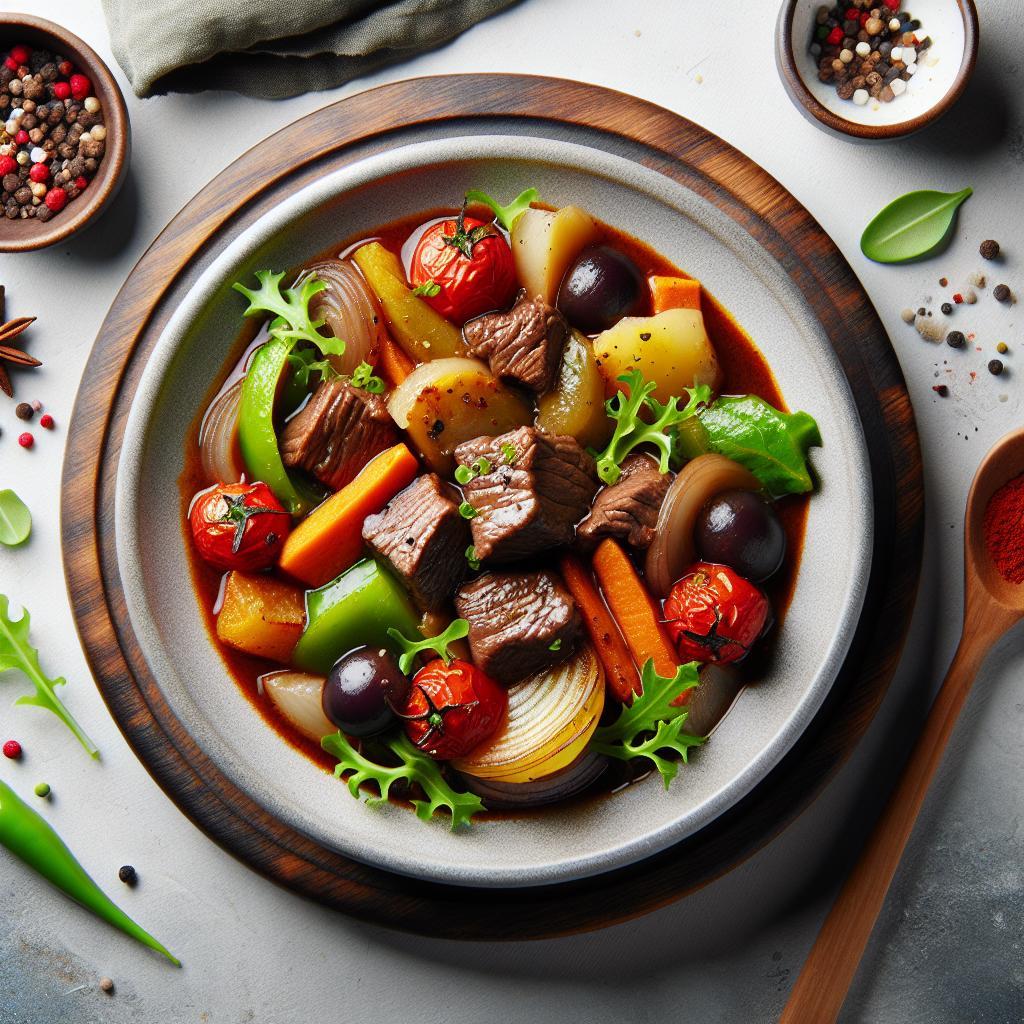

There is real comfort in a steaming bowl of hearty beef stew: rich broth, tender meat, and vegetables that carry slow-cooked depth. This recipe distills technique and ingredient choices to help you produce consistent, restaurant-quality results at home.
- Hearty Ingredients That Build Deep Flavor
- Mastering the Art of Slow Simmering for Tender Beef
- Balancing Aromatics and Spices to Elevate Your Stew
- Serving Suggestions to Complete Your Comfort Food Experience
- Prep and Cook Time
- Yield
- Difficulty Level
- Ingredients
- Instructions
- Tips for Success
- Serving Suggestions
- Q&A
- Future Outlook
- Focus on cut: choose well-marbled beef for the best texture.
- Sear first: build depth with the Maillard reaction before braising.
- Control heat: maintain a gentle simmer for even collagen breakdown.
- Rest overnight: flavors meld and improve after refrigeration.
Hearty Ingredients That Build Deep Flavor
Good stew begins with the right raw materials. Select well-marbled cuts and fresh aromatics to form a flavor backbone that holds up under long cooking.
Use beef cuts suited to low-and-slow cooking, and layer vegetables and spices to complement the meat without masking it.
Mastering the Art of Slow Simmering for Tender Beef
The hallmark of a great stew is slow, gentle simmering that converts collagen to gelatin while preserving moisture. That process produces tender, unctuous meat and a glossy, mouth-coating broth.
Begin by searing cubes or large chunks over medium-high heat to create a caramelized surface, then switch to low heat for long braising. This two-stage approach uses both high-heat flavor development and the low-and-slow breakdown of connective tissue.
Searing and the Maillard Reaction
Searing is not just about color; it creates complex flavor compounds through the Maillard reaction. Sear in batches to avoid steaming the meat.
Use a heavy-bottomed pot and enough oil to get a deep, even crust. Then deglaze the pan with a small amount of broth and scrape up the fond to fold that flavor into the stew base.
After searing and deglazing, transfer meat to the pot with aromatics and liquid, then maintain a very gentle bubble. Vigorous boiling will agitate the protein and can make meat tough.
Balancing Aromatics and Spices to Elevate Your Stew
Layering flavors is a deliberate process. Start with sautéed aromatics, add tomato paste or a small acid element for brightness, and finish with fresh herbs to give lift.
Use whole herbs like thyme and bay leaves for long cooks; they release slowly. Add delicate herbs such as parsley near the end or at service to preserve fresh notes.
Braising Fundamentals
Braising combines dry and wet heat for optimal texture. The technique is defined by partial submersion in liquid at low temperature for extended periods.
For an authoritative description of this method, see braising. Apply that principle here: gentle liquid contact, low heat, and time.
Serving Suggestions to Complete Your Comfort Food Experience
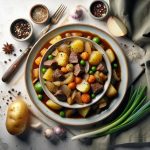
Presentation and accompaniments turn the stew into a memorable meal. Serve over creamy mashed potatoes, buttered egg noodles, or with crusty bread to soak up the sauce.
Add a fresh element—chopped parsley or chives—just before serving to contrast richness with brightness. A small drizzle of good olive oil can add silk and aroma at plating.
Prep and Cook Time
Preparation: 20 minutes. Keep mise en place ready so you can sear without rushing.
Cooking (slow simmer): 2 hours 45 minutes. Total time rises slightly if you brown in batches or rest the stew overnight.
Yield
Serves 6 hearty portions when paired with sides like mashed potatoes or bread. Portions vary with appetite and accompaniments.
Use the nutrition table below as a practical estimate for calorie and macronutrient planning per serving.
Difficulty Level
Medium. The recipe requires timing and heat control rather than advanced techniques, so home cooks will see reliable results with attention to basics.
Equipment that helps: a heavy Dutch oven for even heat, a sharp chef’s knife for clean vegetable cuts, and an accurate timer to manage simmer time.
Ingredients
Below is the working ingredient list for a classic hearty beef stew. Quantities scale well if you double the batch for meal prep.
Use low-sodium broth to control final seasoning, and adjust salt late in the process after reduction.
- 2 lbs beef chuck, cut into 1.5-inch cubes
- 3 tbsp all-purpose flour, sifted
- 3 tbsp olive oil
- 1 large yellow onion, diced
- 4 cloves garlic, minced
- 3 medium carrots, peeled and cut into 1-inch pieces
- 2 stalks celery, sliced
- 3 cups beef broth (low sodium recommended)
- 2 tbsp tomato paste
- 1 tsp smoked paprika
- 2 bay leaves
- 4 sprigs fresh thyme
- Salt and freshly ground black pepper to taste
- Chopped fresh parsley for garnish
Instructions
Follow these steps in sequence. Prepare all vegetables and measure seasonings before you heat the pot to keep the flow tight and efficient.
Work in batches when searing to avoid overcrowding. Return all browned pieces to the pot before the long simmer.
- Dry the beef cubes thoroughly with paper towels. Toss in sifted flour, ensuring each piece is lightly coated. This helps form a thickened broth as the stew cooks.
- Heat olive oil in a large, heavy-bottomed pot or Dutch oven over medium-high heat. Add the beef in batches to avoid overcrowding, and brown all sides until deep golden, about 5-7 minutes per batch. Remove and set aside.
- Lower heat to medium, add diced onions, carrots, and celery to the pot. Sauté until the onions are translucent and the vegetables begin to soften, about 6-8 minutes.
- Add garlic and cook for another minute until fragrant. Stir in tomato paste and smoked paprika to coat the vegetables, cooking for 2 minutes more to intensify flavors.
- Return beef to the pot. Pour in beef broth until the meat and vegetables are just covered. Add bay leaves and thyme sprigs, then season lightly with salt and pepper.
- Bring the stew to a gentle boil, then reduce heat to low. Cover partially with a lid and let simmer slowly for 2 to 3 hours, stirring occasionally to prevent sticking, until beef is tender and flavors are well developed.
- Adjust seasoning with salt and pepper to taste. Remove bay leaves and thyme sprigs before serving.
- Garnish with freshly chopped parsley and serve piping hot.
Tips for Success
Small process choices make big differences in the final stew. Use the right pan, control thermal rhythm, and let time do the work rather than speeding with high heat.
After cooking, cool and refrigerate overnight if time allows; the stew will taste more integrated the next day. Reheat gently over low heat before serving.
Customize vegetables and texture by adding mushroom varieties or root vegetables like parsnips. Add delicate ingredients late so they preserve texture and color.
- Choose the right beef: tougher cuts with good marbling transform into tender morsels after slow simmering and reward patience.
- Don’t skip the sear: browning beef properly amplifies flavor through controlled high heat.
- Control your simmer: keep the heat low enough to maintain a gentle bubble; vigorous boiling toughens meat.
- Make it ahead: Stew flavors improve after resting overnight in the fridge. Reheat gently and refresh with herbs.
Serving Suggestions
For classic pairing, serve over buttery mashed potatoes or with a thick slice of artisan bread for sopping. These preparations highlight the stew’s rich broth.
Introduce a contrasting side such as a simple green salad with a bright vinaigrette to cut richness and add textural variety.

| Nutrient | Amount per Serving |
|---|---|
| Calories | 350 kcal |
| Protein | 38 g |
| Carbohydrates | 15 g |
| Fat | 15 g |
For a concise primer on the cultural category of this dish, see the general discussion of stews, which covers traditional variations and technique across cuisines.
Q&A
Q&A: Hearty Beef Stew – A Classic Comfort Food Recipe Unveiled
Q1: What makes beef stew a timeless comfort food?
A1: Beef stew combines tender protein, savory broth, and slow-developed flavor compounds. The result is a dense, satisfying mouthfeel that many associate with home cooking.
Q2: What are the essential ingredients in a classic beef stew?
A2: Core components include well-marbled beef, beef broth, root vegetables, onions, garlic, bay leaves, and thyme. Acid elements like tomato paste add balance and depth.
Q3: How does the cooking process impact the stew’s flavor and texture?
A3: Slow simmering at low temperature converts collagen to gelatin and allows flavors to meld. Proper searing and controlled simmering produce tender meat and a glossy, flavorful broth.
Q4: How can I thicken my beef stew naturally?
A4: Mash some cooked potatoes or vegetables into the broth, or reduce the liquid gently. A light flour dusting on meat before searing also contributes to body as it hydrates during cooking.
Q5: What cuts of beef are best suited for stew?
A5: Choose cuts with connective tissue and marbling, such as chuck. These cuts reward time and low heat by becoming richly flavored and tender.
Future Outlook
A well-made pot of beef stew rewards patience and technique. Use the principles here—select the right cut, sear properly, and simmer gently—and you will consistently produce a deeply satisfying meal.
Apply small tweaks over time to adapt spice profile or vegetable mix to your household tastes. Stew is forgiving and improves with repeat practice.
Thyme and other fresh herbs bring aromatic lift at service, so keep herbs on hand to refresh the stew right before plating.
See also: beef stew