
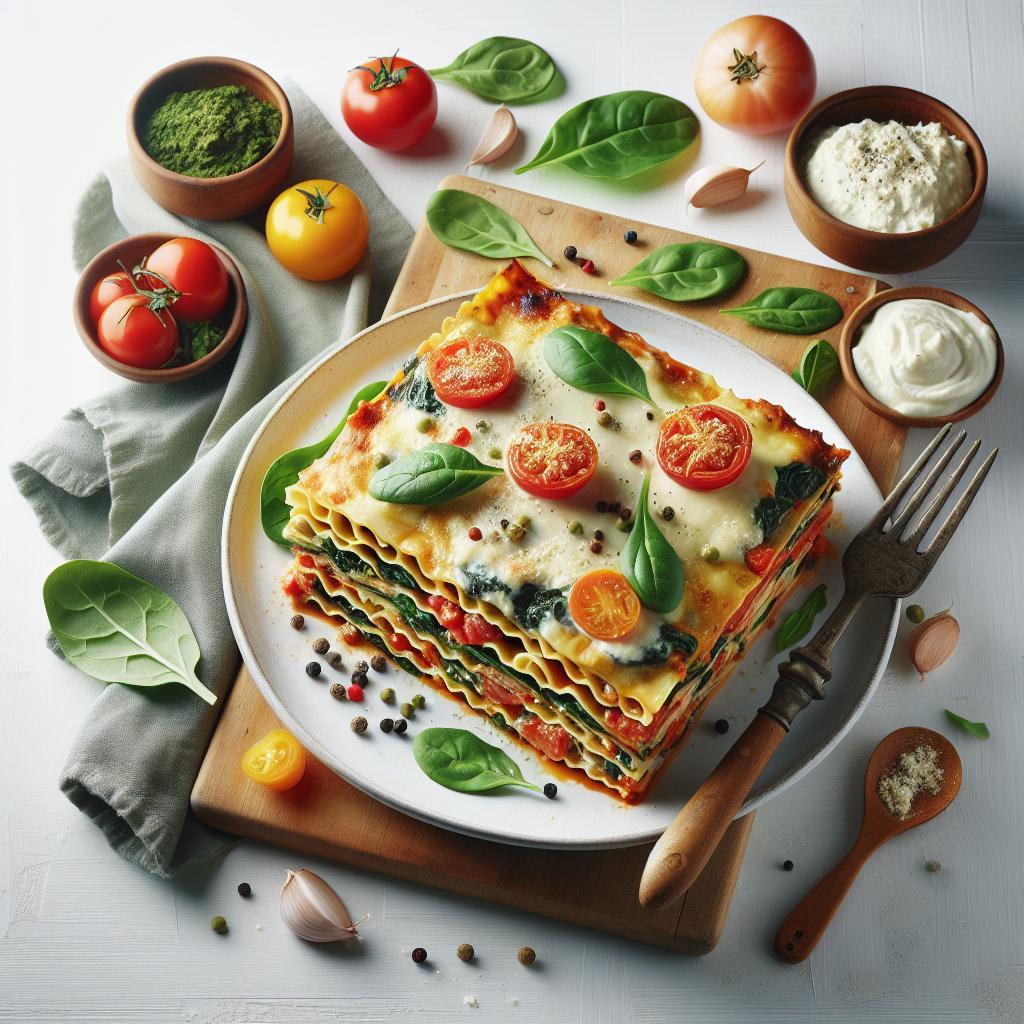

There’s an enduring comfort in a warm, bubbling lasagna fresh from the oven. This hearty vegetarian lasagna layers ricotta, sautéed vegetables, and marinara so the dish feels familiar while staying meat-free.
- Layers build flavor: alternating cheese, sauce, and vegetables concentrates taste.
- Make-ahead friendly: assemble up to 24 hours ahead for deeper melded flavors.
- Feeds a crowd: recipe scales well to serve six generous portions.
Prep and Cook Time
Preparation: 30 minutes. Cooking: 45 minutes. The hands-on prep covers chopping and sautéing vegetables and assembling layers.
Preheat the oven to 375°F (190°C) before you begin layering to maintain consistent oven heat. Using pre-boiled or no-boil noodles expedites assembly and reduces timing variability.
Yield and Difficulty
This lasagna yields six generous servings, suitable for family dinners or small gatherings. Portions provide balanced protein from cheeses and fiber from vegetables.
Difficulty rates as medium because of layering technique and moisture control. With a clear step order and the right tools you can achieve clean slices and a golden top.
Ingredients
Below is the ingredient list used to construct seven sturdy, flavorful layers. Quantities are balanced to avoid soggy layers while ensuring a rich mouthfeel.
Gather pantry staples and fresh produce before you start to streamline the build process. Use whole-milk ricotta for silkier texture or a pressed tofu for a lighter alternative.
Key components
Pasta: 12 lasagna noodles, cooked al dente, or an equivalent weight of no-boil sheets. Properly cooked pasta reduces final oven time and keeps the interior structured.
Cheeses and sauce: 2 cups ricotta, 1 1/2 cups shredded mozzarella, 1 cup grated Parmesan, and about 4 cups marinara. Choose a robust marinara so tomato flavor carries through the layers.
- 12 lasagna noodles, cooked al dente
- 2 tbsp olive oil
- 1 medium yellow onion, finely diced
- 4 cloves garlic, minced
- 1 large zucchini, thinly sliced
- 1 red bell pepper, diced
- 2 cups fresh spinach, roughly chopped
- 1 cup mushrooms, sliced
- 2 cups ricotta cheese
- 1 ½ cups shredded mozzarella
- 1 cup grated Parmesan
- 4 cups marinara sauce
- 1 tbsp fresh basil, chopped or 1 tsp dried
- 1 tsp dried oregano
- Salt and pepper to taste
- 1 tsp red pepper flakes (optional)
Instructions
Work methodically: prepare sauce and vegetables first, then blend cheeses and assemble. A 9×13 inch baking dish fits this quantity and yields clean layers when filled evenly.
Keep vegetables slightly undercooked to avoid excess moisture in the oven. Sautéing vegetables concentrates flavors and reduces the water they release during baking.
Layering technique
- Prepare sauce: Warm 1 tbsp olive oil in a saucepan, sauté diced onion until translucent, then add garlic and cook until fragrant.
- Add vegetables: Add zucchini, bell pepper, and mushrooms; sauté until tender. Stir in spinach at the end, season with salt, pepper, oregano, and optional red pepper flakes.
- Combine cheeses: In a bowl, mix ricotta, half the Parmesan, chopped basil, and pinch of salt to form a smooth layer component.
- Build layers: Spread a thin layer of marinara on the dish bottom, place three noodles, spread one-third of ricotta mix, add vegetables, sprinkle ½ cup mozzarella, and spoon ¾ cup sauce.
- Repeat: Repeat the noodle-ricotta-veg-mozzarella-sauce cycle two more times to reach seven layers of components in total.
- Finish: Top with remaining sauce and cheeses, drizzle the remaining olive oil for color, and cover with foil for the initial bake.
- Bake: Bake covered for 25 minutes, then uncover and bake 15–20 minutes until cheese bubbles and edges brown.
- Rest: Allow 10 minutes of rest before slicing to let the layers settle for neater portions.
Chef’s Notes
To intensify sauce flavor, add a splash of red wine while simmering the marinara and reduce it slightly. This concentrates acidity and balances the dairy in the cheese layers.
Feel free to roast vegetables before sautéing for a smoky, caramelized profile that stands up to the rich cheeses. Roasting also reduces water content and improves texture in finished slices.
Serving Suggestions
Garnish with fresh basil and a light dusting of Parmesan to highlight the top layer. Serve alongside a crisp green salad to introduce brightness and textural contrast.
Pair with a chilled white or a medium-bodied red depending on your preference, and offer garlic bread or roasted seasonal vegetables as sides. Explore additional ideas in our Vegetarian Recipes Collection and practical techniques at Cooking Basics & Tips.
Nutrition
Per serving estimates assume standard whole-milk ricotta and regular pasta. Calories and macronutrients vary with ingredient swaps such as low-fat cheese or gluten-free noodles.
Approximate per serving: 450 kcal, 22 g protein, 38 g carbohydrates, 18 g fat. Use the numbers as a guideline when adjusting portion sizes or dietary substitutions.
| Nutrient | Per Serving |
|---|---|
| Calories | 450 kcal |
| Protein | 22 g |
| Carbohydrates | 38 g |
| Fat | 18 g |

For culinary context, learn about the pasta family and regional Italian dishes: pasta. Read about the specific casserole heritage under lasagne.
To understand the cheeses and dietary approach, see ricotta cheese and the broader food movement at vegetarianism. These references help explain ingredient roles and cultural roots.
FAQ
How can I prevent a watery lasagna?
Sauté vegetables until they lose most of their moisture before layering. Also avoid over-saucing each tier; aim for thin, even sauce layers.
Can I make this lasagna ahead of time?
Yes. Assemble and refrigerate up to 24 hours before baking; allow an extra 5–10 minutes in the oven if baking cold. This resting time deepens flavors and firms layers for cleaner service.
What are good vegan or gluten-free swaps?
Swap ricotta and mozzarella for plant-based cheese or cashew cream for a vegan profile. Replace wheat noodles with certified gluten-free sheets to accommodate gluten sensitivity.
What wine pairs best with this dish?
A medium-bodied red like Sangiovese or a bright white like Sauvignon Blanc matches the tomato acidity and creamy cheeses well. Choose by preference: reds emphasize weight; whites emphasize freshness.
How do I reheat leftovers without drying them out?
Reheat single slices covered with foil in a 350°F oven for 15–20 minutes, or microwave covered with a damp paper towel to keep moisture. Add a splash of sauce if the lasagna seems dry before reheating.
Explore further technique articles in our internal collections and revisit the ingredient list when planning substitutions. With practiced layering and attention to moisture, this vegetarian lasagna becomes a reliable, comforting centerpiece for any meal.
See also: Vegetarian Lasagna