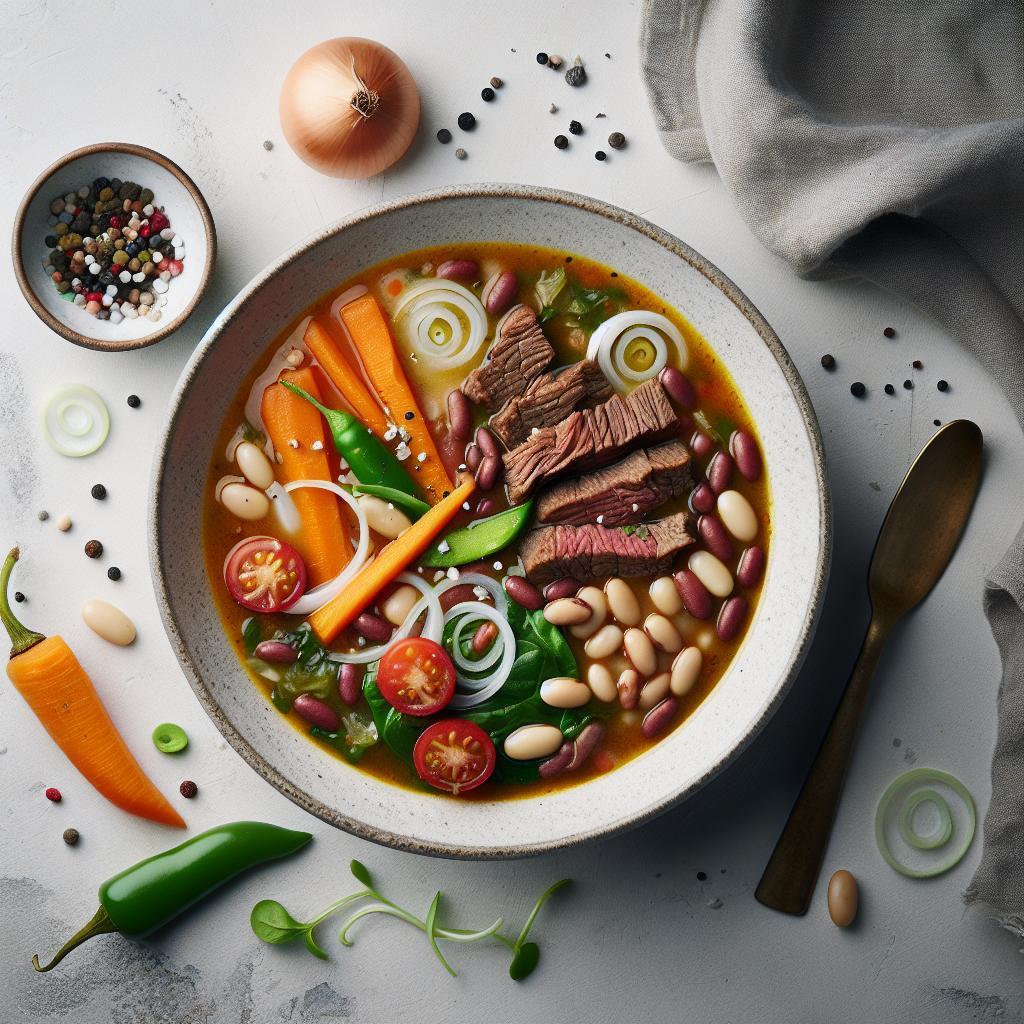

Hearty Harmony: Exploring the Richness of Beef Soup
Beef Soup delivers comfort: a steaming bowl where tender beef and creamy beans create rounded, savory depth. This recipe emphasizes technique—searing, safe soaking, and a low simmer—to yield a rich, gelatinous broth that coats the spoon.
- Flavor base: Sear beef to build Maillard richness before simmering.
- Bean care: Proper soaking and boiling remove off-flavors and improve texture.
- Patience pays: Low, steady heat yields tender beef and silky broth.
- Adaptable: Scale and swap beans or spices to suit pantry items.
Beef Soup: Prep and Cook Time
Preparation: 20 minutes. Cooking: 1 hour 30 minutes. Total: 1 hour 50 minutes. These times assume dried beans soaked overnight; using canned beans reduces hands-on time considerably.
Adjust simmer time to control beef tenderness and broth concentration. For longer, gentle simmering, a heavy-bottomed pot keeps temperature steady and prevents scorching.
Beef Soup: Yield and Difficulty
Serves 6 hearty portions. Difficulty rates as medium because attentive simmering and layered seasoning matter. This recipe rewards technique rather than fancy ingredients.
Double the batch for meal prep and freeze portions for later. Reheat gently to preserve bean texture and maintain beef bite when desired.
Beef Soup: Ingredients
1 lb beef chuck, cut into 1-inch cubes; 1 cup dried kidney beans, soaked overnight and drained; 1 medium onion; 3 cloves garlic; 2 medium carrots; 2 stalks celery; 1 (14 oz) can diced tomatoes; 4 cups beef broth; smoked paprika, cumin, oregano, bay leaf, salt, pepper, olive oil, parsley, and optional lemon.
Use well-marbled cuts—chuck or brisket—to convert collagen into gelatin, which gives body to the broth. For more on collagen and meat science see collagen.
Dry beans give superior texture after proper soaking and boiling. Read about kidney beans at kidney bean. Canned beans speed the process but soften more and need salt adjustments.
Beef Soup: Instructions
1) Prepare the beans: rinse after soaking and keep them ready. Soaking evens the final texture and cuts required simmer time.
2) Sear the beef: heat olive oil in a large pot over medium-high heat and brown beef in batches to develop the Maillard crust. The Maillard reaction creates flavor precursors that enrich the broth.
3) Sauté aromatics: soften onion, carrots and celery over medium heat, add garlic briefly to release aroma. 4) Build flavors: stir in spices, return beef, add drained beans, tomatoes, and broth, then bring to a boil and lower to a gentle simmer.
5) Simmer: cover partially and simmer 1 to 1.5 hours until beef and beans are tender. Check liquid and add broth or water as needed. Finish with salt, pepper, parsley, and a squeeze of lemon if desired.
Deglaze between beef batches with a splash of broth to lift browned fond into the soup. Maintain a low simmer to allow connective tissue to solubilize into gelatin without over-reducing the liquid.
Brown beef in batches to avoid steaming and to preserve caramelization. Drying the beef well before searing accelerates browning and limits moisture loss during the initial high heat sear.
Beef Soup: Tips for Success
Soaking: Overnight soak reduces oligosaccharides and shortens cook time. Rinse beans well to remove soak water and residual sugars.
Beef selection: Choose chuck or brisket for marbling and depth. For leaner results, trim fat or use a mix of cuts and increase vegetables.
Beef Soup: Serving Suggestions
Serve soup in warm bowls so aroma and heat persist. Add parsley and a squeeze of lemon to brighten the flavors and cut perceived fattiness.
Pair with crusty bread or cornbread for texture. A dollop of sour cream or grated sharp cheese adds creaminess and visual contrast on the spoon.
Beef Soup: Nutrition and Portioning
This dish balances protein and fiber with moderate fat. Per-serving calories vary with cut selection, but a typical serving delivers high protein and notable dietary fiber from legumes.
Use low-sodium broth to control salt and adjust portions by reducing beef or increasing vegetables. Track portion size against caloric needs for meal planning.
Beef Soup: Technique Notes and Ingredient Variations
Swap kidney beans for black beans or cannellini to change texture and flavor. Different beans alter cooking time and mouthfeel; adjust simmering accordingly.
Add a touch of chipotle for smokiness or rosemary for a Mediterranean turn. Keep a balance of spice, acid and salt to preserve overall harmony.
Beef Soup: FAQ
Q: Can I use canned beans instead of dried?
Yes. Canned beans reduce cook time and simplify prep. Rinse them and add toward the end of simmering to avoid splitting and mushiness.
Q: Which beef cut works best for soup?
Chuck and brisket provide connective tissue that becomes gelatin during slow cooking, producing mouth-coating richness. Lean cuts cook faster but yield thinner broth.
Q: How do I prevent beans from splitting?
Start soaked beans in cold water and bring them to a boil gently. Maintain a low simmer and minimize stirring to keep skins intact.
Q: Can I use a slow cooker or pressure cooker?
Yes. For slow cookers, brown beef first then cook low 6–8 hours. For pressure cookers, reduce liquid and follow manufacturer timing for beans and beef.
Final Thoughts
Beef Soup combines straightforward ingredients with technique to produce consistent depth and comfort. Proper soaking, searing, and patient simmering transform pantry staples into a rich family meal.
For more recipes and technique notes see our beef soup collection or explore slow-cooking methods in our slow cooking techniques guide.
See also: Beef Soup