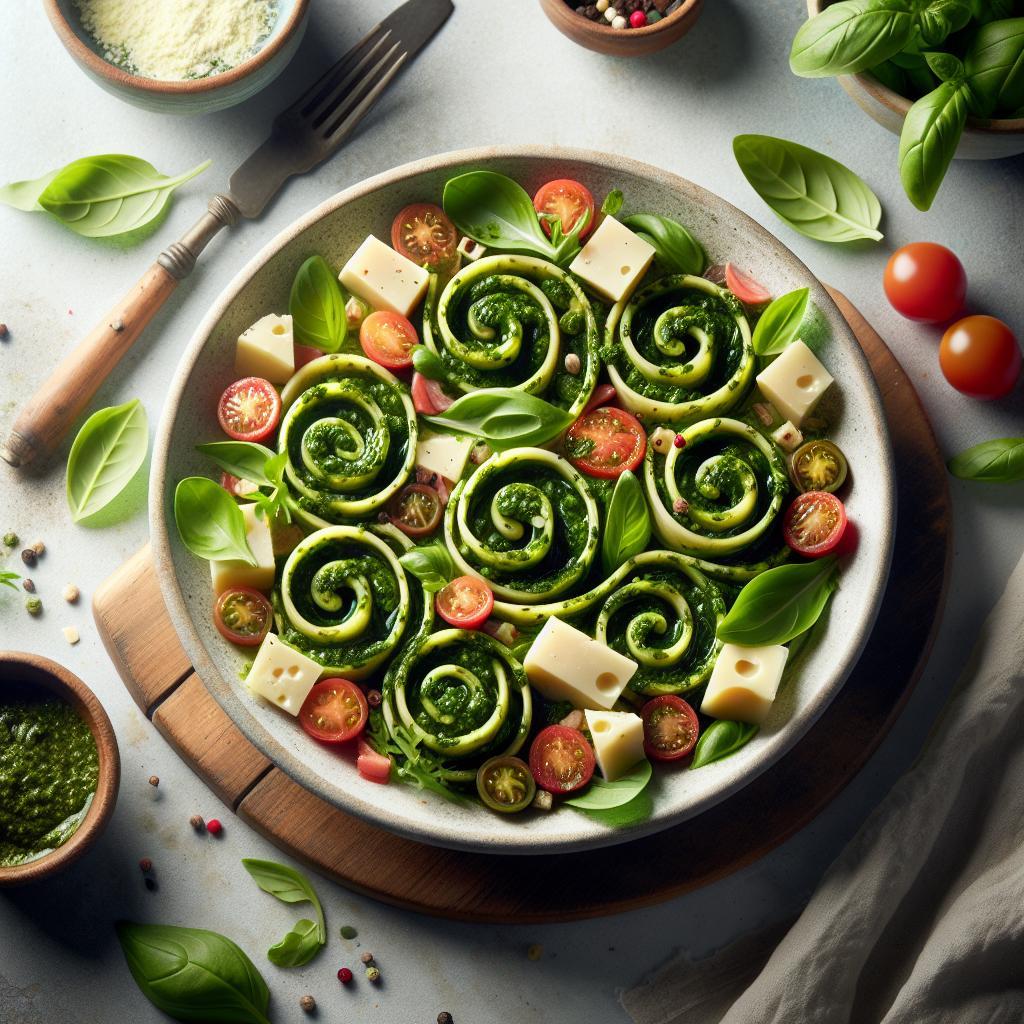

Irresistible Pesto Pinwheels: A Flavorful Taste Twist
These pesto pinwheels turn bright basil pesto into bite-sized, flaky spirals that perform well as appetizers, snacks, or picnic fare. They balance herb-forward flavor with a tender crumb and a crisp outer crust.
- Quick prep: Dough and pesto can be made ahead for fast assembly.
- Versatile: Swap cheeses or add sun-dried tomatoes for variety.
- Freezable: Raw pinwheels freeze well and bake from frozen.
Why Pesto Pinwheels Work
Pesto pinwheels concentrate flavor in every spiral while keeping texture contrast between filling and dough. The herb oil in pesto lubricates the crumb and browns the exterior for an appealing finish.
These bites rely on simple chemistry: oil and cheese in pesto provide moisture and flavor, while a properly developed dough traps gas to produce lift. For background on basil and pesto ingredients, see basil and pesto.
Key Times, Yield, and Difficulty
Preparation: 20 minutes active. Resting/rise: about 1 hour. Baking: 18–22 minutes. Total time depends on ambient temperature and proofing speed.
Yield: About 12–14 pinwheels. Difficulty: Intermediate—requires dough handling and rolling skills but no advanced techniques.
Ingredients
The ingredient list is straightforward and ideal for customization. Use high-quality olive oil and fresh basil for the most authentic profile.
Below are reliable ratios you can scale. For information on yeast behavior during fermentation, consult the yeast overview.
- For the Dough:
- 3 cups all-purpose flour, sifted
- 1 packet (2 ¼ tsp) active dry yeast
- 1 cup warm water (110°F/43°C)
- 2 tbsp extra virgin olive oil
- 1 tbsp sugar
- 1 tsp salt
- For the Pesto Filling:
- 1 cup fresh basil leaves, packed
- ¼ cup pine nuts, toasted (pine nuts)
- ½ cup grated Parmesan cheese
- 2 cloves garlic, minced
- ½ cup extra virgin olive oil
- Salt and freshly ground black pepper, to taste
- Optional Fillings:
- ½ cup sun-dried tomatoes, chopped
- ½ cup shredded mozzarella
- ¼ cup roasted red peppers, sliced
Essential Equipment
Use a stand mixer or strong hands for kneading and a sharp knife or bench scraper for clean slices. A food processor speeds pesto assembly but a mortar and pestle gives a traditional texture.
A parchment-lined sheet pan and an oven with stable temperature yield consistent browning and an even bake. For technique notes on baking fundamentals, consult the baking overview.
Instructions
Follow these steps in sequence for predictable results. Each phase focuses on one variable: structure (dough), flavor (pesto), then assembly.
Keep surfaces lightly floured and avoid overworking the dough after the first rise to preserve tenderness.
Activate the Yeast and Mix Dough
Stir warm water and sugar until dissolved and sprinkle the yeast on top. Wait 5–10 minutes until the mixture becomes frothy; this confirms active yeast.
Combine flour and salt in a bowl, make a well, add the activated yeast and oil, then mix until a shaggy dough forms. Transfer to a floured surface and knead about 8–10 minutes until smooth and elastic.
First Rise and Pesto Preparation
Place dough in an oiled bowl, cover, and let it double in a warm spot—about 1 hour. Proper proof increases volume and develops flavor without over-fermenting.
While the dough rises, make the pesto. Pulse basil, toasted pine nuts, garlic, and Parmesan in a food processor, then stream in olive oil until slightly textured. Season to taste; avoid over-smoothing to retain body.
Roll, Fill, and Shape
Punch down the dough and roll it into a 12×15-inch rectangle. Spread a thin, even layer of pesto leaving a ½-inch border to prevent leakage during baking.
Start rolling from a long edge into a tight log, pinch to seal, and chill briefly if the log softens. Slice into 12–14 pieces and place cut side up on a parchment-lined sheet with space for expansion.
Second Rise and Bake
Allow pinwheels a 20-minute secondary rise to regain lift before baking. Preheat the oven to 375°F (190°C) and bake for 18–22 minutes until golden and fragrant.
Cool slightly on a rack; serve warm or at room temperature. If baking from frozen, add 4–6 minutes to the bake time and check for even browning.
Tips for Success
Fresh basil matters. Use vibrant leaves without brown spots. Bottled or dried pesto often contains preservatives that alter texture and flavor balance.
Toast pine nuts until fragrant in a dry skillet; this step increases depth and prevents a raw flavor. Control toasting closely—nuts burn quickly.
Don’t overfill. A thin, even spread protects roll integrity and ensures even baking. Excess filling can push out and burn on the pan.
Make-ahead strategy. Prepare dough and pesto the night before. Assemble and freeze raw pinwheels on a sheet, then store in a bag. Bake from frozen when needed.
Serving Suggestions and Pairings
Arrange pinwheels on a platter and garnish with torn basil and a light drizzle of olive oil. A dusting of grated Parmesan adds visual appeal and umami lift.
Offer complementary condiments: a bright tomato dip or a simple balsamic reduction pairs well. For drink pairings, crisp white wines or herbaceous iced teas work nicely with the pesto profile.
Nutritional Snapshot
Per pinwheel estimates: roughly 160 kcal, 5 g protein, 18 g carbs, 8 g fat. Values vary by cheese, oil, and added fillings.
For controlled portions, slice to consistent thickness and select lower-fat cheese options or smaller oil quantities to reduce calories per serving.
| Nutritional Info (per pinwheel) | Calories | Protein | Carbs | Fat |
|---|---|---|---|---|
| Pinwheel | 160 kcal | 5 g | 18 g | 8 g |
Storage and Make-Ahead
Refrigerate baked pinwheels for up to 3 days in an airtight container. Rewarm in a 325°F oven for 6–8 minutes to refresh the crust.
For freezing, flash-freeze assembled raw pinwheels on a tray, then transfer to a sealed bag for up to three months. Bake directly from frozen, adding a few minutes to the bake time.
FAQ
Q: Can I use store-bought puff pastry instead of homemade dough?
A: Yes. Puff pastry produces a flakier, more laminated spiral and speeds preparation. Adjust baking time as puff pastry often browns faster.
Q: How do I prevent soggy bottoms?
A: Use a hot oven and a lightly oiled or parchment-lined sheet. Avoid excessive oil in the pesto layer and keep the filling thin and even.
Q: Are pesto pinwheels vegetarian?
A: They are typically vegetarian when made with cheese and no animal rennet. Check cheese labels if strict vegetarian status matters.
Q: Can I make nut-free pesto?
A: Substitute toasted seeds such as sunflower or pumpkin seeds for pine nuts. The texture and flavor remain pleasing while removing the allergen.
Q: What is the best way to reheat leftovers?
A: Reheat in a moderate oven (325–350°F) to revive crispness. Microwaving softens the crust; use the microwave only for convenience, then finish briefly under a broiler if needed.
Final Notes
Pesto pinwheels reward preparation and scale easily for events. Their simplicity makes them a useful tool in a cook’s repertoire, offering flavor and portability.
Follow the technique steps, keep fillings balanced, and use quality ingredients for consistent, crowd-pleasing results. Happy rolling!
See also: Pesto Pinwheels