
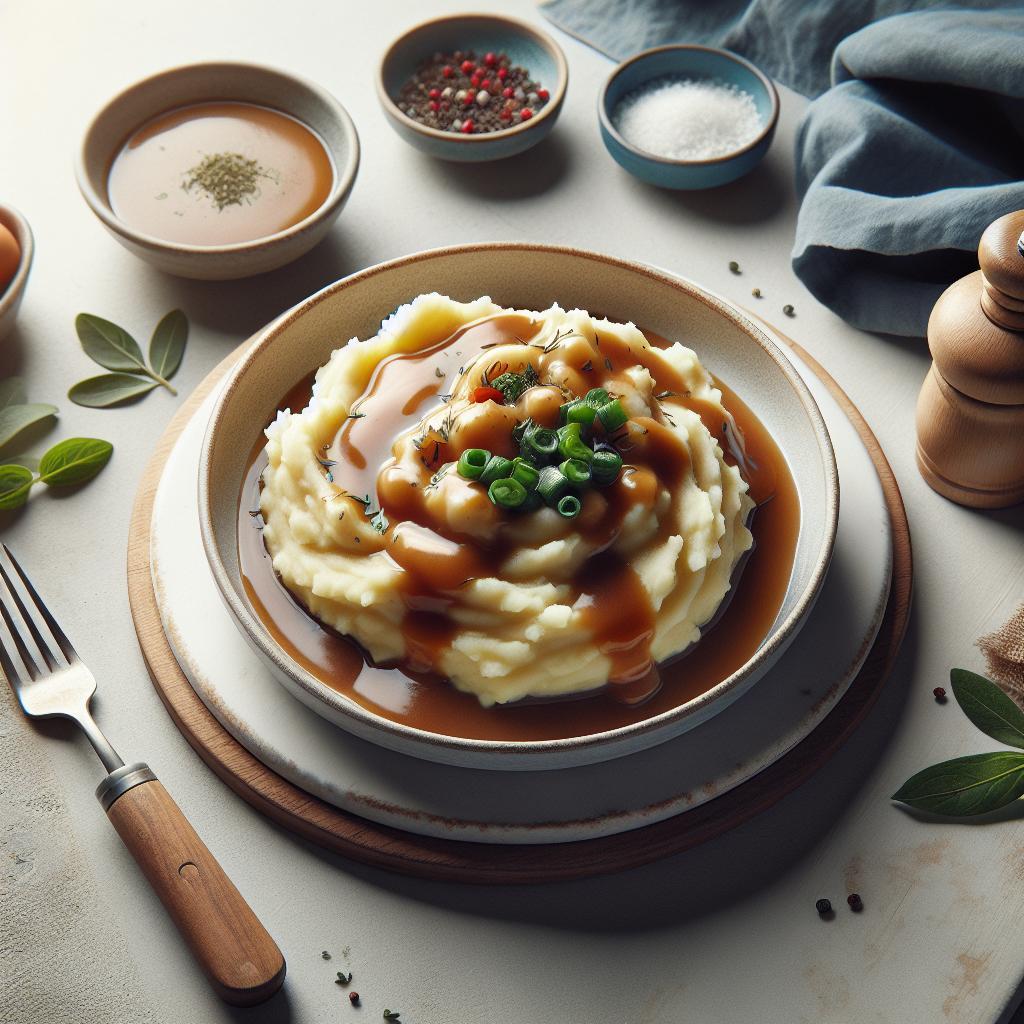

There is a special satisfaction in a bowl of ultra-creamy mashed potatoes dressed in warm, savory gravy. This recipe-level approach shows how simple chemistry and precise technique produce a reliably silky mash and a gravy that complements every mouthful.
- Choose starchy or all-purpose potatoes for the best texture.
- Warm fats and liquids before folding to keep the mash smooth.
- Build gravy from a golden roux and warm stock for stable emulsification.
- Finish with fresh herbs to brighten the rich flavors.
Overview
Mashed potatoes succeed when you balance water, heat and agitation to control starch release. Understanding potato starch behavior prevents gluey results and rewards you with a light, airy texture.
Use reliable varieties like potato cultivars chosen for their starch profile. For example, the Yukon Gold potato offers a naturally buttery mouthfeel that suits this preparation.
Prep and Cook Time
Preparation: 15 minutes. Set up mise en place: peel, cut, and heat your dairy so the assembly is rapid and controlled.
Cooking: 30 minutes. Boil the potatoes gently until fork-tender; aggressive rolling boils break cells and release extra starch.
- Total Time: 45 minutes
Yield and Difficulty
Serves 6 generously. This recipe scales well; keep ratios and heat management consistent when increasing portions.
Difficulty: Easy to Medium. The techniques demand attention rather than advanced skills—timing and temperature matter more than culinary bravado.
Ingredients
Below are grouped ingredient lists to help with prep and to streamline production when cooking for a crowd. Organize items by temperature needs so warm and cold components meet at the right moment.
For Mashed Potatoes
Use starchy or all-purpose potatoes and pre-warm dairy for a cohesive emulsion that avoids separation. Keep measurements flexible depending on desired richness.
- 3 lbs Yukon Gold potatoes, peeled and cut into chunks
- 1 cup whole milk, warmed
- ½ cup unsalted butter, melted and warm
- Salt to taste
- Freshly ground white pepper to taste
For Savory Gravy
Build a stable gravy with a classic roux and warm stock so the starch hydrates evenly. Low, steady simmering develops flavor without breaking the emulsion.
- 4 tbsp unsalted butter
- 3 tbsp all-purpose flour
- 2 cups chicken or vegetable broth, warm
- 1 small onion, finely minced
- 2 cloves garlic, minced
- 1 tsp fresh thyme leaves
- Salt and black pepper to taste
- 1 tbsp Worcestershire sauce (optional for depth)
Instructions
Follow a methodical sequence: cook potatoes, dry them briefly, mash gently, then finish with warm fat and liquid. Keep agitation measured to prevent excess starch gelatinization.
Make the gravy separately to control thickness and seasoning. Warm liquids integrate better with a roux and yield a glossy, lump-free sauce.
Step-by-step Method
1. Prepare the potatoes: Place peeled and chunked Yukon Gold potatoes in a large pot of cold, salted water. Bring to a gentle boil and simmer until tender, about 15–20 minutes; a fork should glide in easily.
2. Drain and dry: Drain thoroughly, return the potatoes to the hot pot off heat for 1–2 minutes to evaporate surface moisture. This reduces excess water in the mash.
3. Mash deliberately: Use a potato masher or ricer and mash while the potatoes are hot. Avoid high-speed mixing. Slowly fold in warm butter and warm milk in batches until you reach a creamy, slightly airy consistency.
4. Make the gravy: In a skillet over medium heat, melt butter and sweat the onion and garlic until translucent. Stir in flour and cook, whisking constantly, until the mixture forms a golden roux and smells lightly nutty, about 2–3 minutes.
5. Finish the gravy: Gradually whisk warm broth into the roux, add thyme, and simmer until the sauce thickens to your preference, 5–7 minutes. Adjust seasoning with salt, pepper, and a splash of Worcestershire if using.
6. Combine and serve: Spoon the gravy over the mashed potatoes, or create a serving well and ladle the sauce in. Garnish with fresh thyme sprigs or chopped chives for balance and color.
Tips for Success
Simple adjustments deliver professional-level results. Focus on temperature control, gentle handling, and seasoning at each stage to build depth without masking the potato’s natural flavor.
Test consistency as you add liquid; the final texture should be creamy but hold its shape when spooned. If it becomes too loose, simmer briefly uncovered to concentrate, or fold in a small amount of warm mashed potato to thicken.
Serving Suggestions
Pair these mashed potatoes with roasted or braised proteins that provide pan drippings for gravy enhancement. The gravy bridges the starch and protein, creating cohesive plates every time.
Add texture contrasts like roasted vegetables or crisp greens, and finish with a small knob of butter or a spoonful of crème fraîche for indulgence. A sprinkling of chopped parsley or thyme brightens rich flavors.
Nutrition
Nutrition varies by ingredient choices and portion size. Below is a practical estimate for a standard serving when prepared with whole milk and butter; adjust for lighter substitutions.
| Nutrient | Per Serving |
|---|---|
| Calories | 320 kcal |
| Protein | 5 g |
| Carbohydrates | 35 g |
| Fat | 18 g |

FAQ
Q: What potato type makes the creamiest mash?
Starchy varieties like Russets and all-purpose varieties like Yukon Gold produce different textures; Yukon Gold gives a naturally buttery feel while Russets aerate more when mashed. Choose based on desired mouthfeel and how you plan to finish the dish.
Q: How do I avoid gluey, gummy mashed potatoes?
Drain and dry the potatoes, mash while hot, and add warm dairy gradually. Avoid electric beaters or overworking; excessive shear ruptures cells and releases free starch that produces a gummy texture.
Q: Can I make the mashed potatoes and gravy ahead?
Yes—store them separately in airtight containers. Reheat the potatoes gently with a splash of warm milk; warm the gravy slowly and whisk to restore a smooth emulsion before serving.
Q: How do I thicken gravy without lumps?
Make a proper roux and add warm stock slowly while whisking. If lumps form, strain the gravy or use an immersion blender on low to smooth the sauce, then simmer briefly to stabilize consistency.
Q: Are there flavor boosts that don’t mask the potatoes?
Use subtle infusions such as garlic-sweated butter, a bay leaf in the stock, or fresh herbs at the end. A small amount of acid, like a teaspoon of white wine or a dash of vinegar, can lift flavors without overpowering the dish.
Final Notes
Technique trumps theatrics when it comes to mashed potatoes; attention to temperature and gentle handling yields reliable results. This approach gives you control over texture, flavor, and presentation so each serving reads as intentional and refined.
For background reading on related culinary concepts, consult resources on mashed potatoes, gravy, and Worcestershire sauce to deepen your functional understanding of ingredients and techniques.
See also: mashed potatoes