
There is an art to the perfect Italian salad: a bright balance of fresh produce, bold olive oil, measured acidity and complementary herbs. This guide condenses practical techniques and ingredient science so you can reproduce that classic Italian clarity at home.
- Focus on fat and acid: the oil-to-vinegar balance defines texture and brightness.
- Use fresh herbs: basil and oregano anchor the profile; add others sparingly.
- Toss sparingly: gentle handling preserves crunch and prevents sogginess.
- Finish with texture: nuts, cheese shavings and toasted seeds provide contrast.
Choosing the Ideal Olive Oil and Vinegar for Bold Flavors
Start by selecting an extra virgin olive oil with a clear sensory profile: fruity, grassy or peppery notes indicate higher polyphenol content and more pronounced flavor. Cold-pressed Italian varietals often deliver the peppery finish prized in traditional salads.
For acidity choose according to the salad’s weight. Aged balsamic concentrates sweetness and body while a sharp red wine or sherry vinegar brings instant lift. Match vinegar intensity to ingredients so the acid complements rather than competes.
Olive oil and vinegar ratios
Classic Italian dressings use ratios between 3:1 and 4:1 (oil to vinegar), adjusted by ingredient weight. Heavier cheeses or roasted vegetables tolerate a 3:1; delicate greens prefer 4:1 or even a squeeze of lemon in place of half the vinegar.
Emulsify briefly with a whisk or shake in a jar. A stable coating minimizes pooling and keeps leaves crisp. Use a small amount of mustard or grated garlic if you need a more persistent emulsion, but use sparingly to preserve clarity.
Incorporating Traditional Herbs and Seasonings to Elevate Your Salad
Fresh basil and oregano form the aromatic backbone of many Italian salads. Use torn basil leaves to release volatile oils and chopped oregano for a savory lift. Add herbs at the end of assembly to keep their aroma bright.
Introduce secondary seasonings—crushed red pepper, a light pinch of sea salt, and freshly cracked black pepper—to build complexity. These accents should support the olive oil and acid, reinforcing balance rather than masking the produce.
For reference on botanical and culinary uses, see basil and the broader concept of a herb in cuisine.
Timing and placement of herbs
Add delicate herbs like basil right before serving so heat or prolonged acid exposure doesn’t flatten their aroma. Sturdier herbs such as oregano or thyme can be added to the dressing to macerate briefly and release flavor.
When experimenting, add herbs incrementally and taste. Small adjustments give you control and reduce the risk of over-seasoning.
Tips for Perfectly Tossing and Serving Italian Salad Every Time
Handle greens with care. Use chilled bowls and either your hands or large salad tongs to lift and fold ingredients rather than pressing down. Gentle tossing keeps leaves intact and prevents early wilting.
Dress lightly and in stages. A single steady drizzle while tossing ensures an even coating and avoids saturated pockets. Serve immediately on slightly chilled plates for the best textural contrast.
Garnish and texture strategy
Finish with toasted nuts, croutons or thin shavings of aged cheese such as Parmigiano-Reggiano to introduce crunch and umami. These elements convert a good salad into a memorable one.
If you include soft cheeses like fresh mozzarella, add them after the initial toss to prevent breaking. Reserve a few whole leaves of basil to crown the finished plate for visual and olfactory impact.
Ingredients
Ingredients determine the direction of the salad—toward light and green or toward robust and savory. Choose produce at peak ripeness and keep textures varied: crisp, creamy and crunchy.
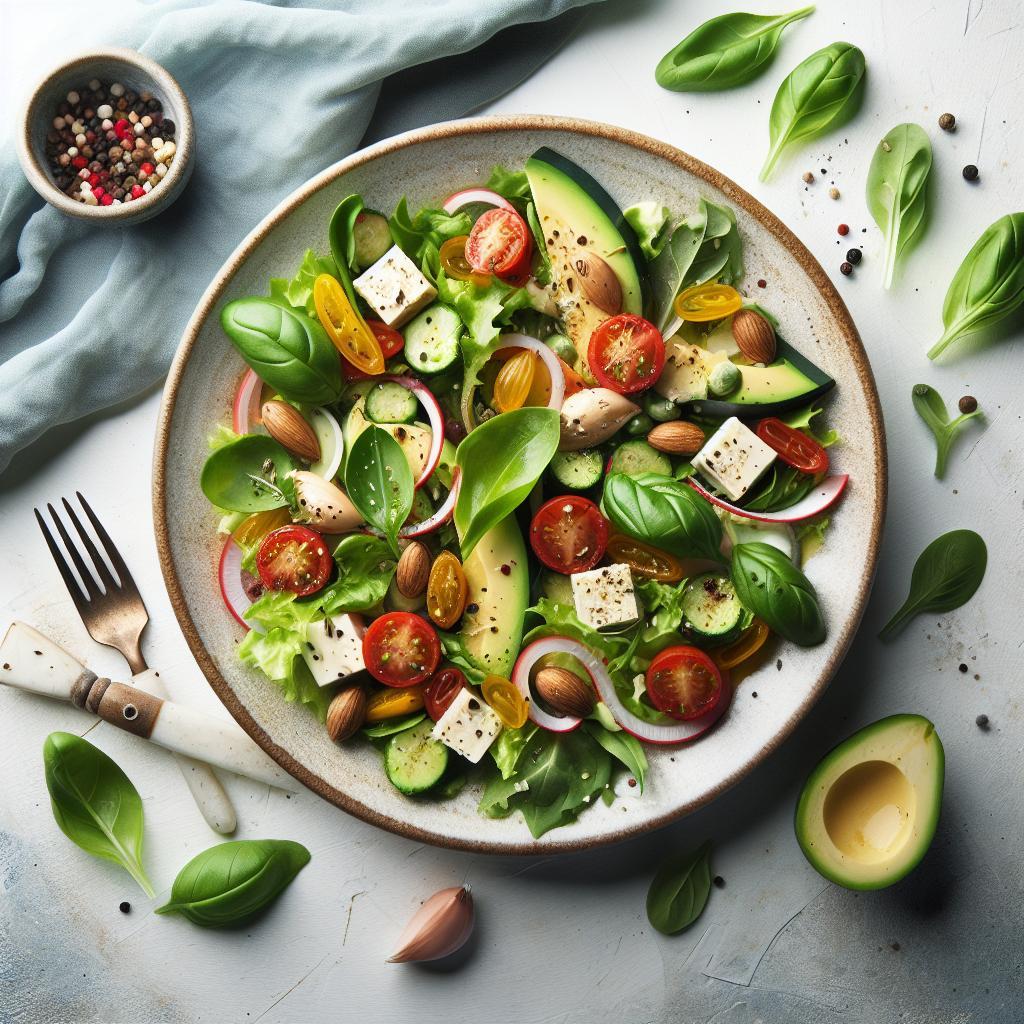
Core ingredient list for a balanced Italian salad: mixed greens (arugula, radicchio, romaine), cherry tomatoes, cucumber, red onion, Kalamata olives, fresh mozzarella, quality extra virgin olive oil, aged balsamic vinegar, fresh basil and oregano, toasted pine nuts, and shaved Parmigiano-Reggiano.
- 4 cups mixed fresh salad greens, washed and dried
- 1 cup cherry tomatoes, halved
- ½ cup cucumber, thinly sliced
- ¼ cup thinly sliced red onion
- ¼ cup pitted Kalamata olives, halved
- ⅓ cup crumbled fresh mozzarella or bocconcini balls
- 3 tbsp extra virgin olive oil
- 1 ½ tbsp aged balsamic vinegar
- 2 tsp fresh oregano leaves, chopped
- 2 tbsp fresh basil leaves, torn
- ½ tsp crushed red pepper flakes (optional)
- Sea salt and freshly cracked black pepper, to taste
- 2 tbsp toasted pine nuts (for garnish)
- Shaved Parmigiano-Reggiano cheese, for garnish
Prep and Cook Time
Preparation: 15 minutes. Plan ingredient prep so everything finishes within minutes of assembly.
Assembly: 5 minutes. Quick assembly preserves temperature and texture; longer waits risk wilt and flavor drift.
Yield
Serves 4 as a starter or side. Scale ingredients linearly to serve more without altering ratios significantly.
For a main-course salad, add protein like grilled chicken or cannellini beans and increase the greens to maintain balance.
Difficulty Level
Easy for cooks at every level. The technical skill lies in balancing acid, oil and salt and in managing timing.
Mastery comes from tasting and adjusting. Once you internalize ratios and textures, you can adapt the recipe confidently.
Instructions
Follow stepwise assembly to preserve each ingredient’s texture and flavor. Assemble quickly and with intention to retain brightness.
- Prepare the dressing: Whisk together the extra virgin olive oil, aged balsamic vinegar, chopped oregano, crushed red pepper flakes, sea salt, and pepper until lightly emulsified.
- Assemble the salad base: In a large salad bowl, combine the mixed greens, cherry tomatoes, cucumber, red onion, and Kalamata olives. Toss gently to mix the ingredients evenly.
- Add the cheese and herbs: Scatter the crumbled mozzarella and torn basil leaves over the salad mixture. Toss lightly to incorporate the fresh flavors without breaking the cheese.
- Dress the salad: Drizzle the dressing over the salad gradually while tossing carefully with your hands or tongs to coat leaves without bruising. Aim for a light, even coating.
- Garnish and serve: Plate on slightly chilled dishes. Finish with toasted pine nuts and ribbons of Parmigiano-Reggiano. Serve immediately.
Keep the dressing separate if you must prepare elements ahead. Store greens and vegetables in airtight containers with paper towels to control moisture.
Chef’s Notes
For a vegan version, omit mozzarella and Parmigiano-Reggiano and add marinated artichoke hearts or roasted chickpeas for heft. Swap pine nuts for toasted walnuts if pine nuts are unavailable or expensive.
If you prefer a milder dressing, reduce balsamic to 1 tablespoon and add a teaspoon of fresh lemon juice for brightness without extra sweetness.
To hold texture, dress only at serving. If you must assemble early, keep the dressing in a separate container and toss moments before plating.
Serving Suggestions
Pair this Italian salad with grilled proteins such as chicken or fish, or serve beside a rustic bread like focaccia to soak up the dressing. The salad also complements hearty soups and legumes.
For a composed meal, add farro or quinoa and a portion of protein to convert the salad into a complete plate while retaining the characteristic Italian flavor profile.
| Nutrient | Amount per Serving |
|---|---|
| Calories | 210 kcal |
| Protein | 7 g |
| Carbohydrates | 9 g |
| Fat | 17 g |
Explore related reading on the history and culture of salads via the salad entry. For deeper context on vinegar traditions, consult balsamic vinegar.

FAQ
What makes an Italian salad authentic?
An authentic Italian salad emphasizes seasonal produce, high-quality olive oil and minimal dressing so ingredients remain the focal point. Salt, acid and fat balance creates the familiar bright-rounded profile.
Which greens work best?
Combine textures: crisp romaine or radicchio, peppery arugula, and tender leaf lettuces. The contrast adds interest and supports varied dressings and toppings.
How important is olive oil?
Olive oil acts as both flavor carrier and texture agent. Use extra virgin oil for aroma and mouthfeel; its phenolic content contributes bitterness and pungency—desired traits in many Italian salads.
Can an Italian salad be a complete meal?
Yes. Add grilled protein, legumes like cannellini beans, or whole grains such as farro to create a balanced main-course salad without losing the Italian character.
How do I keep the salad crisp if prepping ahead?
Store components separately, keep dressing in a sealed jar, and assemble only at serving. Use paper towels in storage containers to absorb excess moisture and slow sogginess.
Apply these principles and you will consistently build Italian salads that taste intentional, balanced and distinctly Italian. Buon appetito!
See also: Italian salad