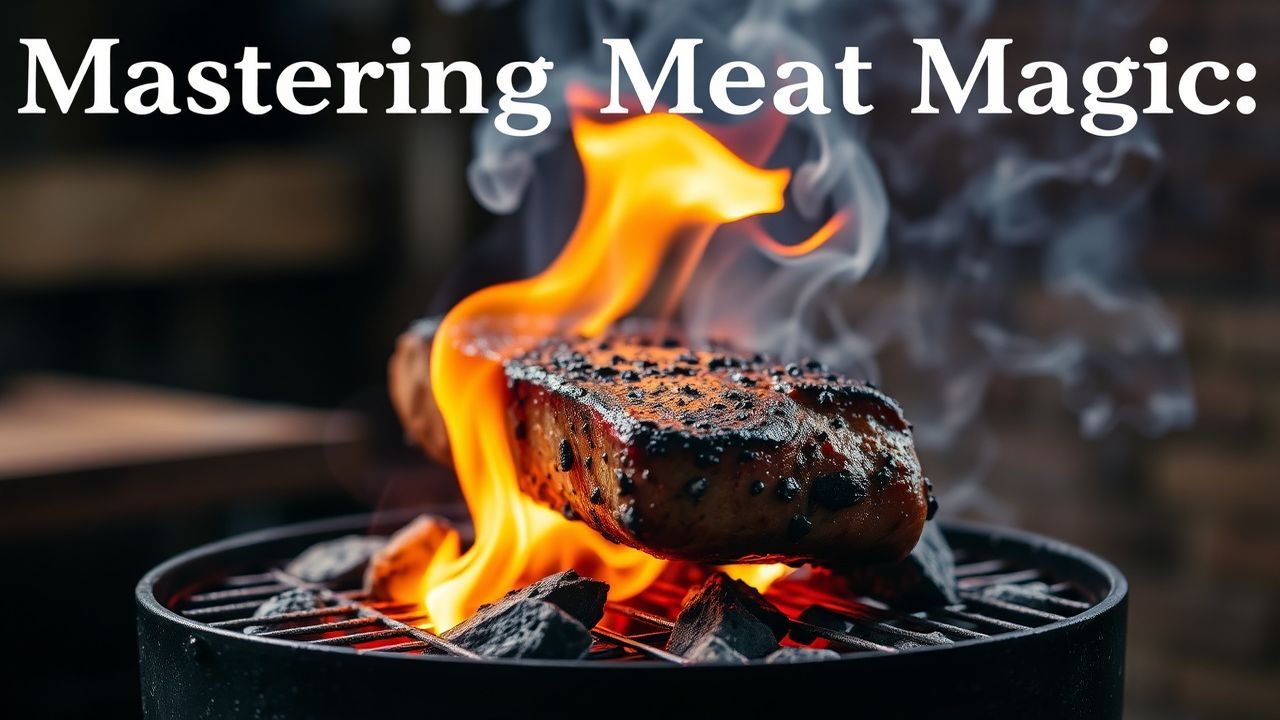

Mastering Meat Magic: Smoking on a Charcoal Grill Guide
There’s something undeniably enchanting about the ritual of smoking meat over a charcoal grill — a dance of smoke, embers, and careful timing that converts simple cuts into deeply flavored dishes. This guide lays out measurable techniques for consistent results on a charcoal rig, from fuel and airflow to meat prep and rest.
- Low-and-slow wins: steady 225–250°F yields tender, smoke-kissed meat.
- Wood selection matters: match wood strength to the protein for balance.
- Temperature control: vents, water pan, and a dual-probe thermometer keep you on track.
- Rest and slice: proper resting yields juicier slices and more even texture.
Why Charcoal Smoking Works
Charcoal combines radiant heat from glowing coals with wood smoke to build complex surface chemistry on the meat. The process encourages Maillard reactions and smoke adsorption that create that prized bark and deep flavor layers.
The physical fuel also gives the pitmaster control: by shaping fuel banks and adjusting vents you tune temperature and smoke density. Read more about the fuel type at charcoal and how it performs compared to other heat sources.
Prep and Cook Time
Preparation: 30 minutes active prep (plus marinating or dry-brining as desired). Prep gives the rub and meat a chance to adhere and develop surface proteins that accept smoke.
Cooking: Typical low-and-slow sessions run 3 to 12 hours depending on cut, weight, and target internal temperature. Brisket, for example, often needs the full range to break down connective tissue.
Yield
This recipe framework serves roughly 6–8 guests when you start with a 4 lb trimmed brisket. Yield varies by trimming, moisture loss, and how thinly you carve the final product.
Plan for 6–8 oz cooked meat per person for a main course when you have side dishes accompanying the plate.
Difficulty Level
Intermediate. You must manage a fire for hours and read temperatures, but the steps are repeatable. With practice, you gain predictable control over flavor and tenderness.
Beginners can succeed by following zone-fire setup and monitoring with a reliable thermometer — see the internal guide on temperature control at grill temperature basics.
Ingredients
Use quality ingredients and calibrated measures. The list below gives a classic savory rub and a simple fuel plan for long smoking sessions.
- 4 lb beef brisket, trimmed of excess fat
- 1/4 cup kosher salt
- 1/4 cup coarse black pepper
- 2 tablespoons smoked paprika
- 1 tablespoon garlic powder
- 1 tablespoon onion powder
- 3 cups hardwood lump charcoal
- 2–3 chunks of hickory or applewood, soaked 30 minutes to slow burn
- Aluminum foil and a water pan for humidity and bite protection
If you want a tested dry-rub formula to pair with this method, use the internal tutorial on rubs at creating the perfect dry rub.
Instructions
Start by lighting lump charcoal and arranging it in a two-zone setup: a hot direct side and a cooler indirect side. Aim to stabilize the cooking area between 225–250°F before you place meat on the grill.
Mix the dry rub thoroughly and press it into the trimmed brisket. Let the meat rest at room temperature for 20–30 minutes while the grill comes to the correct temperature to avoid shock from cold meat hitting hot surfaces.
- Arrange charcoal: bank coals to one side for indirect cooking and leave a clean zone for the brisket to sit away from direct flame.
- Add wood chunks: position soaked wood chunks atop the coals once they hold a steady ember bed to release cool, flavorful smoke. For a primer on smoking technique see smoking (cooking).
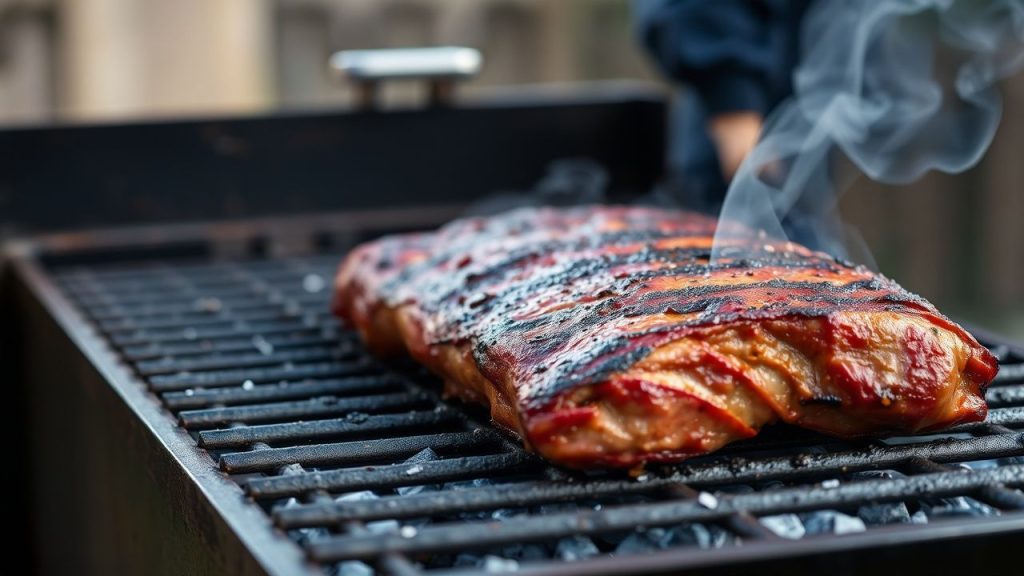
- Position meat: place brisket fat-side up on the indirect side, with a water pan beneath to stabilize humidity and slow temperature fluctuations.
- Monitor temps: use a dual-probe thermometer to track both grill and meat temperature. Adjust vents in small increments for steady control.
- Smoke duration: plan roughly 1 hour per pound, but judge doneness by internal temp (195–205°F) and probe feel for that tender pull rather than clock time alone.
- Wrap and rest: when the brisket hits stall or reaches the target, wrap in foil and rest 45–90 minutes to redistribute juices before slicing.
[WARNING]Pro-Caution: Never rush the stall. Forcing heat or slicing too soon drains juices and toughens tissue. Use low, steady heat, and avoid frequent lid checks that drop internal temperature.
When you remove the brisket, tent it loosely and let residual heat finish the tenderizing process. Slice thinly against the grain for the best mouthfeel and even chew.
Tips for Success
Choosing wood: match wood intensity to protein—hickory pairs well with beef, fruitwoods play nicely with pork and poultry. For more on the species, consult the hickory reference at Hickory.
Temperature control: small vent adjustments change the oxygen feed significantly, so move vents in minor increments and wait 10–15 minutes for the effect to stabilize. A water pan reduces spikes and keeps the bark forming predictably.
Keep a small spray bottle with apple juice or diluted vinegar to spritz during the early bark phase for flavor layering, but avoid over-spritzing which can wash away rub and cool the surface too often.
Serving Suggestions
Serve brisket on a warm board or platter with classic sides like buttery cornbread, vinegar-based slaw, and pickles to cut through the richness. A little finishing oil flavored with smoked paprika adds gloss and aroma.
For plated service, offer sliced brisket alongside a small ramekin of sauce and a vegetable garnish. Presentation that balances texture and acidity highlights the smoked meat.
Nutritional Table
The table below gives a per-serving macronutrient snapshot based on a typical smoked brisket portion size. Adjust portions if you trim more fat or serve thinner slices.
| Nutrient | Amount per Serving |
|---|---|
| Calories | 450 kcal |
| Protein | 48 g |
| Carbohydrates | 3 g |
| Fat | 25 g |
Q&A
This section answers common operational questions about smoking on a charcoal grill. The practical tips aim to fix recurring issues smokers face during a long cook.
Review answers below to troubleshoot common points: fuel choice, setup, and temperature control methods that experienced pitmasters use.
Q1: Why does my brisket take so long to soften?
A1: Connective tissue breaks down at higher cumulative exposure to collagen-denaturing temperatures. Maintain a steady low heat and allow time for the collagen to convert to gelatin; forcing higher temps shortens time but yields drier meat.
Q2: How do I avoid bitter smoke?
A2: Bitter smoke comes from incomplete combustion or resinous woods. Use dry, hardwood pieces or properly soaked chunks and ensure coals burn to embers before heavy smoke production. Avoid green or resin-rich woods.
Q3: Can I use mesquite or other strong woods?
A3: Yes, but sparingly. Mesquite imparts bold flavor and can overwhelm lean proteins. Reserve strong woods for short exposure or robust cuts and blend with milder fruitwoods for balance.
Q4: What internal temps should I target?
A4: For brisket target 195–205°F and judge tenderness with a probe; for pork shoulder aim 195–203°F. Temperatures relate to texture as much as safety in long cooks.
Q5: How do I reheat smoked meat without losing moisture?
A5: Reheat gently at low oven temperatures (225–250°F) in foil with a splash of broth or saved juices. Slow reheating preserves bark texture and internal moisture better than high-heat methods.
FAQ
Short FAQs below provide schema-friendly answers to frequent user queries about charcoal smoking technique and outcomes. Use them for quick reference on the most actionable points.
These answers reflect the methods above and link to relevant background material for context and deeper reading.
What is the best temperature for charcoal smoking?
Keep the grill between 225–250°F for most low-and-slow cuts. This range allows fibers to relax and smoke to penetrate without over-searing the exterior.
Which woods pair best with brisket?
Hickory and oak are classic choices for beef. Use small amounts and blend with milder woods for complexity. For details on species and wood characteristics, see Hickory.
How long should I rest smoked brisket?
Rest brisket 45–90 minutes wrapped in foil to let juices redistribute and for residual heat to even out internal temperature. Resting improves sliceability and juiciness.
Why use lump charcoal instead of briquettes?
Lump charcoal lights faster and offers hotter, cleaner heat with less chemical binder residue. If you prefer consistency, premium briquettes with minimal additives can also work. Learn fuel basics at charcoal.
Where can I read more about brisket and its cuts?
For anatomy and traditional preparations, consult the brisket overview at Brisket, which helps you choose the right trimming and cooking approach for best results.
Embrace the process, read your temperature meters, and adjust the fuel train in small steps. Mastery comes from repeatable control and small refinements that deliver consistent, smoke-forward results.
See also: charcoal smoking