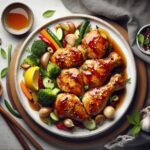
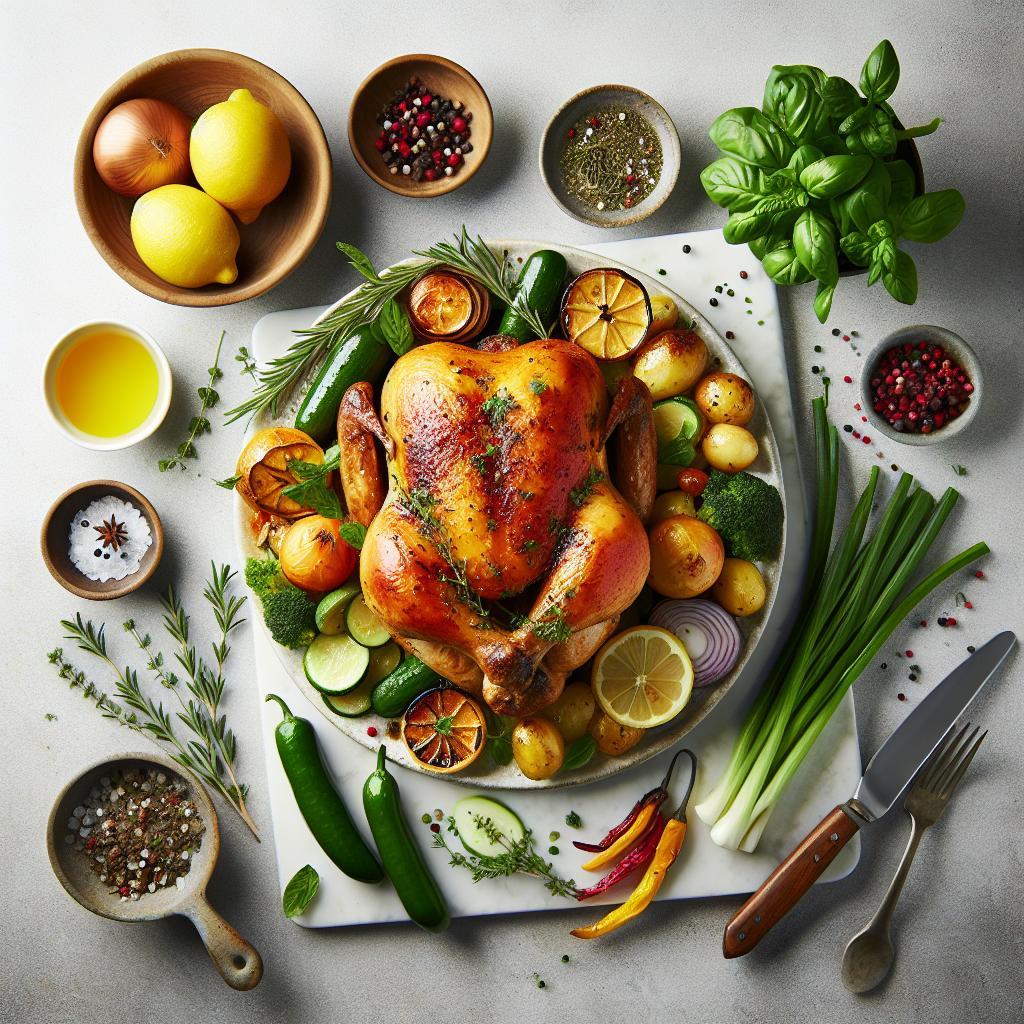

There is an unmistakable pleasure in a roast chicken with crackling golden skin and meat that stays juicy to the last bite. This guide condenses tested culinary technique into clear, actionable steps so you can repeat the result reliably.
- Brine or marinate: improves moisture retention and flavor.
- High-to-medium roast: crisp skin, gentle finish for juicy meat.
- Thermometer and rest: key controls for safe, tender results.
- Simple carving and pan juices: maximize serving quality.
Prep and Cook Time
Preparation: about 20 minutes active hands-on time. Brining or marinating ranges from a short 1–2 hours to overnight for deeper flavor.
Cooking: expect roughly 1 hour 15 minutes to 1 hour 30 minutes at home ovens when starting at 425°F then dropping to 375°F. Resting adds 10–20 minutes before carving.
Yield
This recipe yields a whole roast chicken that serves 4–6 people depending on appetite and sides. Plan for 6 servings if you include generous portions or leftovers.
Leftovers reheat well and make sandwiches, salads, or quick fried rice; store chilled within two hours in a covered container for safe use.
Difficulty Level
Classified as medium—it requires timing, temperature control, and basic knife skills. A home cook with one or two oven roasts under their belt will find this predictable and repeatable.
The most important tools are a probe thermometer and a roasting rack. These reduce guesswork and increase success rates dramatically.
Ingredients
Use this ingredient list as a baseline; adjust aromatics and heat to taste. Quantities below suit a 4–5 lb (1.8–2.3 kg) whole chicken.
- 1 whole chicken (4–5 lb), patted dry
- 4 cups cold water (for brine)
- 1/4 cup kosher salt
- 1/4 cup brown sugar
- 4 cloves garlic, crushed
- 1 lemon, halved
- 2 sprigs rosemary
- 1 sprig thyme
- 2 tbsp olive oil
- 1 tsp black pepper, freshly ground
- 1 tsp smoked paprika
- 1 tsp onion powder
- Optional: 1/2 tsp chili flakes
If you prefer cuts, bone-in thighs and drumsticks deliver faster cook times and robust juiciness. Adjust salt and cooking time for pieces.
Instructions
Selecting the Bird
Choose a whole bird with intact skin and even breast and thigh size for uniform cooking. A 4–5 lb bird provides predictable timing for the method below.
Consider free-range or higher-fat birds for flavor variance, but technique—brine, dry skin, correct roast—matters more than label for juiciness.
Brining (or Marinade Alternative)
Prepare a simple brine: dissolve kosher salt and brown sugar in cold water, add garlic, lemon, and herbs, then fully submerge the bird for 4–8 hours. Short brines of 1–2 hours still improve moisture retention.
Brining changes the meat’s protein hydration and seasoning profile; see brining for the underlying chemistry. If you prefer an acid/tenderizing route, a yogurt-based marinade offers tang and enzyme-based tenderizing.
Dry and Season
Remove the chicken from the brine, rinse if you used a salty brine, and pat completely dry. Dry skin crisps far better during roasting.
Rub the skin with oil, then season under and over the skin. Tuck lemon halves and aromatics into the cavity for internal steam and flavor infusion.
Preheat and Roast
Preheat the oven to 425°F (220°C). Set the chicken breast-side up on a rack in a roasting pan so air circulates and heat distributes evenly.
Start at the high temperature for 10–15 minutes to jump-start browning, then lower to 375°F (190°C) for the remainder. This sequence balances crisp skin and gentle finish; read more about dry-heat methods at roasting techniques.
Monitor Internal Temperature
Use a reliable probe to check the thickest part of the thigh, avoiding bone contact. Pull the bird when the thermometer reads 160–162°F (71–72°C)—carryover will bring it to safe serving temperature.
The common safe final temperature for poultry is 165°F (74°C), but removing earlier and allowing carryover prevents overcooking. For tool reference see meat thermometer.
[having_separated_block]
Rest to Seal Juices
Tent the bird with foil and rest for 15 minutes. Resting lets muscle fibers relax and reabsorb juices rather than spilling them on the cutting board.
While resting, use the oven’s residual heat to keep vegetables warm. Reserve pan juices to make a simple jus or finish with a splash of acid and butter.
Carve and Serve
Carve with a sharp chef’s knife: remove legs and thighs first, then wings, and slice breasts against the grain for tender slices. Arrange on a warmed platter and spoon pan juices over the slices.
Garnish with fresh herbs and lemon wedges to brighten the plate. For more side ideas see our internal guide: Ultimate Roast Dinner Guide.
Chef’s Notes
Substituting bone-in pieces like thighs shortens cook time and raises the odds of moist results if you prefer not to roast a whole bird. Adjust salt proportionally when moving from whole bird to pieces.
Use an oven thermometer to verify actual oven temperature; many home ovens vary by ±25°F, which changes cook time and outcome. For a focused primer, consult our internal page on Brining Basics.
Serving Suggestions
Pair the roast with roasted garlic mashed potatoes, sautéed seasonal greens, or a crisp fennel and orange salad to cut through richness. Simple sides keep the bird center stage.
Finish plates with pan juices or a light herb oil. These small additions dramatically improve mouthfeel and perceived richness without heavy sauces.
Nutrition
The following values approximate a single serving from a 4–5 lb roasted chicken prepared with the listed ingredients. Values will vary by portion size and trimming.
| Nutrient | Per Serving |
|---|---|
| Calories | 320 kcal |
| Protein | 38 g |
| Carbohydrates | 1 g |
| Fat | 18 g |

Q&A
The following concise answers target common technical questions readers ask during roast prep and cooking. Each answer gives a clear action you can apply the same day.
Q1: What is the single most reliable step to ensure a juicy roast?
Remove the chicken from the oven at the correct internal temperature and rest it. Pulling early and allowing carryover cooks the meat gently and retains moisture.
Combine this with brining or a short marinade for best results; both increase water-holding capacity and flavor.
Q2: How long should I brine a 4–5 lb chicken?
Four to eight hours gives good penetration without turning the texture soft. For quick brines, even 1–2 hours improves juiciness compared with no brine.
Aim for a balanced brine formula and refrigerate the bird while brining for safety.
Q3: Is a thermometer necessary?
Yes—an instant-read or probe thermometer removes guesswork. Target pull temperature of 160–162°F (71–72°C) for the thick thigh; final safe temp will reach 165°F (74°C) after resting.
Thermometers are inexpensive and dramatically reduce the risk of overcooking while ensuring safety.
Q4: Should I baste during roasting?
Basting can flavor the exterior but causes oven temperature fluctuations if performed repeatedly. A well-oiled skin and correct oven schedule provide better crispness and even cooking.
If you choose to baste, do it sparingly during the first half of the roast to avoid heat loss and slower cooking.
Q5: How do I reheat leftovers without drying them out?
Reheat gently with a splash of broth in a covered dish at low oven temperature, or microwave on reduced power with a damp paper towel. Short, gentle reheating preserves moisture.
Use leftover meat in salads, soups, or tortillas where additional sauce or dressing helps maintain juiciness.
Closing Notes
This method emphasizes controlled heat, simple brining, and precise temperature monitoring to produce reliably juicy roast chicken. Each step reduces common failure points and builds predictable outcomes.
Practice the timing on smaller birds first, and you will internalize roast rhythm—preheat, sear the skin with high heat, reduce to finish, monitor temperature, then rest—this sequence repeatedly yields dependable results.
See also: roast chicken