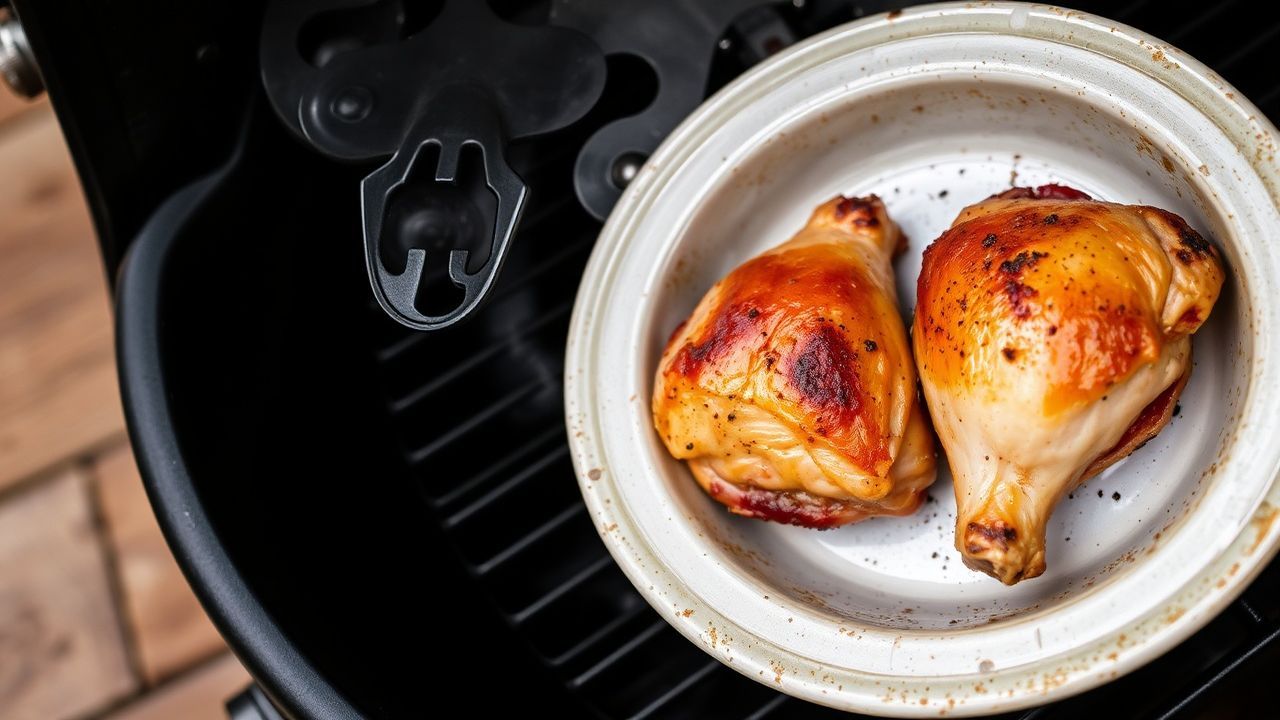

Smoked chicken delivers a layered flavor that starts with steady heat and ends with moist, pull-apart thighs and crisp, caramelized skin. This guide lays out ten pro techniques you can apply the next time you fire up a smoker.
- Low-and-slow smoke helps the thighs stay juicy while building bark and smoke flavor.
- Use a probe thermometer to track internal temperature instead of trusting the clock.
- Pick complementary woods—fruitwoods bring sweetness; use hickory sparingly for punch.
- Rest before serving to let juices redistribute and finish connective tissue breakdown.
Why Thighs Work Best for Smoked Chicken
Chicken thighs tolerate long, gentle heat because they contain more intramuscular fat and connective tissue than breast meat. That composition soaks up smoke and stays tender rather than drying out.
Understanding collagen breakdown and muscle fibers helps you choose the right pull temperature. A properly smoked thigh balances tenderness and juiciness rather than relying on the lowest safe temperature alone.
Prep and Cook Time for Smoked Chicken Thighs
Short prep, patient cooking. A 30-minute post-seasoning rest improves adhesion; overnight dry brines or a brief wet brine add depth and moisture. See the brine technique for timing.
Typical cook time at 225°F is about 1.5–2 hours. Add prep and rest and plan for a three- to four-hour window for a consistent smoked chicken cook session.
Yield & Difficulty
This method produces four generous servings from eight bone-in, skin-on thighs. It works on backyard offset smokers, pellet units, and electric smokers when managed well.
Skill level: Intermediate. You need a reliable probe thermometer and a feel for smoke intensity to fine-tune outcomes across different smoker types.
Ingredients
Use trimmed, patted-dry thighs for even rub adhesion and consistent smoke absorption. The basic rub balances salt, sweet, and savory elements for good color and flavor.
Essentials: bone-in, skin-on thighs; oil or melted butter; kosher salt; smoked paprika; black pepper; garlic and onion powders; thyme; optional brown sugar or cayenne for heat. Keep a small water or apple-juice pan in the smoker to stabilize temperature and humidity.
Equipment and Setup
Choose a smoker that holds steady heat. Pellet smokers, offset smokers, and charcoal rigs all work if you control airflow and fuel loading. Calibrate the cook chamber before the first run.
Use an independent digital probe for accuracy; a good probe eliminates guesswork. If you need a quick reference, see the meat thermometer entry for sensor types and best practices.
Instructions
1. Season and rest. Lightly oil thighs, apply the rub, then rest 30 minutes at room temp or refrigerate up to 2 hours. For deeper penetration, dry-brine overnight—salt draws moisture and then reabsorbs seasoned liquid.
2. Prepare the smoker. Bring the chamber to 225°F (107°C). Use small wood chunks to create thin, steady smoke. If you use chips, soak briefly and add in stages to avoid thick, bitter smoke.
3. Smoke the thighs. Place thighs skin-side up with space between pieces for airflow. Maintain a steady heat band and replenish wood in small amounts to keep smoke clean and blue rather than heavy and black.
4. Track internal temperature. Probe the thickest part without touching bone. Pull at 165°F (74°C) for safe service; many pros pull closer to 170–175°F (77–79°C) for softened connective tissue and improved mouthfeel.
5. Rest and finish. Tent thighs loosely and rest 10–15 minutes. For crisper skin, finish skin-side down on a hot grill or under a broiler for 2–3 minutes after resting.
After the warning, check your smoke color. Thin, translucent smoke signals good combustion; dark, heavy smoke means reduce fuel or increase airflow.
Tips for Success
Wood selection matters. Fruitwoods like apple and cherry pair well with poultry; use hickory sparingly to avoid overpowering the meat. Learn the characteristics of common smoking woods to build balanced profiles.
Temperature control. Maintain a steady low temperature and resist frequent lid lifts. Every lid opening drops chamber temperature and lets smoke escape, increasing total cook time and risking dryness.
Make-Ahead and Handling Strategies
You can brine or apply a dry rub up to 24 hours ahead. For crisp skin, store thighs uncovered in the fridge during the last 2 hours of dry time to promote surface drying before smoke.
When pulling from the smoker, hold on a cutting board and rest properly. Rest lets carryover cooking complete and redistributes juices for a juicier bite of smoked chicken.
Serving Suggestions
Serve smoked thighs with bright, acidic sides that cut richness—cucumber salad, pickled slaw, or a citrus vinaigrette all work well. Fresh herbs lift the final plate.
For heartier plates, pair smoked thighs with smoked mac and cheese, grilled corn, or serve shredded over rice bowls. For recipe ideas see our internal smoked chicken tag and smoker buyer’s guide.
Smoked chicken recipes and guides • Best smokers and gear recommendations
Common Mistakes and How to Avoid Them
Over-smoking is common. Thick, black smoke paints an acrid bark. Aim for thin, steady smoke and monitor color rather than chasing a deep smoke ring as your only success metric.
Another frequent error is impatience. Pulling too early leaves collagen undercooked; pulling too late wastes moisture. Trust your probe thermometer and read the meat, not the clock.
Final Notes
Smoking reliable, juicy chicken thighs is a science and a craft. Controlling heat, smoke volume, and target pull temperature produces repeatable results across different smokers and conditions.
Practice small adjustments—wood mix, pull temperature, rest time—and log outcomes. Over a few cooks you’ll develop a signature smoked chicken profile that pleases family and guests consistently.
FAQ
How long should I smoke chicken thighs?
Smoking at 225°F generally takes 1.5–2 hours for bone-in thighs, depending on size and smoker stability. Use internal temperature (165–175°F) to decide when to pull.
Can I smoke boneless thighs the same way?
Yes. Boneless thighs cook faster because they lack bone insulation. Reduce cook time, monitor the probe carefully, and aim for slightly lower pull temperatures to avoid overcooking.
Which woods pair best with chicken?
Fruitwoods such as apple and cherry add sweetness that complements poultry. For a bolder profile, blend small amounts of hickory with a fruitwood to avoid overpowering the meat. See hickory for wood character.
Do I need to brine my thighs?
Brining helps with seasoning depth and moisture retention on longer cooks. A simple salt brine for 1–4 hours will improve juiciness and rub adhesion. Learn the basics at the brine overview.
Is 165°F enough for thighs?
165°F is the safe minimum for poultry. Many pitmasters pull thighs closer to 170–175°F to allow connective tissue to soften while still retaining juiciness. Rest 10–15 minutes before serving.
See also: smoking techniques, chicken anatomy, hickory wood, brine basics
See also: smoked chicken