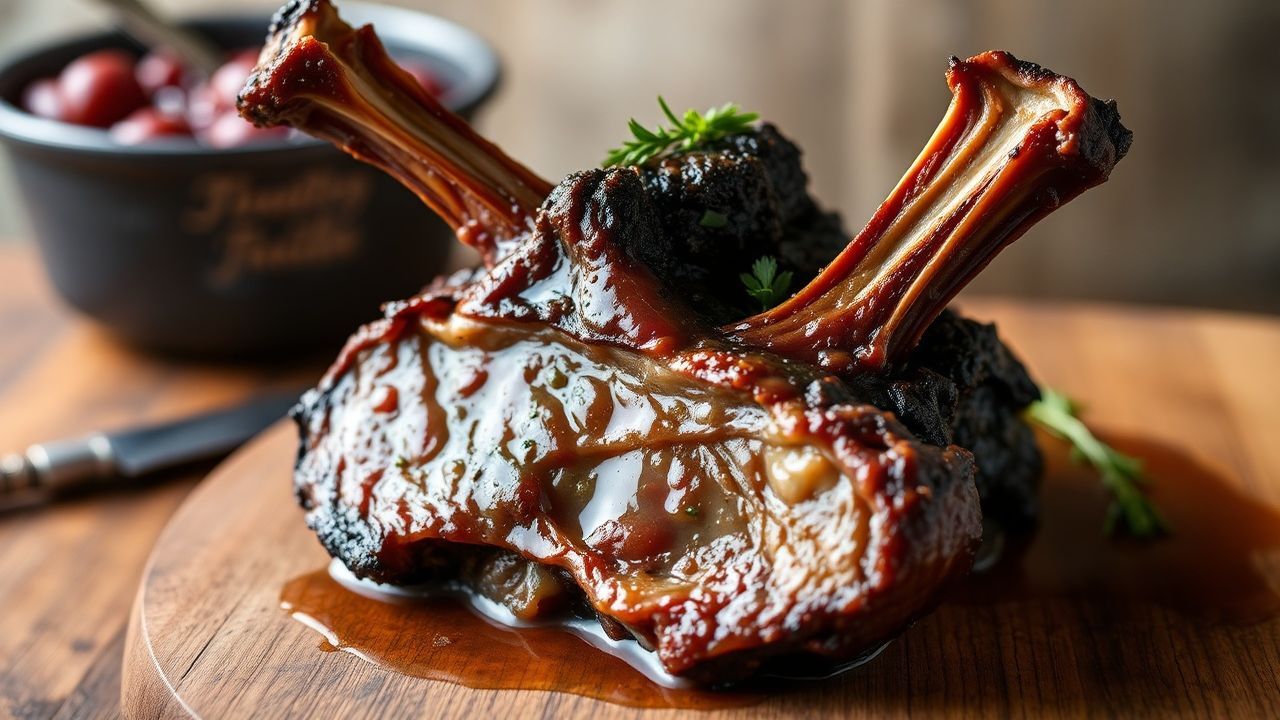

Smoked Oxtail rewards patience: a collagen-rich cut turns silky when smoked low and slow, yielding deep marrow and glossy sauce. This guide lays out ten pro techniques you can follow to render connective tissue, build a stable bark, and control smoke so results repeat reliably.
- Low-and-slow heat converts collagen to gelatin without drying the meat.
- Balanced wood like hickory plus fruitwood highlights beef richness while adding sweetness.
- Temperature tracking and probe feel beat calendar time for consistent tenderness.
- Resting firms the bark slightly and lets juices redistribute for cleaner plating.
Why Oxtail Works for Smoking
Oxtail has high collagen and marrow content, which respond predictably to low heat and long time. That collagen melts into gelatin and lubricates muscle fibers rather than drying them out.
That process creates both texture and sauce, and explains why the cut benefits from patient handling more than brief high-heat finishing. For anatomical context, review oxtail on Wikipedia.
Prep and Cook Time for Smoked Oxtail
Plan for 8–12 hours total when you include trimming, optional marinating, smoking and a brief rest. The clock helps, but probe feel and internal temperature drive doneness.
Typical workflow: 20 minutes active trim and rub, 4–12 hours refrigerated marinade (optional), then 6–8 hours smoke at steady low temps. Keep a probe thermometer and log your runs to tighten repeatability.
Time Breakdown
Short tasks like trimming and applying a dry rub take minutes but set the flavor foundation. Marinating with a touch of acid helps tenderize; avoid aggressive acid exposure that can change texture if left too long.
Smoking varies by piece size and smoker performance. Aim for an internal range where connective tissue yields easily and the thermometer reads ~195°F (90°C); that often aligns with adequate collagen conversion.
Yield and Difficulty
This approach serves 4 generously or 6 as part of a multi-course meal. Technique difficulty rates medium: it requires steady heat management but no advanced butchery beyond basic trimming and rubbing.
You can scale portions and tweak wood or rub components without altering the core technique. Focus on consistent ambient temps and confirming tenderness by probe feel rather than fixed time alone.
Ingredients
Use a short list of high-impact ingredients: oxtail, kosher salt, coarse black pepper, smoked paprika, aromatics, a little sugar, an acid to aid tenderizing, and a fat carrier. These build a balanced bark and baste.
Recommended shopping list follows; adjust amounts for yield and flavor preference. Link to related rub ideas at our internal guide for rubs and seasoning blends: BBQ rubs and seasoning ideas.
- 3 lbs oxtail, cut into 2-inch sections
- 2 tbsp kosher salt
- 1 tbsp coarse black pepper
- 2 tbsp smoked paprika
- 1 tbsp garlic powder
- 1 tbsp onion powder
- 1 tsp cayenne (optional)
- 2 tbsp brown sugar
- 1 cup apple cider vinegar
- 1/2 cup olive oil
- 3 cloves garlic, minced
- 2 bay leaves
- Wood chips: hickory + apple blend, about 2 cups
- Fresh rosemary for garnish
Instructions
Work in three stages: prepare, smoke, rest. Treat each stage as a mini-project with checkpoints for flavor and texture to reduce mistakes and boost consistency.
Below is an ordered workflow with quick tips and checks designed to help you read the meat instead of relying solely on the clock. Use this to train muscle memory for repeatable outcomes.
Prepare the Oxtail
Rinse and trim loose fat and membrane so the rub adheres evenly and smoke can reach the surface. Pat pieces dry to encourage a stable bark formation.
Apply your dry rub thoroughly and let pieces sit 30 minutes at room temperature. For deeper penetration, marinate 4–12 hours refrigerated in a vinegar-based mix; avoid over-acidifying to prevent mushy flesh.
Smoke the Oxtail
Preheat the smoker to a steady 225°F (107°C). Use a fruitwood plus hickory combination for balanced smoke; hickory gives backbone while apple or cherry adds a sweet lift. Read about hickory flavor profiles for reference.
Place oxtail so pieces have airflow between them and maintain consistent ambient temps. Monitor internal readings and probe feel; aim for tenderness when the thermometer approaches 195°F (90°C) and the probe meets little resistance.
Rotate racks if your smoker has hot spots and add wood in measured increments to avoid heavy early smoke that can taste acrid. Keep logs of smoke duration and wood amounts to refine your approach.
Rest, Finish and Serve
Remove the oxtail when tender and allow a 15–30 minute covered rest. Resting firms the bark slightly and redistributes juices for cleaner slices and spooned sauces.
Serve with spooned juices or a reduced jus from pan drippings. Garnish with rosemary and pair with acidic sides to cut richness for balanced bites. For plating ideas, see our smoking basics guide: Smoking basics.
Tips for Success
Temperature control equals repeatability: steady ambient heat and measured smoke volume produce consistent outcomes. Small variances in heat or wood type change texture significantly.
Use an accurate probe thermometer and log each cook. Over several cooks you will internalize how your smoker behaves and can make small corrections early in the run for better results.
- Wood selection: Mild fruitwoods plus hickory complement beef; very strong woods like mesquite can overwhelm marrow notes.
- Marinating: Acid helps breakdown but don’t leave pieces in a strong acid marinade more than 12 hours.
- Low-and-slow: Keep the smoker between 225–250°F for predictable collagen conversion.
- Make-ahead: Refrigerate up to 3 days or freeze for 2 months; reheat gently with a splash of broth.
Practice on modest batches while you dial in your wood mix and rub. Track what you change and the sensory results so you can repeatedly reproduce the outcome you prefer.
Serving Suggestions to Elevate Your Smoked Oxtail Experience
Pair smoked oxtail with creamy starches like mashed potatoes or polenta to capture pan juices and balance mouthfeel. Acidic condiments such as pickles or chimichurri cut richness and refresh the palate.
Add sautéed greens or roasted root vegetables for texture contrast. A small drizzle of pan reduction with finishing vinegar ties flavors together and brightens bites.
Nutritional Snapshot
Smoked oxtail delivers concentrated protein and fat with a higher calorie total than lean cuts. Gelatin and marrow contribute richness and a fuller mouthfeel.
Per-serving values depend on trimming and portion size. Typical generous serving: ~480 kcal, 38 g protein, 6 g carbs, 30 g fat. Adjust portions and sides to meet dietary needs.
| Item | Calories | Protein | Carbs | Fat |
|---|---|---|---|---|
| Smoked Oxtail (per serving) | 480 kcal | 38 g | 6 g | 30 g |
Advanced Notes: Collagen, Gelatin and Texture
Collagen conversion determines mouthfeel and sauce body. Conversion begins in the mid-160s and progresses up to ~205°F depending on time and moisture; slow cooks maximize conversion while retaining juices.
For a concise primer on connective tissue, see collagen. Use texture and probe feel in tandem with temperature to judge doneness rather than relying on a single thermometer read.
FAQ
This FAQ answers common, practical questions about timing, wood choice and storage so you can troubleshoot cooks quickly. Each answer focuses on repeatable checks you can use during a live run.
Keep a temperature log and sensory notes; you’ll find patterns fast and shave hours of guesswork across multiple cooks.
How long should I smoke oxtail for consistent tenderness?
Target 6–8 hours at 225–250°F, but prioritize tenderness and connective tissue feel over strict time. Use a probe; when the meat yields easily and reaches roughly 195°F, it usually signals adequate conversion.
Allow extra hours if pieces are larger or the smoker runs cool. Plan buffer time so you don’t rush a finish that benefits from more low heat.
What woods pair best with oxtail?
Mild fruitwoods blended with hickory create a balanced profile that enhances beef without masking marrow. Hickory provides backbone while apple or cherry adds sweet notes that complement gelatinous richness.
Experiment with small amounts of different woods in separate cooks to find the mix that suits your taste. Avoid aggressive woods early in the smoke to prevent bitter overlays.
Can I braise instead of smoking?
Yes—braising in a low oven or slow cooker yields comparable collagen breakdown. Smoke adds an extra flavor layer that braising alone cannot replicate.
Consider finishing braised oxtail briefly over charcoal or with smoked fat to introduce that smoky dimension if you lack a dedicated smoker.
How do I store and reheat leftovers?
Refrigerate up to 3 days or freeze up to 2 months. Reheat gently in a covered pan with a splash of broth to retain moisture and revive sauce body.
For best texture, reheat slowly and avoid high heat that can tighten fibers and dull gelatinic mouthfeel. Low, moist heat preserves the silkiness you achieved on the smoker.
What internal temperature should I aim for?
Use texture as your guide; the thermometer is a tool. Readings near 195°F often align with soft, fall-off-the-bone texture for oxtail, but probe feel and easy separation of connective tissue confirm doneness.
Record both temperature and probe resistance on each cook to develop a personal doneness profile for your equipment and favorite cuts.
Closing Thoughts
Smoked oxtail rewards control, patience and a concise set of techniques. When you manage smoke volume, ambient temperature and time deliberately, you get consistent tenderness and a deep, layered flavor profile.
Practice on modest batches, log what you learn, and refine wood blends and rubs to match your preferences. Over several cooks you will build a repeatable process that yields restaurant-quality smoked oxtail at home.
See also: Smoked Oxtail