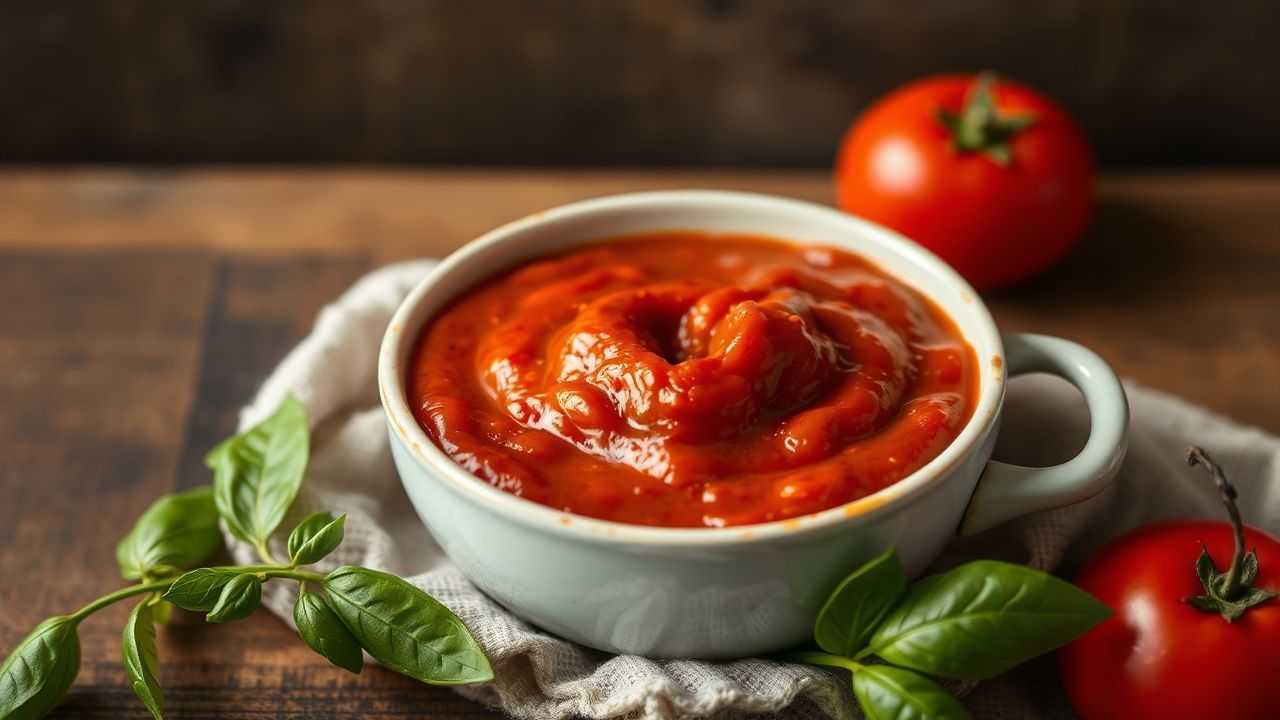

There is a simple thrill in ladling a thick, velvety tomato sauce over pasta or pizza. This guide pares technique and timing to create deep flavor fast, using focused ingredients and a few culinary shortcuts that preserve quality.
- Fast thickening: Use concentrated tomato paste and brisk reduction to build body without long simmering.
- Balanced acidity: Neutralize sharp tang carefully with a measured pinch of baking soda when needed.
- Texture first: Start with meaty tomatoes and finish with olive oil and basil for silkiness and aroma.
- Smart finishing: Rest and taste — carryover heat evens acidity and rounds flavor.
Tomato sauce: Choosing the Right Tomatoes
Tomato choice determines finished texture faster than any single technique. Meaty varieties, such as plum types, yield dense flesh that reduces to thickness quickly.
When time matters, prefer low-water fruit. For background on tomato varieties and physiology see tomato to identify the best cultivars for sauce.
Tomato sauce: Prep and Cook Time
Prep Time: Plan 15 minutes to peel and seed. Removing skins and seeds cuts bitter edges and excess water for faster concentration.
Cook Time: Expect 20–30 minutes using rapid-reduction methods outlined below. Those steps focus heat and surface area to speed evaporation without losing flavor.
Tomato sauce: Yield and Difficulty
Yield: Roughly 2 cups finished sauce, about 4 servings. Final volume depends on how aggressively you reduce the tomatoes.
Difficulty: Medium. The method relies on heat control and seasoning adjustments; the steps stay simple but demand attention for consistent results.
Tomato sauce: Ingredients
Use a concise list of quality ingredients to keep the sauce focused and predictable. A few strong items beat many mediocre ones.
Key ingredients: 2 lb San Marzano or Roma-style tomatoes (peeled and crushed), 1 medium onion finely diced, 3 garlic cloves minced, 2 tbsp extra-virgin olive oil, 1 tsp tomato paste, 1 tsp sugar, 6–8 basil leaves torn, salt and pepper to taste, and 1/8–1/4 tsp baking soda optional for controlled acid balancing.
Finish with a tablespoon of good olive oil for mouthfeel. For technical reading on olive oil grades and flavor impact see olive oil.
Tomato sauce: Instructions
Prepare the Tomatoes
Blanch tomatoes 20–30 seconds in boiling water, then plunge into ice water to loosen skins. Peel promptly and crush by hand to retain some texture for body.
If you use canned whole tomatoes, crush them gently after draining excess liquid; retaining pieces helps the sauce feel substantial without added thickeners.
Sauté Aromatics
Heat oil in a wide, heavy pan over medium heat. Sweat diced onion until translucent, about 4–6 minutes, then add garlic and cook 45–60 seconds until fragrant.
Keep aromatics moving to avoid burning. Light browning builds a quick base of flavor that masks any shortcuts used later in the process.
Add Tomato Paste and Combine
Stir in tomato paste and cook 1–2 minutes to caramelize it slightly. This step unlocks umami and helps paste bind to the tomato body for immediate thickness.
Next, add crushed tomatoes, sugar, and a pinch of salt. If you opt for baking soda, sprinkle 1/8–1/4 tsp now and stir; it will neutralize some sharp acids and accelerate softening.
Reduce Quickly
Raise heat to maintain a steady simmer with the pan partially uncovered. Use a wide pan to increase surface area and speed water loss.
Stir frequently to prevent scorching and to expose more liquid to the air. Cook 20–30 minutes for a spoon-coating sauce; shorten time for a looser pasta sauce and extend for ragu-like density.
Tomato sauce: Quick Techniques to Build Thickness Fast
Combine techniques rather than relying on one trick. The following methods stack safely and deliver a dense, flavorful sauce in far less time than a long simmer.
Professional cooks use concentrated solids, surface-area reduction, and controlled chemistry to compress hours of flavor into minutes without losing clarity.
Tomato Paste and Focused Reduction
Tomato paste supplies concentrated solids and natural pectin that immediately add body. Sautéing paste first deepens its flavor and improves integration.
Then reduce in a wide pan to concentrate sugars and acids. A larger surface area accelerates evaporation and yields a glossy, thick texture quickly.
Baking Soda: Controlled Chemistry
Sodium bicarbonate raises pH slightly and can speed pectin interaction, softening perceived sharpness. Use precisely 1/8–1/4 tsp for about 2 lb of tomatoes and taste immediately.
For technical context on the compound see sodium bicarbonate. Too much causes off-flavors, so measure carefully and adjust by reduction if uncertain.
After any chemical tweak, simmer briefly and adjust seasoning incrementally. Small salt or sugar changes correct perceived acidity without masking tomato character.
Tomato sauce: Tips for Success
These practical tips keep the process reliable under time pressure. They focus on steps that yield the largest perceptible improvements.
Refine your instinct for heat and seasoning across batches to develop repeatable results. Taste after resting — flavors meld as the sauce cools slightly.
Tomato sauce: Serving Suggestions
Spoon sauce over al dente pasta and toss briefly so noodles and sauce marry. Garnish with grated hard cheese and torn basil for contrast in salt and texture.
Use the same sauce as a base for baked dishes, braises, or as a sturdy pizza topping; a thick sauce stands up to oven time without weeping.
Tomato sauce: Nutrition Snapshot
Tomato sauces remain low in calories while delivering vitamin C, vitamin K, and the antioxidant lycopene. Adjust oil and cheese to control fat and sodium.
For readers tracking macro or micronutrients, small ingredient swaps change totals: reduce oil for lower calories or add legumes for more protein.
Tomato sauce: Practical Storage and Reheating
Cool sauce to room temperature, then refrigerate in an airtight container for up to five days. Flavors concentrate overnight; leftovers often taste richer.
Reheat gently over low heat and stir to reincorporate any separated oil. If the sauce tightens after cooling, add a splash of water or stock to loosen it while warming.
Tomato sauce: Further Reading and Reliable Sources
For method background consult authoritative culinary sources on fundamental techniques and ingredient science. For general cooking technique see cooking.
For herb handling and flavor pairing, refer to resources such as basil. These references explain why the techniques here concentrate flavor efficiently.
Tomato sauce: Practical Internal Resources
Explore related recipes and testing notes on our site to extend technique and build repertoire. See our tag hub for variations and user-tested tweaks: Tomato sauce tag.
Read our olive oil handling guide for finishing and mouthfeel recommendations: olive oil guide. Internal guides provide usable, tested steps to speed success.
FAQ
Can fresh tomatoes match canned for a quick tomato sauce?
Yes. Choose very ripe, meaty tomatoes and remove skins and seeds. Crush them before cooking and add paste to accelerate body development.
When pressed for time, canned whole tomatoes still outperform watery fresh fruit because manufacturers pack them at peak ripeness.
Does baking soda ruin tomato sauce flavor?
When used sparingly, baking soda smooths acidity without harming taste. Overuse creates a soapy profile, so measure precisely and taste as you go.
If you avoid chemistry, extend reduction; slow evaporation likewise softens acids and develops complexity without additives.
How much tomato paste should I add to the tomato sauce?
Start with 1 teaspoon per cup of crushed tomato and increase if you want more immediate thickness. Sauté paste first to deepen its flavor.
Use paste in combination with surface-area reduction for best results; the paste supplies solids while the pan concentrates flavor.
Will the tomato sauce keep well in the freezer?
Yes. Freeze in portion-sized containers for up to three months. Thaw slowly in the refrigerator, then reheat gently to preserve texture and flavor integrity.
Label containers with date and ingredient notes so you know if you used fresh or canned tomatoes on reheat; that affects final texture.
Can I make this tomato sauce vegan-friendly?
Absolutely. The core recipe is plant-based. Use nutritional yeast instead of cheese for umami lift and finish with olive oil for silkiness.
Many traditional tomato sauce techniques are naturally vegan, so focus on fat and salt to achieve the same mouthfeel that dairy delivers.
Mastering quick, thick tomato sauce relies on decisive technique: choose the right fruit, concentrate flavor early, and use small chemistry where appropriate. Follow the steps above to produce a rich, spoon-coating sauce in a fraction of traditional time.
See also: Tomato sauce
Recommended Reading:
- From Crush to Sauce: 7 Expert Steps to Craft Tomato Magic at Home
- 7 Expert Steps for Perfect Tomato Sauce
- Crisp & Sweet: The Ultimate Guide to Dehydrated Apple Chips