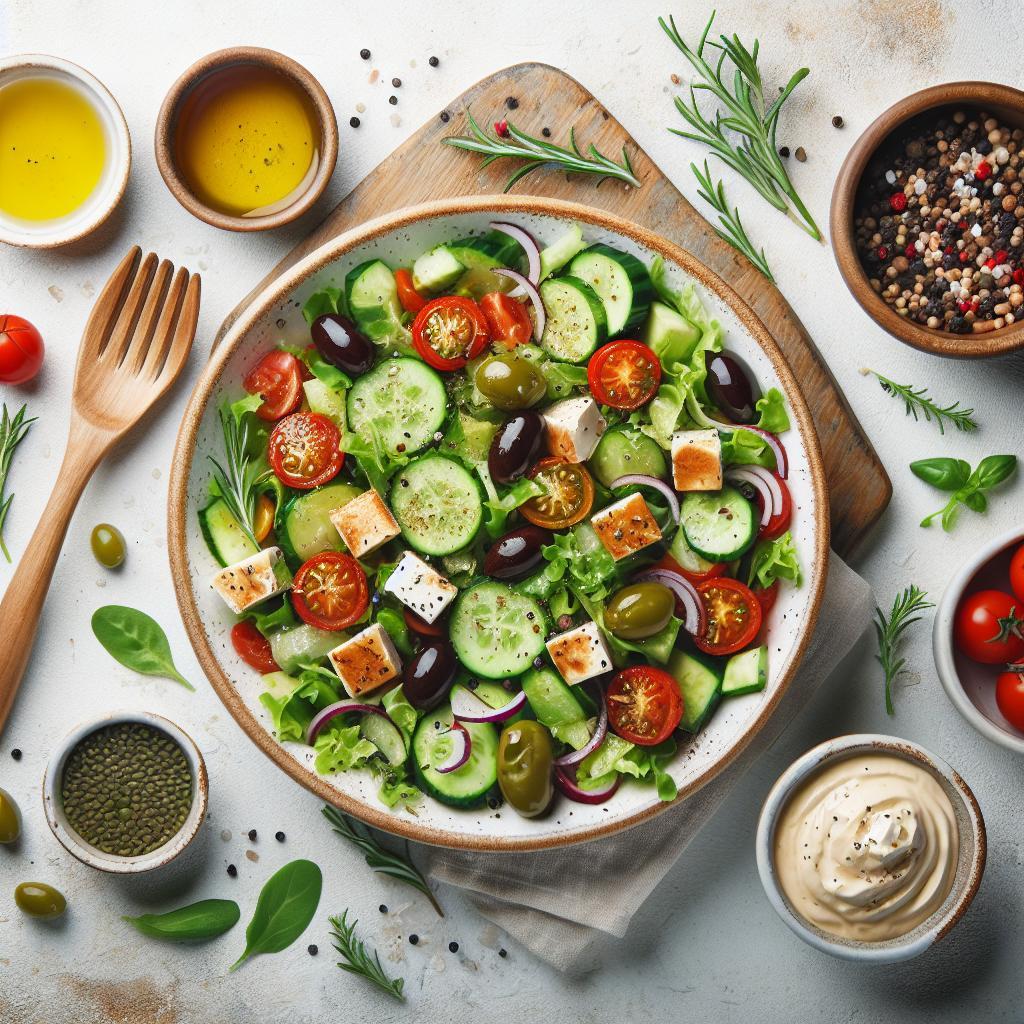

Mediterranean salad shines as a succinct expression of regionally driven ingredients, straightforward technique, and nutritional balance. Fresh vegetables, briny olives, aromatic herbs, and high-quality olive oil combine to create a dish that works as a light main or a bright side.
- Quick prep: Ready in about 15 minutes using raw ingredients.
- Versatile: Easy vegan, protein, or grain additions for different meals.
- Nutrition-forward: Monounsaturated fats, fiber, and plant phytonutrients support heart health.
- Serve smart: Dress at the last moment to preserve crispness.
Mediterranean Salad Ingredients That Bring Vibrant Flavors to Life
Mediterranean salad relies on high-quality produce. Use ripe tomatoes, crisp cucumbers, red onion, sweet bell pepper, Kalamata olives, and crumbled feta for a classical profile.
Tomatoes supply acidity and umami, while cucumbers add cooling crunch and hydration. Learn more about the fruit biology and varieties at Tomato on Wikipedia.
Kalamata olives deliver briny depth and healthy fats; feta brings tang and calcium. For context on traditional cheese production, see Feta on Wikipedia.
Fresh herbs—oregano, mint, parsley—lift aroma and introduce subtle phytochemicals. Pick herbs close to service for maximum volatile oil content and aromatic intensity.
Crafting the Perfect Dressing to Elevate Your Mediterranean Salad
The dressing binds the components with acid, fat, and seasoning. A simple emulsion of extra virgin olive oil and lemon juice, seasoned with salt and pepper, remains the benchmark for balance and mouthfeel.
Use high-quality olive oil for flavor complexity. For background on production and fatty-acid composition, consult Olive oil on Wikipedia.
When you emulsify olive oil and lemon, the droplet size matters: smaller droplets cling better to vegetables. Cold-pressed extra virgin oils tend to provide a fruitier, peppery finish that complements herbs and feta.
Prep, Timing, and Yield
Preparation: 15 minutes. Cook time: 0 minutes. Total time depends on washing and chopping speed.
The recipe below yields approximately four side-dish servings. To scale up, maintain ingredient ratios and toss just before serving to keep textures vibrant.
Prep and Cook Time
- Preparation: 15 minutes
- Cook Time: 0 minutes (no cooking required)
- Total Time: 15 minutes
Yield
Serves 4 as a refreshing side or light main dish. Adjust quantities for more guests or larger mains.
Difficulty Level
Easy – suitable for beginner cooks and busy home kitchens. Focus on ingredient quality rather than complex technique.
Ingredients
- 3 large ripe tomatoes, chopped into bite-sized pieces
- 1 large cucumber, peeled and diced
- 1 red bell pepper, seeded and sliced thinly
- 1/2 red onion, thinly sliced
- 1/2 cup Kalamata olives, pitted and halved
- 1 cup crumbled feta cheese
- 1/4 cup fresh oregano, chopped (or 1 tbsp dried)
- 2 tbsp fresh mint, finely chopped
- 2 tbsp extra virgin olive oil
- 1 tbsp freshly squeezed lemon juice
- 1 tsp red wine vinegar (optional)
- Salt and freshly ground black pepper, to taste
Step-by-Step Instructions
Assemble ingredients and layout mise en place for quick, clean assembly. Wash, dry, and chop vegetables uniformly to ensure even bites.
Combine tomatoes, cucumber, bell pepper, and red onion in a large bowl. Add olives and chopped herbs, then top with crumbled feta.
- Prepare the vegetables: Wash and chop the tomatoes, cucumber, bell pepper, and red onion. Place them in a large salad bowl.
- Add olives and herbs: Stir in Kalamata olives, fresh oregano, and mint, mixing gently to distribute flavors evenly.
- Crumble the feta: Add the feta cheese over the salad, reserving a small amount for garnish if desired.
- Whisk the dressing: In a small bowl, combine olive oil, lemon juice, red wine vinegar (if using), salt, and pepper. Whisk until fully emulsified.
- Toss the salad: Pour the dressing over the salad and toss gently to coat all ingredients without breaking up the feta.
- Adjust seasoning: Taste and add more salt or lemon juice if necessary for a brighter profile.
Health Benefits of Mediterranean Ingredients for Wholesome Eating
The Mediterranean pattern emphasizes vegetables, legumes, whole grains, olive oil, and moderate dairy. That pattern aligns with improved cardiovascular markers and metabolic health.
Extra virgin olive oil contributes primarily monounsaturated fats and polyphenols; vegetables add fiber, vitamins, and antioxidants. For broader dietary context, review Mediterranean diet on Wikipedia.
Feta adds whey and casein proteins and calcium, supporting bone maintenance when consumed in moderation. Olives supply polyphenols associated with favorable lipid metabolism.
Tips for Customizing Your Salad to Suit Every Palate and Occasion
Customize the salad to suit nutrition goals or palate preferences. Add chickpeas or quinoa to build protein and make the salad meal-ready for lunch or light dinner.
For a vegan version, omit feta and add toasted nuts or a dollop of hummus for creaminess. Roast seasonal vegetables like artichokes or zucchini to introduce warm contrasts in cooler months.
Herb swaps change the profile: basil contributes sweet, peppery notes while parsley keeps the flavor bright. Toasted pine nuts or walnuts give efficient texture contrast without overpowering fresh ingredients.
Presentation matters: layer ingredients on a large platter, finish with a gentle drizzle of oil, and reserve a little feta for final garnish. Serve with warm whole-grain bread or pita on the side for a fuller plate.
Chef’s Notes and Serving Suggestions
Use the freshest, in-season produce for maximum flavor; tomatoes at peak ripeness transform the salad. Chill ingredients briefly if serving on a hot day to keep textures crisp.
Serve chilled or at room temperature to suit the main course. A squeeze of lemon or a dusting of sumac at the table sharpens flavor while keeping dressing light.
- Reserve some feta for garnish to contrast texture.
- Keep dressing separate if assembling more than 1–2 hours ahead.
- Add a teaspoon of tahini to the dressing for a creamier mouthfeel if desired.
Nutrition Snapshot
This salad provides a modest calorie count with emphasis on healthy fats and fiber. Per serving values will vary by cheese portion and amount of oil used.
| Nutrient | Per Serving (1/4 Salad) |
|---|---|
| Calories | 180 kcal |
| Protein | 6 g |
| Carbohydrates | 12 g |
| Fat | 13 g |

Explore the variant of a classic Greek salad and experiment with grains or legumes to increase satiety. Classic variations maintain the same formula: fresh produce, brine, herb oils, and a salty cheese.
FAQ
The following questions address common preparation, storage, and substitution concerns for Mediterranean salad.
Can I make this salad ahead of time?
You can prep vegetables and store them separately in airtight containers. Hold dressing apart and combine at service to maintain optimal texture.
What proteins pair best if I want a complete meal?
Grilled chicken, canned tuna, cooked chickpeas, or a scoop of cooked quinoa convert the salad into a balanced plate. Those proteins blend seamlessly and maintain Mediterranean flavor balance.
How do I reduce sodium without losing flavor?
Use low-sodium or rinsed olives, reduce added salt, and rely on lemon and herbs for brightness. Acidic components boost perception of saltiness without increasing sodium content.
Which herbs work best year-round?
Oregano, mint, and parsley perform well across seasons; basil is excellent in summer while dill can add a crisp, anise-like note in spring.
Can I swap feta for a vegan alternative?
Yes. Use firm tofu marinated in lemon and olive oil, or a commercial plant-based cheese. Toasted nuts add texture and healthy fats to compensate for the lost dairy element.
Final Thoughts
Mediterranean salad delivers reliable, high-impact flavor with minimal technique. Prioritize ingredient quality, simple emulsified dressing, and timely assembly to get consistent, satisfying results.
With small tweaks—protein additions for heft, herb switches for nuance, or simple plating changes—you can adapt this salad for daily meals or entertaining. Keep recipes flexible and let seasonal produce guide your choices.
See also: Mediterranean salad