
Pear relish turns everyday fruit into a bright, savory condiment that lifts meats, cheeses, and snacks. This guide gives you clear steps, flavor science, and storage practices so you get consistent, delicious results every time.
- Bright acid + natural sugar makes a balanced relish.
- Pear selection matters: texture and ripeness change the final mouthfeel.
- Short simmering retains fruit character while concentrating flavor.
- Proper jars and cold storage keep flavor and safety in check.
Pear Selection and Preparation for Optimal Flavor
Choose pears with firm flesh and a clear aroma. Varieties like Bartlett, Bosc, or Anjou provide a mix of sweetness and structure that withstands gentle cooking.
Handle fruit carefully: rinse, peel if you prefer smooth texture, remove the core, and dice into uniform 1/2-inch cubes so the pieces cook evenly. For botanical context, see pear on Wikipedia for cultivar differences.
Firm but ripe pears release juices during simmering that deepen the relish without falling apart. If pears sit too long before cooking they can become mealy; use them within a day of reaching eating ripeness.
Trim out any blemishes and taste a sample; that bite tells you whether to boost acidity or sweetness later in the process.
Balancing Sweetness and Tanginess with Natural Ingredients
Relish succeeds when acid and sugar form a stable flavor matrix. Use apple cider vinegar or a mild white vinegar for clean sharpness and add lemon juice for fresh lift.
Sweeten with honey, maple, or brown sugar to complement the pear’s fructose without masking it. For reference on sweeteners’ properties, consult the honey article.
Spices create layers: grated ginger adds zing, cinnamon adds warmth, and a few mustard seeds or chili flakes give bite. Add spices early in the cook to fuse their oils into the syrup.
Always adjust in small increments. Start with the recipe baseline, taste at room temperature, and tweak acid or sweetener one teaspoon at a time until the balance pleases your palate.
Step-by-Step Guide to Crafting Your Perfect Pear Relish
Prep time and rhythm: this recipe runs quick — short prep, short simmer, and a resting phase for flavors to meld. Follow timing to keep texture consistent.
Use a medium saucepot and a wooden spoon. Working in a pot that’s too large wastes liquid; in one that’s too small you risk scorching.
Ingredients and Yield
Yields: about 2 cups, roughly 6 condiment servings. Prep 15 minutes; cook 20–25 minutes.
Core ingredients: 4 ripe pears (diced), 1/2 cup diced red onion, 1/4 cup apple cider vinegar, 2 tbsp lemon juice, 2 tbsp honey or maple syrup, 1 tsp grated ginger, 1/4 tsp cinnamon, pinch chili flakes, 1/4 tsp salt, pepper to taste.
Instructions
1. Prepare pears: peel (optional), core, and dice. Keep pieces uniform for even cooking.
2. Sauté aromatics: soften onion and ginger over medium heat with a splash of water to avoid oil-induced browning.
3. Add pears and spices: stir pears with cinnamon and chili and coat evenly so spices heat through.
4. Incorporate liquids: add vinegar, lemon, and honey; stir constantly for the first minute to emulsify the liquids and sugar.
5. Simmer: reduce to low and simmer 20–25 minutes until pears are tender and the syrup thickens to a relish consistency. Stir periodically.
6. Cool and adjust: remove from heat, cool to room temperature, then taste and fine-tune sugar or acid.
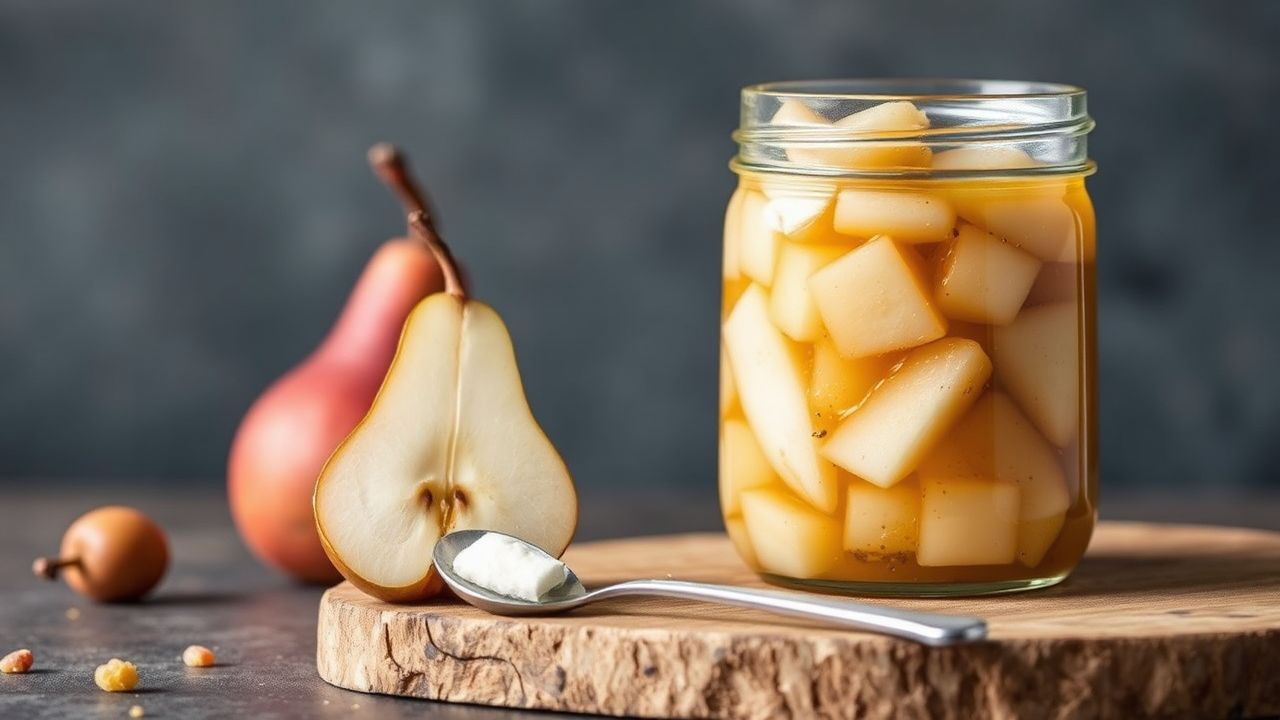
7. Jar and rest: transfer to a sterilized jar and chill. Flavors blend further after 24 hours and peak around day 2 or 3.
Let jars cool uncovered before sealing to limit pressure changes inside the container. Label jars with date and contents for traceability.
Chef’s Notes: Tips for Success
Variety swaps: Anjou keeps more structure; Bosc brings earthier notes. Try small batches to compare results side by side.
Sweetener options: brown sugar adds caramel notes; agave keeps the profile neutral. Each choice nudges the relish’s final character.
Texture control: shorten cooking time for chunkier relish; mash a portion for body if you want a hybrid texture with intact pieces.
Acidity correction: if your batch tastes too sharp, a tiny pinch of baking soda will neutralize excess acid. Add sparingly and stir thoroughly.
For safe preservation techniques and canning parameters, consult the comprehensive food preservation resources that outline pH and heat requirements.
Storage Tips and Creative Serving Suggestions for Your Relish
Store pear relish in clean, airtight jars in the refrigerator for up to two weeks. For longer storage, freeze in freezer-safe containers leaving headspace for expansion.
Serve spooned over cream cheese on crackers, alongside roasted pork, grilled chicken, or with sharp cheeses. The relish adds contrast to salty and fatty foods.
Garnish with fresh thyme or rosemary for aromatic lift. Use small amounts first; perishable condiments can dominate a dish if overused.
Think of relish as a flavor bridge: it brightens roasted meats, enhances sandwiches, and complements a cheese board with both sweet and tangy notes.
Nutritional Snapshot
The table below presents a quick per-serving estimate for a 1/4-cup portion. Values vary by ingredient choices and exact serving size.
| Nutrient | Amount (per 1/4 cup) |
|---|---|
| Calories | 45 kcal |
| Protein | 0.2 g |
| Carbohydrates | 11 g |
| Fat | 0.1 g |
Practical Variations and Flavor Experiments
Try savory variants by adding sautéed shallot, a dash of soy sauce, or roasted mustard seeds for complexity. These add umami and depth without shifting the relish into a different category.
For a sweeter chutney-like finish, fold in dried fruit such as apricots or golden raisins during the last five minutes of simmering. Rehydrate dried fruit in warm liquid first for even texture.
To explore global profiles, add star anise or clove for a warm, spiced blend. Use small quantities so these potent spices do not overpower the pear base.
Experiment in 1-cup test batches so you can refine ratios before scaling up for gifts or entertaining.
Q&A
Q1: What makes pear relish different from other fruit relishes?
A1: Pears offer a delicate sweetness and a clean mouthfeel that pair well with mild acids and warm spices. Their subtlety lets other components shine without dominating a plate.
Q2: Which pears hold up best to cooking?
A2: Bosc and Anjou retain structure well. Bartlett grows softer but gives more pronounced fruit flavor. Choose based on your desired texture.
Q3: Can I can pear relish for long-term storage?
A3: Yes, but only by following tested water-bath canning procedures and reliable pH guidance. Improper canning risks spoilage and safety issues.
Q4: How long does flavor improve after making the relish?
A4: Flavor typically peaks after 24–72 hours as acids and sugars meld. Store refrigerated and taste at intervals to decide your preferred maturity.
Concluding Remarks
Homemade pear relish rewards precise choices: pick the right pear, balance acid and sugar, and control reduction. Follow tested storage steps if you plan to shelf-stable can jars.
With a few simple experiments you can tune sweetness, heat, and spice to match your menu. The result: a jar that lifts everyday dishes into memorable plates.
FAQ
How long does homemade pear relish keep in the fridge?
Properly stored in sterilized jars, refrigerated relish keeps up to two weeks. For longer life, freeze or use tested canning methods.
Which sweetener preserves the pear flavor best?
Honey and maple syrup preserve fruit character well because they add sweetness without heavy molasses notes. Brown sugar adds richer caramel tones.
Can I make pear relish without added sugar?
Yes. Ripe pears provide natural sugar; increase simmer time slightly to concentrate juices. Taste and add a small amount of acid to balance if needed.
Is water-bath canning safe for pear relish?
Water-bath canning can be safe for high-acid preserves. Ensure your recipe meets acidity and sugar levels recommended by food-preservation standards before canning.
What spices pair best with pear?
Ginger, cinnamon, cloves, and mustard seed pair exceptionally well. Use them sparingly to enhance rather than mask the pear’s profile.
See also: pear relish