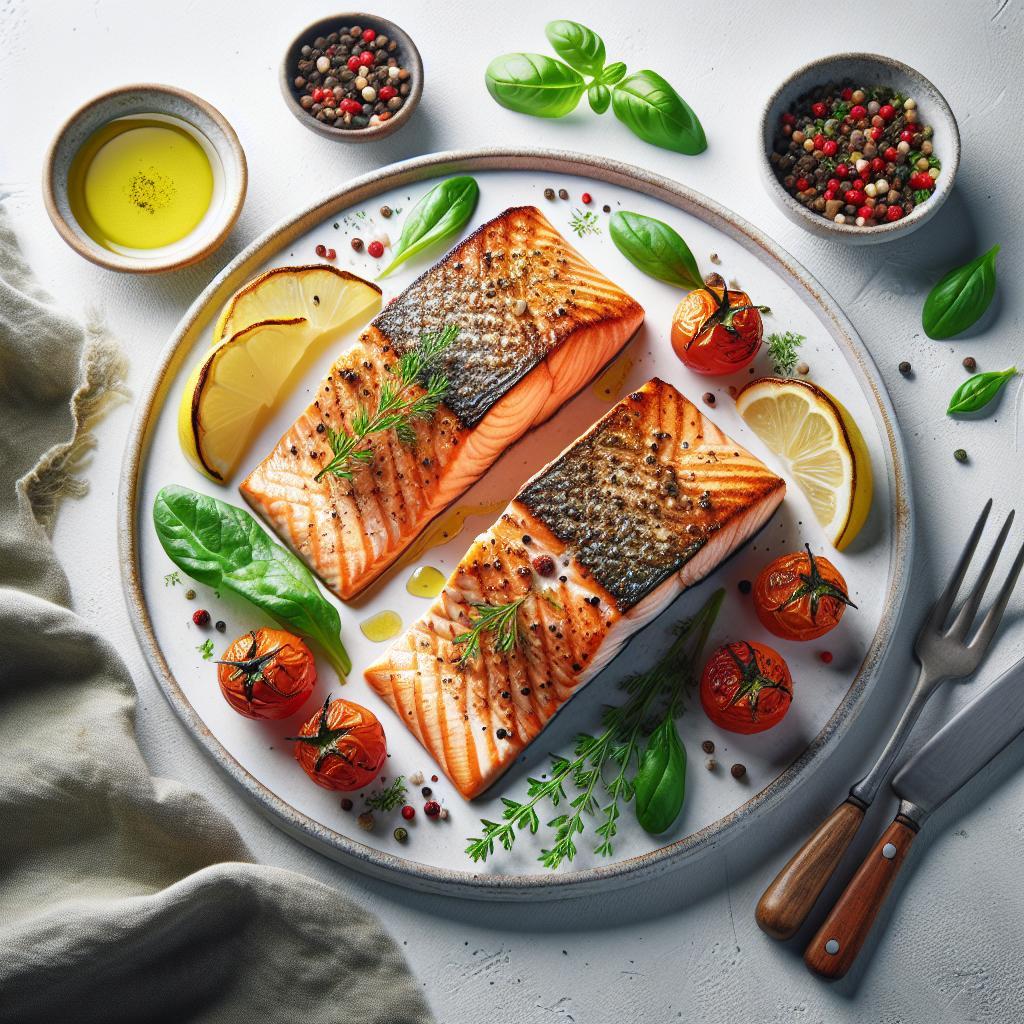

There is a precise joy to a perfectly baked salmon fillet: tender flakes, lightly crisped edges, and rich, buttery flavor. This guide breaks the process into repeatable steps so you can deliver that result reliably at home.
- Goal: moist, flaky fillets with crisp edges.
- Timing: short, high-heat bake; 10–12 minutes for 1-inch fillets.
- Seasoning: keep it simple—salt, pepper, lemon, and a touch of oil or butter.
- Serve: pair with bright sides to balance the richness.
Selecting the Freshest Salmon for Ultimate Flavor
Start with quality fish: the fillet sets the ceiling for the finished dish. Look for firm flesh that springs back when pressed and a clean ocean aroma rather than a sharp, fishy smell.
When possible, choose wild or sustainably farmed salmon for texture and flavor differences. Learn more about salmon biology and species differences on Salmon on Wikipedia, which helps explain why color and oil content vary by species.
Mastering the Art of Seasoning to Enhance Natural Tastes
Seasoning should highlight the fish, not cover it. Use coarse sea salt, freshly ground black pepper, and a bright lift from citrus zest to enhance natural oils and mouthfeel.
Finish with a small amount of quality oil or butter to carry aromatics and aid browning. For background on oil types and uses, see Olive oil on Wikipedia and choose extra virgin olive oil for flavor or clarified butter for higher-heat tolerance.
Optimal Baking Techniques for Moist and Flaky Fillets
Control of oven heat and holding temperature determines texture. Preheat to 400°F (200°C) for a balance of browning and gentle cooking; place fillets skin-side down on parchment to prevent sticking and reduce fat loss.
Use a reliable thermometer or the fork-flake test: the flesh should separate into moist flakes, not crumble. Remember that residual heat raises the internal temperature a few degrees after you pull the fish.
Recipe Details
This recipe targets home cooks who want consistent results with minimal fuss. It scales easily and fits a standard sheet pan for uniform heat exposure.
For technical context on dry-heat cooking methods and oven behavior, consult the general principles on Baking on Wikipedia. Understanding heat transfer helps you adjust time when fillets vary in thickness.
Ingredients
- 4 salmon fillets (6 oz each, skin-on)
- 2 tbsp extra virgin olive oil
- 1 tsp sea salt
- ½ tsp freshly ground black pepper
- 1 tsp lemon zest
- 1 tbsp fresh dill, chopped (optional)
- Lemon wedges for garnish
Instructions
- Preheat oven to 400°F (200°C). Line a baking sheet with parchment paper.
- Pat fillets dry with paper towels to promote browning and adhesion of seasoning.
- Brush each fillet lightly with oil; season with salt, pepper, and lemon zest.
- Place fillets skin-side down, spaced evenly on the prepared sheet.
- Bake 10–12 minutes depending on thickness; check for flake at 10 minutes.
- Pull from oven when center reads about 125°F (52°C) or flakes with a fork; let rest 2 minutes.
- Garnish with dill and lemon wedges, then serve immediately.
Prep & Yield
Prep Time: 10 minutes • Cook Time: 12 minutes • Total: 22 minutes.
Yield: Serves 4 generous portions. Difficulty: Easy — well suited to beginner cooks who follow timing and temp guidance.
Expert Tips for Serving and Pairing Your Perfectly Baked Salmon
Balance the salmon’s richness with bright, acidic sides: lemon wedges, fresh herbs, or a citrus vinaigrette lift the palate. Light starches like herbed quinoa or roasted vegetables add texture without overwhelming the fish.
For pairing ideas, a crisp white wine or a light red complements most preparations. If you prefer non-alcoholic options, sparkling water with cucumber or lemon cleanses the palate between bites.
[TI P]Expert Insight: Use room-temperature salmon for even cooking. If fillets vary in thickness, score the thicker end lightly or fold a thin piece under to create a more uniform profile before baking.[/TIP]
Serving Suggestions and Variations
Serve fillets on a bed of seasoned grains or alongside simple steamed vegetables for a balanced plate. For a Mediterranean touch, finish with a drizzle of olive oil and a scatter of fresh herbs.
Explore bold sauces sparingly—a herb chimichurri, yogurt-dill drizzle, or a light mustard-honey glaze complement rather than mask the fish. For grain pairing, see Quinoa on Wikipedia for its nutty texture and cooking ratios.
Nutritional Snapshot
| Nutrient | Per Serving |
|---|---|
| Calories | 350 kcal |
| Protein | 34 g |
| Carbohydrates | 2 g |
| Fat | 22 g |

For broader context on seafood and culinary uses, consult the Seafood overview on Wikipedia. That resource clarifies how cooking methods change nutrient retention and texture.
FAQ
How do I know when salmon is done?
Check for flake with a fork and a slight translucence in the center, or use an instant-read thermometer at 125°F (52°C) for medium-rare. Allow a short rest; carryover heat finishes the cook.
Should I bake salmon with the skin on?
Yes. Keeping the skin protects the flesh, helps retain moisture, and crisps nicely when exposed to direct heat. You can remove it after cooking if you prefer not to eat it.
Can I use frozen salmon?
Yes, but thaw fully and pat dry before seasoning to avoid steam and uneven cooking. Thaw in the refrigerator overnight for best texture.
What if my fillets vary in thickness?
Adjust time based on the thickest part; thinner pieces will cook faster. For large disparities, cut thicker fillets in half horizontally or start thicker pieces a few minutes earlier.
How far in advance can I season salmon?
You can season up to 1 hour ahead and refrigerate; bring to room temperature before baking for even results. Avoid salting much farther ahead, which can draw too much moisture out of the fillet.
See also: Baked Salmon