
There is a quiet algebra to great pickles: the right salt, the right acid, and the right timing. Small-batch pickling gives an exact, repeatable pathway to crisp texture and layered flavor that larger production often loses.
- Small batches improve control over brine, heat, and fermentation.
- Quality ingredients drive texture and final aroma.
- Record keeping ensures you can recreate winners and avoid failures.
- Precise fermentation yields consistent, safe results.
Crafting the Ideal Brine for Robust and Balanced Flavors
The brine is the backbone of any pickle. Balance salt, acid, and aromatics to create a stable environment that preserves texture and promotes desirable microbial activity.
Use laboratory-style precision for ratios when you start: measure salt by weight and vinegar by volume. For background on the role of acid in preservation, consult vinegar.
Salt and Acid: Practical Ratios
Use kosher or pickling salt to avoid anti-caking agents and iodine that can cloud brines. A common starting brine for quick pickles: 1/4 cup salt to 4 cups combined water and vinegar, adjusted to taste.
For lacto-fermentation, reduce vinegar and rely on naturally produced acids; otherwise, maintain at least a 5% acetic acid solution in the final brine for safety. Keep notes on each ratio so you can iterate.
Selecting Fresh Ingredients to Elevate Your Pickle Profile
Ingredient selection defines mouthfeel. Choose firm, unblemished cucumbers or vegetables harvested at peak texture to maximize crunch and flavor uptake.
Smaller cucumbers often have fewer seeds and crisper flesh. Learn more about the plant characteristics of your main ingredient at the cucumber page.
Aromatics and Additions
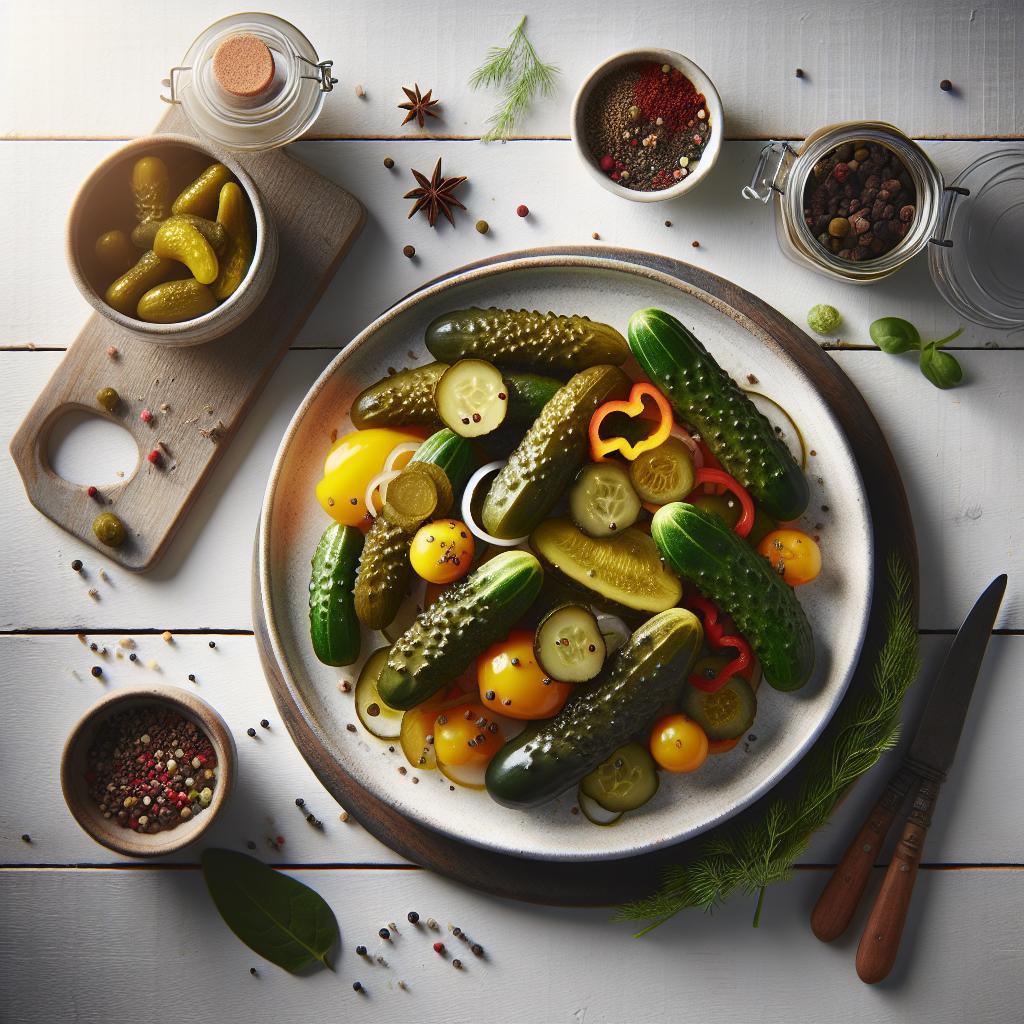
Fresh dill, whole mustard seeds, garlic, horseradish, and peppercorns layer complexity without masking the vegetable. Toast whole seeds lightly to wake oils for a more pronounced aroma.
Consider adding sugar, honey, or fruit for contrast in small increments. Test each change on a 1-jar trial before scaling up to maintain predictability.
Mastering the Art of Fermentation for Perfect Texture and Tang
Fermentation transforms texture and flavor through controlled microbial action. When executed correctly, it delivers crunch and nuanced acidity that vinegar-alone pickles cannot match.
Study the microbial pathway if you plan to rely on natural fermentation; relevant fundamentals are summarized on the fermentation and lactic acid fermentation pages.
Temperature, Time, and Safety
Keep jars at stable room temperature (18–22°C / 64–72°F) for the active fermentation phase. Rapid temperature swings produce uneven activity and off-flavors.
Always use clean jars and submerge solids fully under brine to prevent aerobic spoilage. If you see surface mold, discard the batch and review sanitation steps.
Small Batch Secrets for Consistent Results and Bold Aromas
Small batches let you control variables tightly, learn quickly, and waste less. With jars that hold 1–4 quarts, you can test spice blends and timing without committing a cellar’s worth of product.
Maintain a lab-like notebook. Record salt by grams, vessel type, ambient temperature, and tasting notes. This reproducible data is the hallmark of a reliable small-batch program.
[p>Quick Equipment Checklist: Glass jars, non-reactive lids, kitchen scale, thermometer, and an airlock or loose cover for fermenting jars.
[NOTE: The recipe below uses precise yet approachable measures appropriate for home cooks.]
[h4]Prep and Cook Time
- Preparation: 20 minutes
- Fermentation: 3–7 days (tasting to preference)
Yield
Approximately 2 quart-sized jars (8 cups total).
Adjust proportions linearly for more or fewer jars; keep brine ratios consistent.
Difficulty Level
Easy to medium. The procedural steps are straightforward; the discipline lies in sanitation and observation.
Start with small tests before committing to flavor experiments at scale.
Ingredients
- 4 cups fresh, firm cucumbers (Kirby or pickling variety), trimmed and sliced
- 2 cups filtered water
- 2 cups white distilled vinegar (5% acidity)
- 1/4 cup kosher salt (by volume) or 60–70 g by weight
- 2 tbsp apple cider vinegar (optional complexity)
- 4 cloves garlic, lightly crushed
- 3 tbsp fresh dill sprigs
- 1 tbsp mustard seeds
- 1 tbsp whole black peppercorns
- 1 tsp red chili flakes (optional)
- 1 small fresh red chili, sliced (optional)
Instructions
- Prepare the brine: Combine filtered water, white distilled vinegar, apple cider vinegar, and kosher salt in a saucepan. Heat gently and stir until the salt dissolves, then cool to room temperature to prevent vegetable softening.
- Sanitize jars: Wash jars and lids thoroughly, then sterilize with hot water or a hot dishwasher cycle. Dry on a clean rack before packing.
- Pack the jars: Add garlic, dill, mustard seeds, peppercorns, and optional chilis to each jar. Pack cucumber slices tightly without crushing for the best texture.
- Pour the brine: Pour cooled brine over the packed cucumbers, leaving roughly 1/2 inch of headspace. Ensure solids remain submerged.
- Seal and ferment: Cover jars with fermentation lids or a loose lid to allow gases to escape. Place jars in a cool, shaded area and taste daily. Expect bubbling within 24–48 hours if fermenting naturally.
- Refrigerate when ready: Once your preferred tang and crunch are reached (typically 3–7 days), tighten lids and move jars to the refrigerator to slow fermentation. Flavor will continue to meld slowly in cold storage.
Leave the jar in a cool spot during active fermentation and check daily for bubble activity. Press any floating pieces back under brine using a clean utensil to maintain an anaerobic environment.
Chef’s Notes
- Substitute cucumbers with carrots, green beans, or cauliflower for varied textures and presentations.
- If pickles turn overly sour, shorten future fermentation or add a small amount of sugar to the brine to balance acidity.
- Use glass or food-grade ceramic containers; avoid reactive metals to prevent metallic off-flavors.
- Store refrigerated pickles for up to 8 weeks for best freshness and crunch; always use clean utensils to remove product from the jar.
- Experiment with herbs like tarragon, oregano, or bay leaf to expand aromatic profiles.
Serving Suggestions
These pickles pair with rich, fatty dishes to provide a bright counterpoint. Try them with smoked meats, fried foods, or creamy spreads.
Use thin slices in sandwiches, add chopped pickles to salads for acidity, or serve whole as part of a composed appetizer board with cheeses and charcuterie.
| Nutritional Info (per 1/2 cup) | Calories | Protein | Carbs | Fat |
|---|---|---|---|---|
| Homemade Pickles | 15 | 0.5g | 3g | 0g |

Q&A
Q1: Why choose small-batch pickling over large-scale production?
A1: Small batches offer precise control over flavor and texture. They reduce waste, let you experiment freely, and deliver an artisanal product that can be tailored jar-by-jar.
Q2: What essentials make an unforgettable small-batch pickle?
A2: Fresh produce, a balanced brine, and thoughtful aromatics are the core elements. The difference comes from technique: accurate salt measurement, proper submersion, and temperature control.
Q3: How does the pickling process change in small batches?
A3: Small batches let you test quick pickles or true lacto-ferments without committing large volumes. That flexibility shortens the learning cycle and sharpens your palate for incremental improvements.
Q4: Can small-batch pickling be sustainable?
A4: Yes. Small batches reduce food waste by using seasonal surplus and imperfect produce. They also minimize overproduction and packaging consumption when you make only what you will use.
Q5: Tips for consistent flavor every time?
A5: Keep a detailed log of salt (by grams), liquid volume, temperature, and tasting notes. Standardize jars and lids, and always prioritize sanitation to prevent spoilage.
Future Outlook
As interest in home fermentation grows, small-batch pickling will remain a pragmatic way to explore flavor science. This method rewards curiosity and careful record-keeping.
With a handful of reliable techniques, you can create a repertoire of pickles for different seasons and dishes. Treat each jar as a repeatable experiment and refine your process over time.
FAQ
How long do small-batch pickles keep in the refrigerator?
Properly prepared and refrigerated small-batch pickles remain excellent for about 6–8 weeks. Use clean utensils to extend freshness and monitor texture and aroma.
Can I ferment pickles without added vinegar?
Yes. Lacto-fermentation uses naturally occurring lactic acid bacteria to acidify the brine. Maintain cleanliness, keep produce submerged, and monitor taste to ensure safety.
Should I use measured salt by weight?
Always measure salt by weight when possible. Volume measures vary with grain size; grams provide reproducible brine strength across batches.
Is refrigeration required after fermentation?
Move jars to the refrigerator when they reach the desired acidity and texture. Cold storage slows microbial activity and stabilizes flavor for longer shelf life.
What vegetables work well for small-batch pickling?
Firm vegetables like cucumbers, carrots, green beans, cauliflower, and radishes pickle particularly well. Adjust cut size and spice blends to match each vegetable’s texture and natural sweetness.
See also: pickling