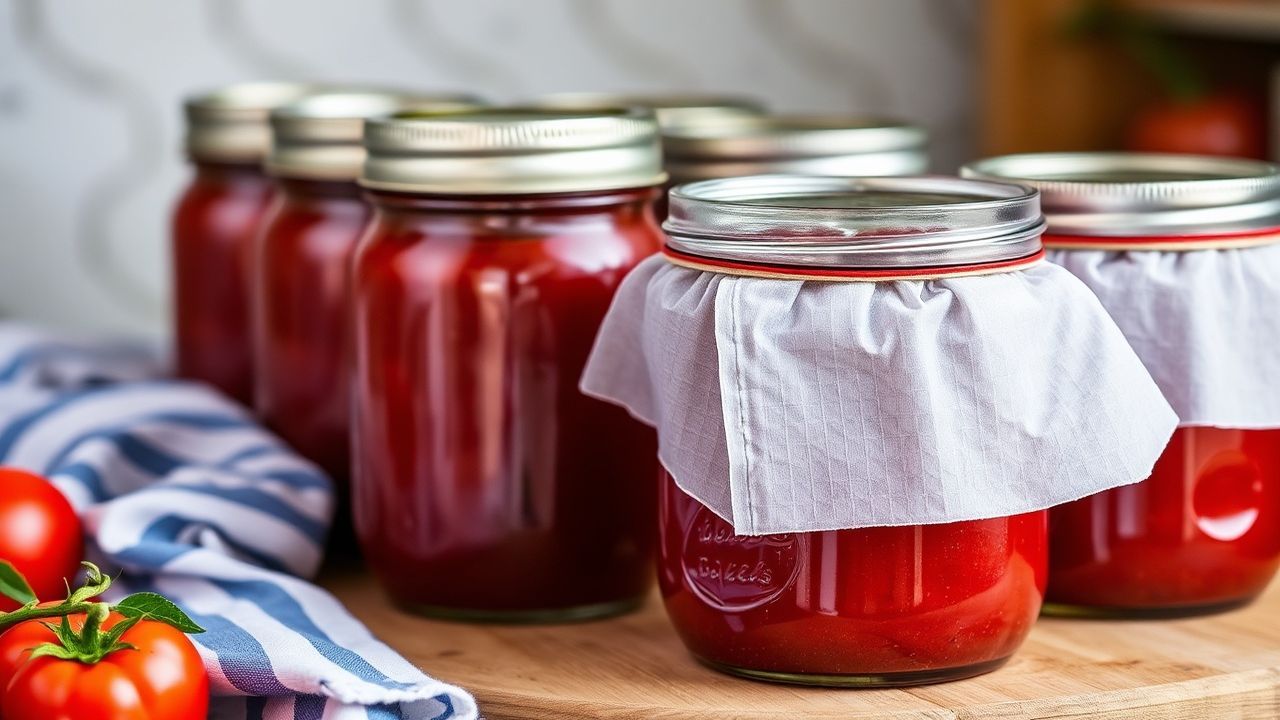

There’s something magical about homemade tomato sauce — the rich aroma, bright color, and fresh, tangy flavor that lifts simple meals. Canning sauce in pint jars captures that peak flavor and makes it available long after the harvest.
- Quick takeaway: Add acid to every pint jar to ensure safe pH for water-bath canning.
- Yield: This recipe fills about six 16-oz pint jars.
- Processing: Process pints 35 minutes in a boiling water canner; adjust for altitude.
- Storage: Store sealed jars in a cool, dark place for best quality up to 12–18 months.
Prep and Cook Time
Estimated time: Preparation takes roughly 30 minutes, simmering about 45–60 minutes, and processing 35 minutes per batch. Total active time is approximately 2 hours 15 minutes when you include jar prep and cooling.
Plan for extra hands if you process multiple batches. Jars should stay warm between filling and processing to avoid thermal shock and ensure seals form reliably.
Ingredients & Yield
This formula yields about six pint jars (16 fl oz each) of rich tomato sauce. Use firm, ripe plum tomatoes and basic aromatics for the cleanest, most shelf-stable result.
Key ingredients include roughly 10 lb of tomatoes, onions, garlic, olive oil, salt, optional sugar, fresh basil, and 2 tbsp bottled lemon juice per pint jar for acidity. The lemon juice step standardizes acidity for safe water-bath canning.
- 10 lb ripe plum tomatoes (Roma or San Marzano preferred)
- 2 cups finely chopped onions
- 6 cloves garlic, minced
- ½ cup extra virgin olive oil
- 1 tbsp sea salt (adjust to taste)
- 1 tbsp sugar (optional, to balance acidity)
- 1 tsp black pepper, freshly ground
- ½ cup fresh basil, chopped
- 2 tbsp bottled lemon juice per pint jar
Step-by-Step Canning Instructions
Follow precise sequencing: prep tomatoes, cook sauce, sterilize and fill jars, then process. Each stage affects final safety and flavor, so proceed methodically.
I organize the workflow in three phases: tomato prep, sauce finishing, and jar processing. That keeps hot and cold tasks separate and reduces the chance of contamination or losing heat at the critical sealing stage.
Select and Prepare Tomatoes
Select tomatoes that are fully ripe but firm; overripe fruit increases water content and dilutes flavor. Plum types such as Roma concentrate flesh and reduce water, giving a thicker base after simmering.
Score each tomato, blanch 45–60 seconds, then plunge into ice water to loosen skins for easy peeling. For background on the ingredient, see tomato.
Sauté and Simmer the Sauce
Heat olive oil in a heavy-bottomed pot and sweat onions and garlic until translucent and fragrant, about 5 minutes. Add chopped tomatoes, salt, sugar (if using), and black pepper, then bring to a gentle simmer.
Reduce heat and simmer uncovered 45–60 minutes, stirring occasionally to prevent sticking. Add chopped fresh basil in the final 5 minutes for bright herbal notes; learn more about basil at basil.
Blend and Finish
Use an immersion blender for a controlled, even texture or pulse in a blender in batches for very smooth sauce. Taste and adjust salt; avoid adding flour- or starch-based thickeners before canning as they can trap air and affect heat penetration.
Keep the sauce hot for filling. Hot-packing helps remove air and improves vacuum formation during processing, which increases shelf stability.
Prepare Jars, Fill, and Process
Wash jars and lids in hot, soapy water and keep them warm in a simmering water bath until use. Use new lids; old lids can fail to seal reliably.
Ladle hot sauce into warm pint jars, leaving ½ inch headspace. Add 2 tbsp bottled lemon juice to each pint to standardize acidity for safe water-bath canning. For more on the method, review the basic canning process at canning.
Process and Cool
Wipe rims clean, apply lids and screw bands fingertip tight, then process pints 35 minutes in a boiling water bath covered by at least 1 inch of water. Adjust processing time for altitude following published guides.
Remove jars and let them cool undisturbed on a towel for 12–24 hours. Confirm seals by pressing the center of each lid; a sealed lid stays concave and does not flex.
Tips for Success
Small, deliberate practices make a big difference in canned-sauce quality. Keep heat consistent and ingredients clean to avoid off-flavors and seal failures.
Use a wide-mouth funnel to reduce drips when filling jars, and keep a dedicated clean towel and magnetic lid lifter nearby to speed the workflow and reduce contamination risk.
Safety and Shelf Life
Acidification is non-negotiable for tomato sauce in a water bath. Tomatoes vary in pH by variety and season, so add 2 tbsp bottled lemon juice per pint or use ½ tsp citric acid per pint to meet safe acidity thresholds.
Store sealed jars in a cool, dark place. Quality stays best for 12 months; after that, texture and color may decline though spoilage signs are the true failure indicators.
For context on preservation science, see the broader topic of food preservation.
Serving Suggestions
This sauce works as a classic pasta topping, a pizza base, or a flavorful addition to soups and casseroles. Its balanced acidity and herbal lift keep it flexible across recipes.
Finish a reheated jar with a drizzle of good olive oil, a handful of fresh basil, or grated hard cheese. Reserve any opened sauce in the refrigerator and use within one week for best flavor and safety.
Nutrition
Per ½ cup serving, this sauce provides roughly 90 calories, 2 g protein, 7 g carbohydrates, and 6 g fat depending on oil and salt inclusion. Homemade recipes vary, so calculate nutrition based on actual ingredient weights when needed.
For dietary adjustments, reduce oil to lower calories or omit added sugar for lower carbohydrate totals. Always list allergen information when sharing jars with others.
| Nutrient | Per ½ cup |
|---|---|
| Calories | 90 |
| Protein | 2 g |
| Carbohydrates | 7 g |
| Fat | 6 g |
FAQ
Why use pint jars instead of larger jars?
Pint jars match typical single-use portions and reduce waste by letting you open only what you need. Smaller jars also heat and cool more evenly during processing, which improves seal reliability and quality retention.
When planning preserves, choose jar size that matches how you cook to minimize repeated refrigeration and reheating of leftovers.
Do I need a pressure canner for tomato sauce?
No. Acidified tomato sauce processed correctly in a boiling water bath is safe for home storage. The added bottled lemon juice or citric acid ensures the pH stays in the safe low-acid range for this method.
Reserve a pressure canner for low-acid foods such as meats, poultry, and most vegetables where water-bath processing won’t reach lethal temperatures for certain bacteria.
How can I tell if a jar has failed after processing?
Check the lid for a concave shape and no flex when pressed. Look for cloudy liquid, off-odors, bulging lids, or unexpected effervescence, which indicate spoilage.
If you suspect failure, discard the jar contents safely and sanitize the storage area. Never taste a product that shows spoilage signs.
Can I customize flavor before canning?
Yes. Add herbs and red pepper flakes during simmering for infusion. Avoid adding thickening agents like cornstarch prior to canning; instead, thicken after opening when reheating.
Test small batches for balance before committing large quantities; customization can change acidity and density, which affects processing dynamics.
How long will sealed jars stay good?
Properly sealed jars stored in a cool, dark spot maintain best quality for 12–18 months. After that, flavor, color, and texture degrade even if the seal remains intact.
Always rotate stock by date and label jars with processing dates to use older jars first and preserve peak flavor over time.
See also: Tomato sauce